
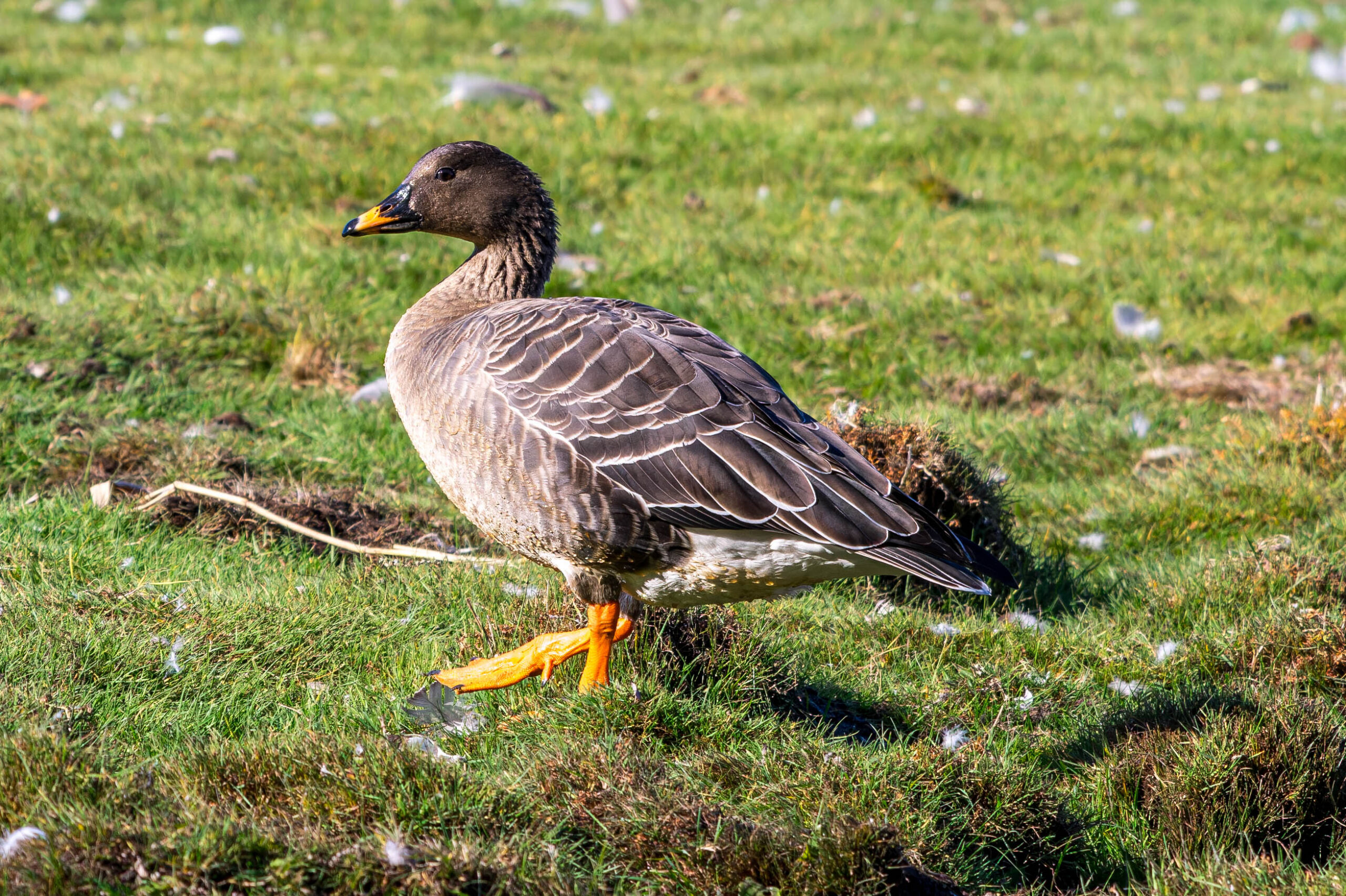
Where to see the Taiga Bean Goose in the Netherlands
Very rare 🦅 Bird Sensitive species · R4
🛡️ No exact locations, on purpose
This is a sensitive species. We deliberately give no roosting or wintering gathering places. Why we do that.
Where and when do you see a Taiga Bean Goose? This species is very rarely seen, from November to March.
How do you recognise a Taiga Bean Goose?
A large, dark goose with orange legs and a black bill with an orange band. Larger than the Tundra Bean Goose and with more orange on the bill. Note: the features are fairly variable and the two species look much alike. Length 66 to 89 centimetres, wingspan 142 to 175 centimetres.
Where do you see this species in the Netherlands?
A rare winter visitor. Numbers have fallen drastically since the nineteen-eighties and nineties: 1 to 22 animals in the period 2016/17 to 2020/21. Roosts lie in North Brabant and the north-east of the Netherlands. In normal years about five per cent of the world population winters in the Netherlands.
Habitat: It breeds along lakes, pools and rivers in the taiga zone of Scandinavia and Russia. In winter it forages on raised-bog marshes, grassland and arable land.
We have not yet recorded any areas for this species with enough evidence behind them, so we name the habitat type instead.
When is the best time?
Green = present · orange = peak period. The bar is generated from our database.
Best period: A winter visitor, mainly from November to February.
Best time of day: By day, on the feeding grounds.
Recent sightings
👁️ Where has this species been seen recently?
Check the current sightings on Waarneming.nl. A useful addition to our own verified information.
Current sightings on Waarneming.nl →
Note: for sensitive species the source already blurs or withholds sightings. We do not reproduce exact locations.
How to improve your chances
- Learn the calls first. You will hear most birds before you see them.
- Go in the first hour after sunrise, when the song is at its peak and the wind is still down.
- Use a hide or natural cover. Sitting still gets you more than walking closer.
- Keep the sun behind you. Against the light you see a silhouette and no colour.
🎒 What you need for this
A telescope. You are looking for one odd goose among hundreds of white-fronted and tundra bean geese.
Photography
Photograph the bill from the side and as sharply as you can. With this species everything turns on how much orange there is on the bill, and that is easier to judge on a photo than through the binoculars.
🌿 Watching responsibly
Keep your distance, stay on the paths, and never lure animals with food or sound. Leave as soon as an animal becomes uneasy. This is a sensitive species. We deliberately give no roosting or wintering gathering places.
Status: Verified · Last checked: 2026-08-08