
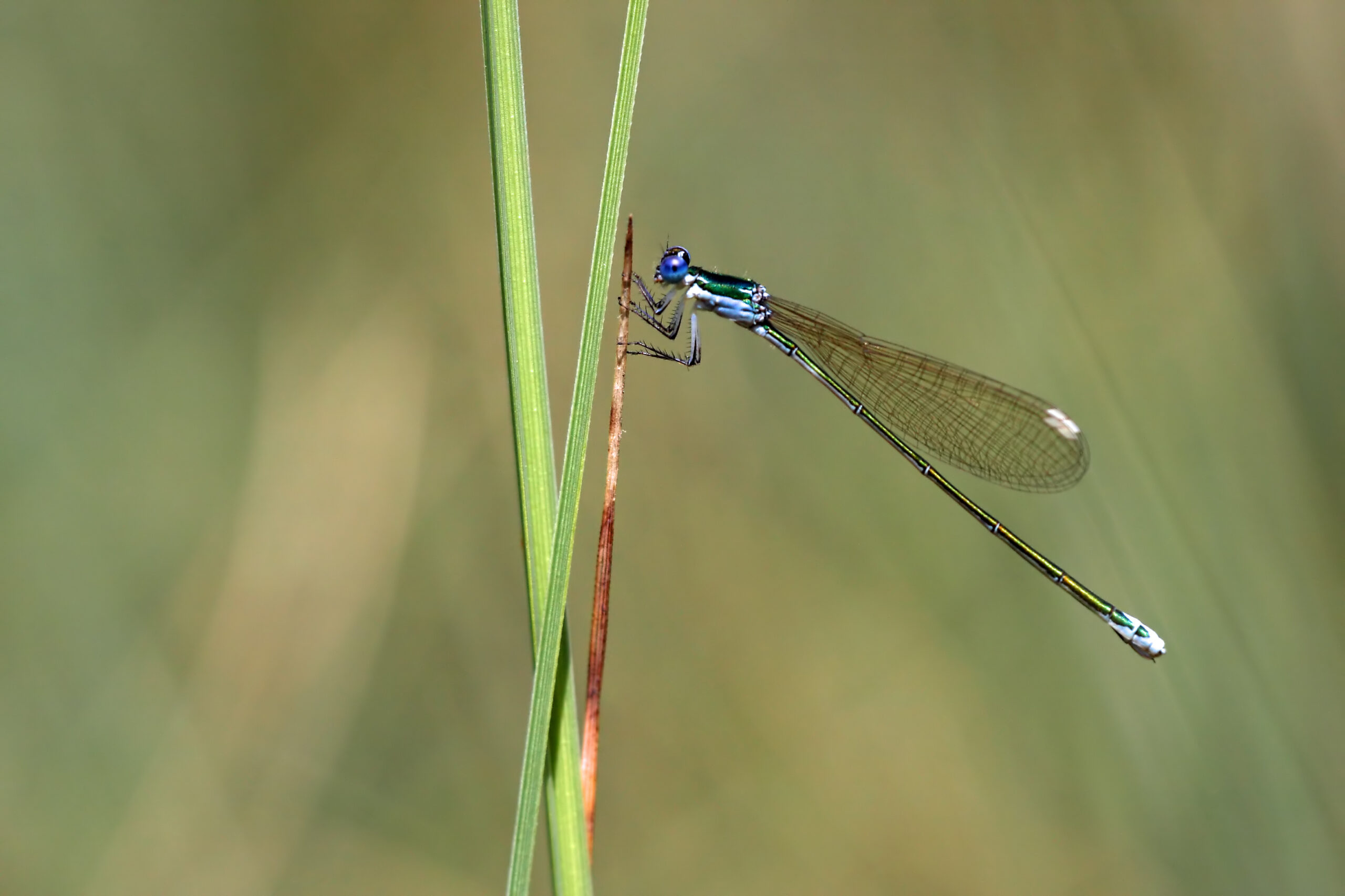
Where to see the Sedgling in the Netherlands
Very rare 🪰 Dragonfly Sensitive species · R1
🛡️ No exact locations, on purpose
This is a sensitive species. We deliberately give no exact locations. If an area is named below, that is because the site manager publishes the species there themselves, and the source is given with it. That way we do our bit for the protection of the species. Why we do that.
Where and when do you see a Sedgling? This species is very rarely seen, from May to August.
How do you recognise a Sedgling?
At 24 to 26 millimetres, Europe's smallest dragonfly. The body is not only short but also exceptionally thin, with proportionally short wings. The male has a glossy green body with blue on segments 8 to 10. The female at first resembles the male but turns orange-brown with age. Both sexes have pale legs and white pterostigmas that grey later on.
Where do you see this species in the Netherlands?
Very rare, mainly in the east of the Netherlands.
Habitat: Nutrient-poor sedge marshes with a low but constant water level, in raised bog, fen and moorland pools. It prefers high densities of small sedge species.
When is the best time?
Green = present · orange = peak period. The bar is generated from our database.
Best period: Mid-May to late August, peaking from mid-June to late July.
Best time of day: The sunny hours in the middle of the day.
Recent sightings
👁️ Where has this species been seen recently?
Check the current sightings on Waarneming.nl. A useful addition to our own verified information.
Current sightings on Waarneming.nl →
Note: for sensitive species the source already blurs or withholds sightings. We do not reproduce exact locations.
How to improve your chances
- Go on a warm, windless day between about ten and four, when they are active.
- Look for the place rather than the animal: flowery edges for butterflies, banks and open water for dragonflies.
- Move slowly and keep your shadow off the animal. It notices that before it notices you.
- Early in the morning they are still cold and motionless on a leaf. That is when you can get closest.
🎒 What you need for this
Camera with a macro lens. Binoculars with a short focusing distance help, but this animal is so small that you only see it once it moves.
Photography
Do not expect a dragonfly but a pine needle that suddenly shifts. Search low among the sedges, and stay on the edge of the vegetation while you do — the sedge marshes it lives in are extremely vulnerable to trampling.
🌿 Watching responsibly
Keep your distance, stay on the paths, and never lure animals with food or sound. Leave as soon as an animal becomes uneasy. This is a sensitive species. We deliberately give no exact locations. If an area is named below, that is because the site manager publishes the species there themselves, and the source is given with it. That way we do our bit for the protection of the species.
Status: Verified · Last checked: 2026-08-08