
Where to see the ringed seal in the Netherlands
Very rare 🦭 Marine mammal
Where and when do you see a ringed seal? This species is very rarely seen, all year round.
How do you recognise a ringed seal?
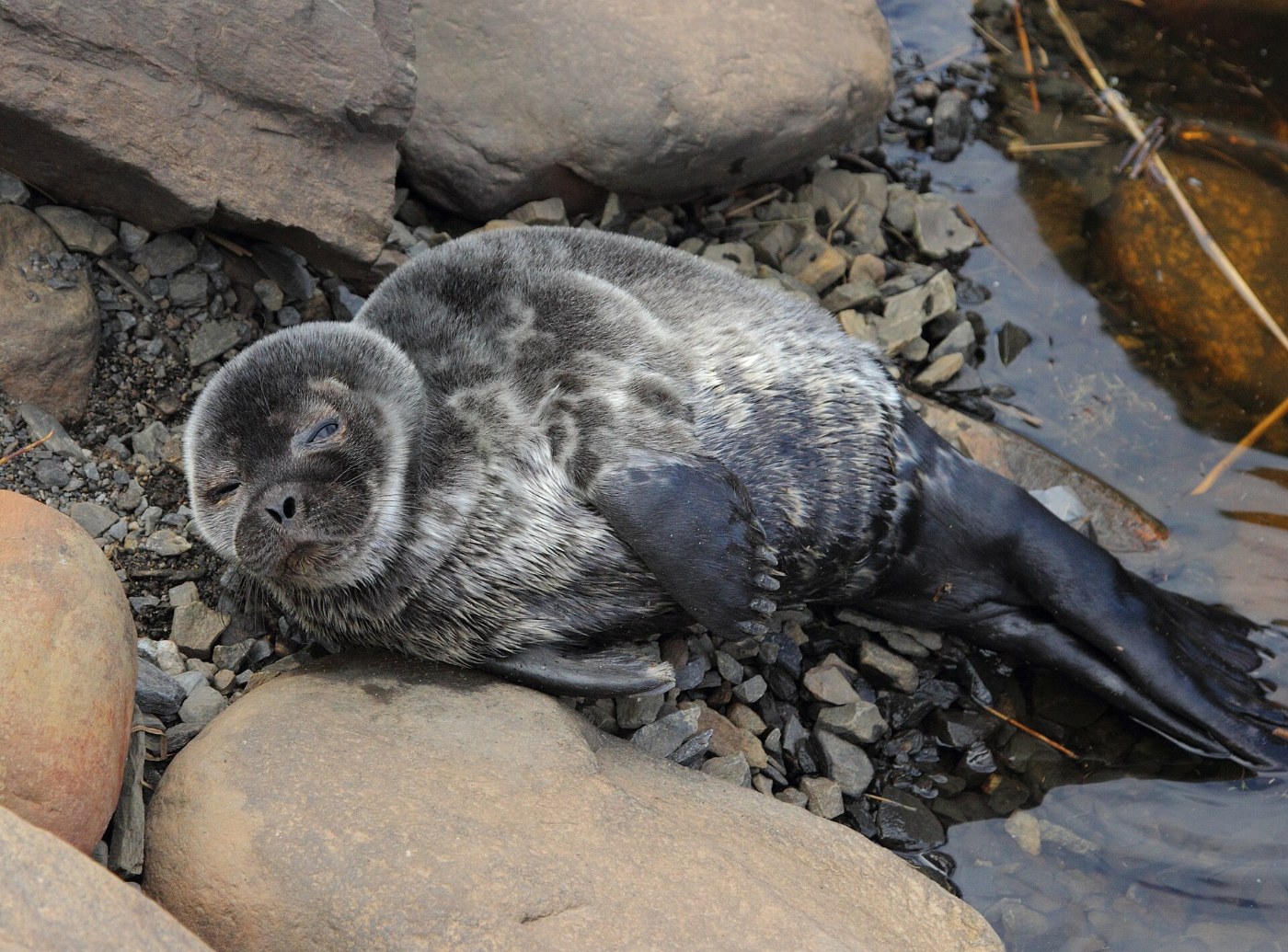
Ringed seals average 130 cm long and 86 kg, the smallest seal to reach our coast. The coat is dark grey with pale rings on the back, which gives the species its name. More important is the warning the Dutch mammal atlas adds to that: the species is hard to recognise in the field.
What can you confuse a ringed seal with?
Looks like: Harbour seal, Grey seal
- Harbour seal: the standard mix-up. A ringed seal is smaller, averaging 130 cm, and has clearer white rings on a dark coat; in the field the distinction stays hard.
- Grey seal: much larger and with a long, straight snout instead of a short round head.
- Hooded seal: also an arctic vagrant, but much larger and with irregular black blotches instead of rings.
Where do you see this species in the Netherlands?
A vagrant from the arctic. There are 14 reports in the period 1989 to 2012, eleven of them in and around the Wadden Sea. There is no clear trend. In June 2019 one swam inland via De Kwakel and the Amstel; according to the seal rescue centre that was the third ringed seal to visit the country in the previous six years.
Habitat: Coastal and pack ice in the arctic. In winter and early summer the animals live on the ice and fast during the moult; the pups are born in a lair under the snow.
This is a common, widespread species: you can come across it in far more places than the areas listed below. Treat that list as a starting point rather than a full survey.
Habitat: Coastal and pack ice in the arctic. In winter and early summer the animals live on the ice and fast during the moult; the pups are born in a lair under the snow.
We have not yet recorded any areas for this species with enough evidence behind them, so we name the habitat type instead.
When is the best time?
Green = present · orange = peak period. The bar is generated from our database.
Best period: No seasonal pattern has been found for the Dutch reports.
Best time of day: Not applicable: this is not a species to go out for.
Recent sightings
👁️ Where has this species been seen recently?
Check the current sightings on Waarneming.nl. A useful addition to our own verified information.
How to improve your chances
- Keep the wind in your face. Most mammals will smell you long before they see you.
- Arrive before sunrise and then stay put. Sitting still beats walking about.
- Wear muted colours, skip the scent, and put your phone on silent.
- Be patient. Expect to come back more than once before it works.
🎒 What you need for this
Binoculars, and with an animal on the beach: make a phone call rather than approach it
Photography
Photograph the back from the side, so that the ring pattern becomes visible, and note the size against something else in the frame. Without that a "ringed seal" on the beach cannot be made to stick — the atlas itself says the species is hard to recognise in the field.
🌿 Watching responsibly
Keep your distance, stay on the paths, and never lure animals with food or sound. Leave as soon as an animal becomes uneasy.
Status: Verified · Last checked: 2026-10-28