
Where to see the Ortolan Bunting in the Netherlands
Very rare 🦅 Bird
Where and when do you see an Ortolan Bunting? This species is very rarely seen, in April, May, August, September and October.
How do you recognise an Ortolan Bunting?
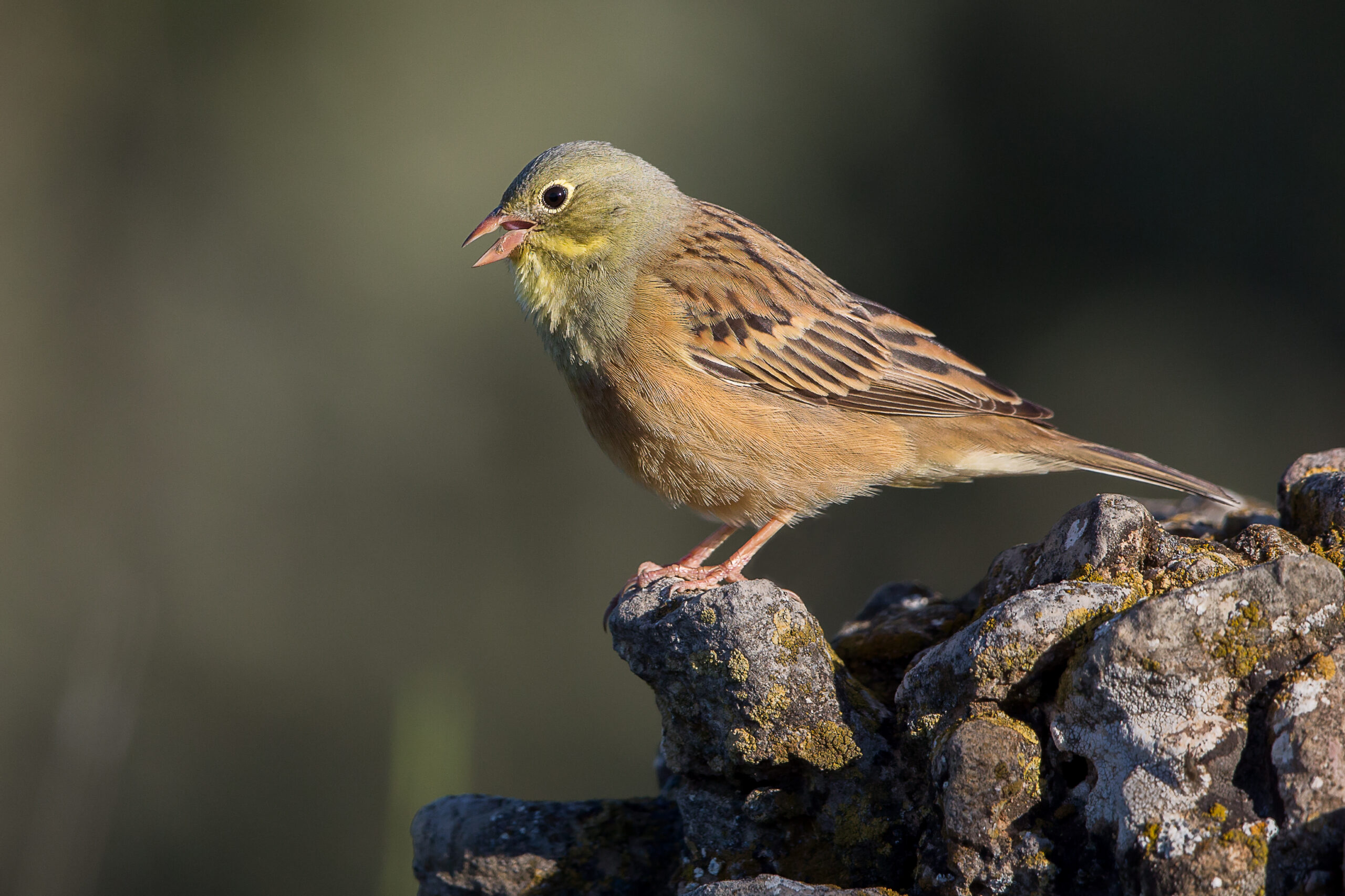
A bunting of 15.5 to 16 cm. The male has a greyish green head and breast, a yellow throat, a pink bill and a striking yellowish white eye-ring; the underparts are orange-brown and the upperparts streaked brown. The female is duller, young birds are pastel-coloured with fine streaking. The eye-ring combined with the yellow throat is the decisive feature.
Wingspan: 26 cm an indication from Wikidata; it varies by individual, sex and subspecies · compare all birds (in Dutch)
What does an Ortolan Bunting sound like?
Recording: Jens Loose, CC BY-SA 4.0, via Wikimedia Commons
Where do you see this species in the Netherlands?
Gone as a breeding bird; the last breeding pairs date from around 1998. The species bred mainly on the sandy soils in the east of the country. Now only 1 to 100 passage migrants a year.
Habitat: Small-scale farmland on sandy soil with hedgerows and oak-rich field margins. It forages on the ground and in bushes: caterpillars, ants, beetles and grasshoppers in the breeding season, seeds all year round.
This is a common, widespread species: you can come across it in far more places than the areas listed below. Treat that list as a starting point rather than a full survey.
Habitat: Small-scale farmland on sandy soil with hedgerows and oak-rich field margins. It forages on the ground and in bushes: caterpillars, ants, beetles and grasshoppers in the breeding season, seeds all year round.
We have not yet recorded any areas for this species with enough evidence behind them, so we name the habitat type instead.
When is the best time?
Green = present · orange = peak period. The bar is generated from our database.
Best period: On passage in April and May and again from August through October.
Best time of day: The morning during autumn passage, in rough field margins and dune slacks.
Recent sightings
👁️ Where has this species been seen recently?
Check the current sightings on Waarneming.nl. A useful addition to our own verified information.
How to improve your chances
- Learn the calls first. You will hear most birds before you see them.
- Go in the first hour after sunrise, when the song is at its peak and the wind is still down.
- Use a hide or natural cover. Sitting still gets you more than walking closer.
- Keep the sun behind you. Against the light you see a silhouette and no colour.
🎒 What you need for this
Binoculars and a knowledge of the call: a tjup or zsli-uu, less varied than in related buntings.
Photography
A passing ortolan usually sits briefly and low in a field margin. Photograph from the car or from the path and work with side light, so that the yellowish white eye-ring and the yellow throat light up against the greyish green head.
🌿 Watching responsibly
Keep your distance, stay on the paths, and never lure animals with food or sound. Leave as soon as an animal becomes uneasy.
Status: Verified · Last checked: 2026-08-08