Where to see the Long-eared Owl in the Netherlands
With luck 🦅 Bird Sensitive species · R1
🛡️ No exact locations, on purpose
This is a sensitive species. We deliberately give no exact locations. If an area is named below, that is because the site manager publishes the species there themselves, and the source is given with it. That way we do our bit for the protection of the species. Why we do that.
Where and when do you see a Long-eared Owl? With some luck you can see this species, all year round.
How do you recognise a Long-eared Owl?
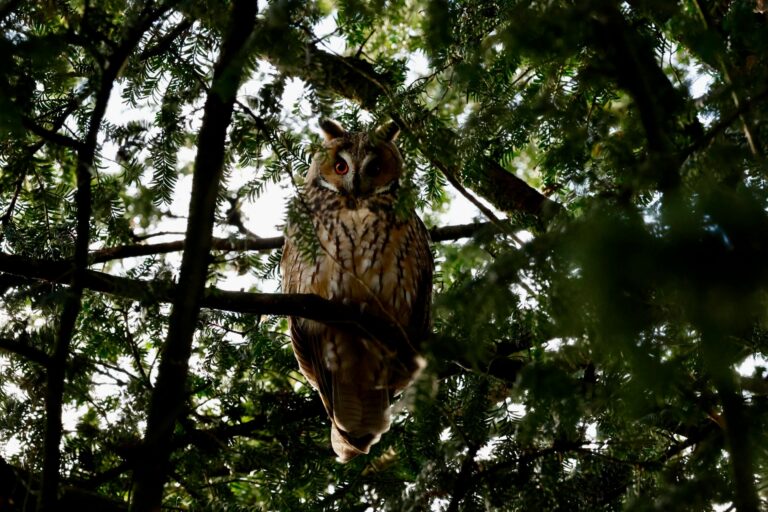
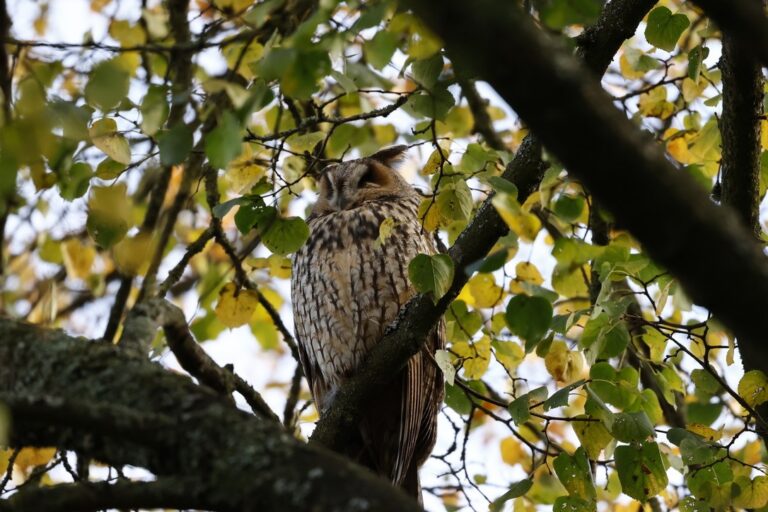
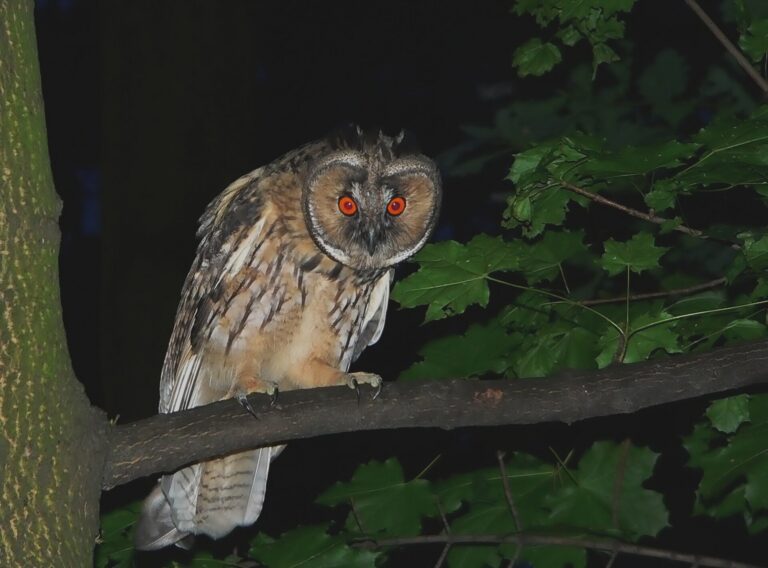
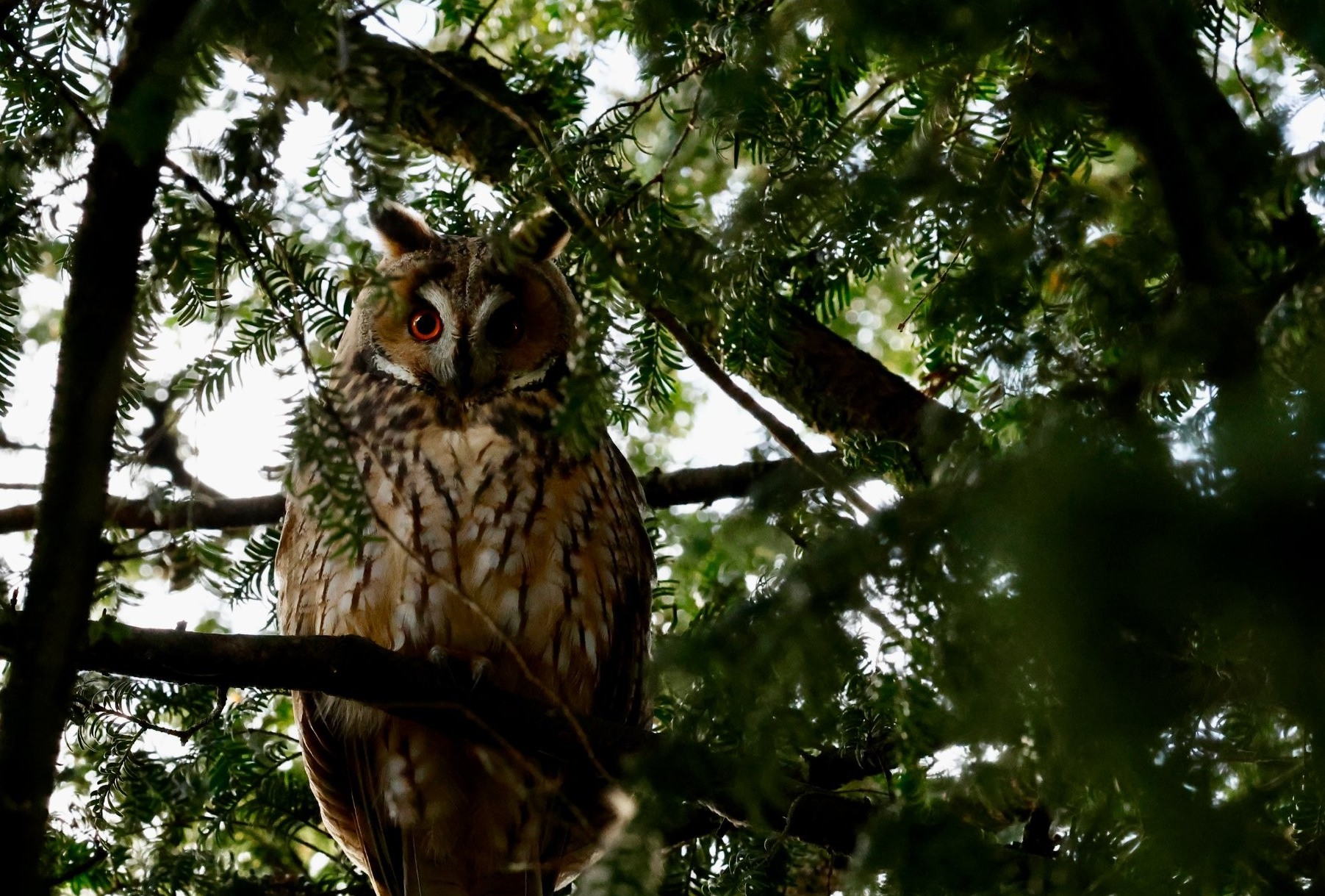
Smaller and slimmer than the tawny owl, with long ear tufts that are often held upright, and orange-yellow eyes. The upperside is marbled yellow-brown, the underside a pale rusty yellow with dark lengthwise streaks. Length 35 to 37 centimetres, wingspan 90 to 100 centimetres.
What can you confuse a Long-eared Owl with?
Looks like: Tawny Owl, Short-eared Owl
- Tawny owl: Larger, with a round head without ear tufts and dark eyes.
- Short-eared owl: Paler, with very short ear tufts and sulphur-yellow eyes; hunts by day over open country.
What does a Long-eared Owl sound like?
Recording: Vidar, CC BY-SA 4.0, via Wikimedia Commons
What tracks does a Long-eared Owl leave?
Pellets: as with other owls they consist of the hair and small bones of mice, but the long-eared owl's stomach acid attacks the skull remains far more strongly than the barn owl's. For anyone who wants to identify the prey, a barn owl pellet is the better choice. If you find a little heap of pellets together under a tree, that is an indication that an owl roosts in that spot.
Where do you see this species in the Netherlands?
Spread across the whole country as a scarce breeding bird, with 2,100 to 3,000 breeding pairs (2018-2020). Strongly reduced since the 1970s, above all in intensively farmed country.
Habitat: Half-open landscape: it breeds in conifers, hedgerows and groups of trees, often in an old crow's nest, and hunts in the open field, along road verges and on clear-fells.
When is the best time?
Green = present · orange = peak period. The bar is generated from our database.
Best period: Present all year. From autumn onwards long-eared owls gather in groups at fixed roosts; that is the period when they are easiest to see. The clutch is laid between late March and mid-April.
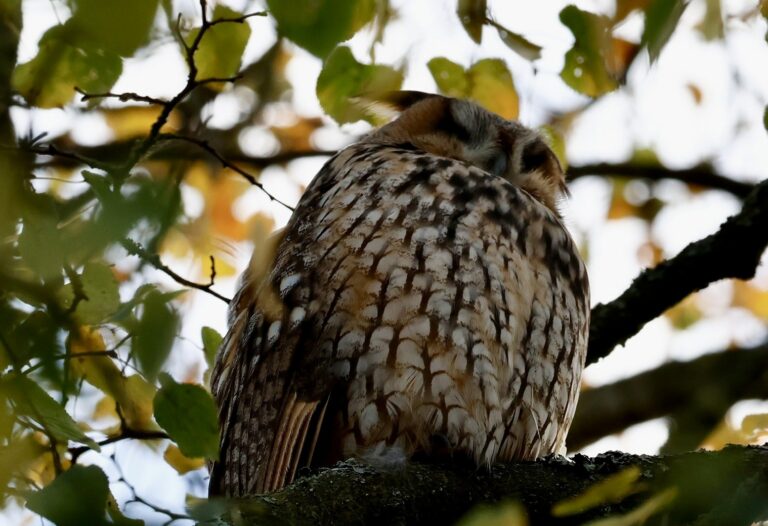
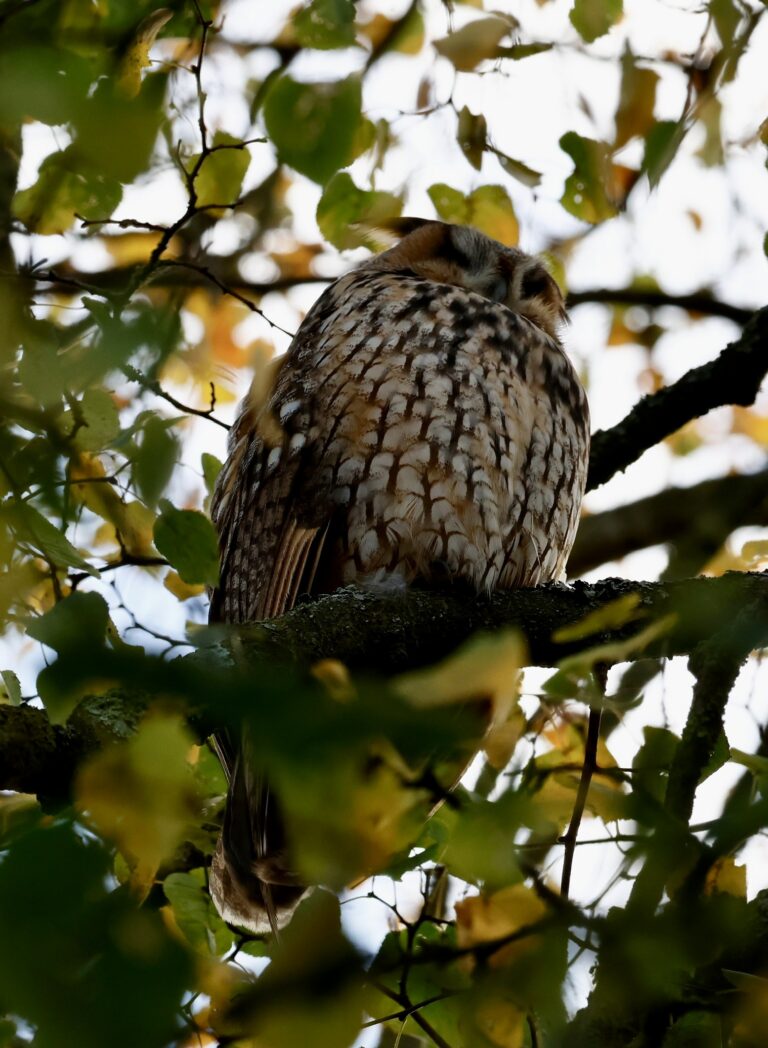
Best time of day: Dusk and the night. In winter the roosts can be watched during the day, when the birds sit sleeping close together in a tree or shrub.
Recent sightings
👁️ Where has this species been seen recently?
Check the current sightings on Waarneming.nl. A useful addition to our own verified information.
Current sightings on Waarneming.nl →
Note: for sensitive species the source already blurs or withholds sightings. We do not reproduce exact locations.
How to improve your chances
- Learn the calls first. You will hear most birds before you see them.
- Go in the first hour after sunrise, when the song is at its peak and the wind is still down.
- Use a hide or natural cover. Sitting still gets you more than walking closer.
- Keep the sun behind you. Against the light you see a silhouette and no colour.
🎒 What you need for this
Binoculars; keep well back from roosts
🌿 Watching responsibly
Keep your distance, stay on the paths, and never lure animals with food or sound. Leave as soon as an animal becomes uneasy. This is a sensitive species. We deliberately give no exact locations. If an area is named below, that is because the site manager publishes the species there themselves, and the source is given with it. That way we do our bit for the protection of the species.
Status: Verified · Last checked: 2026-08-08
More photos