
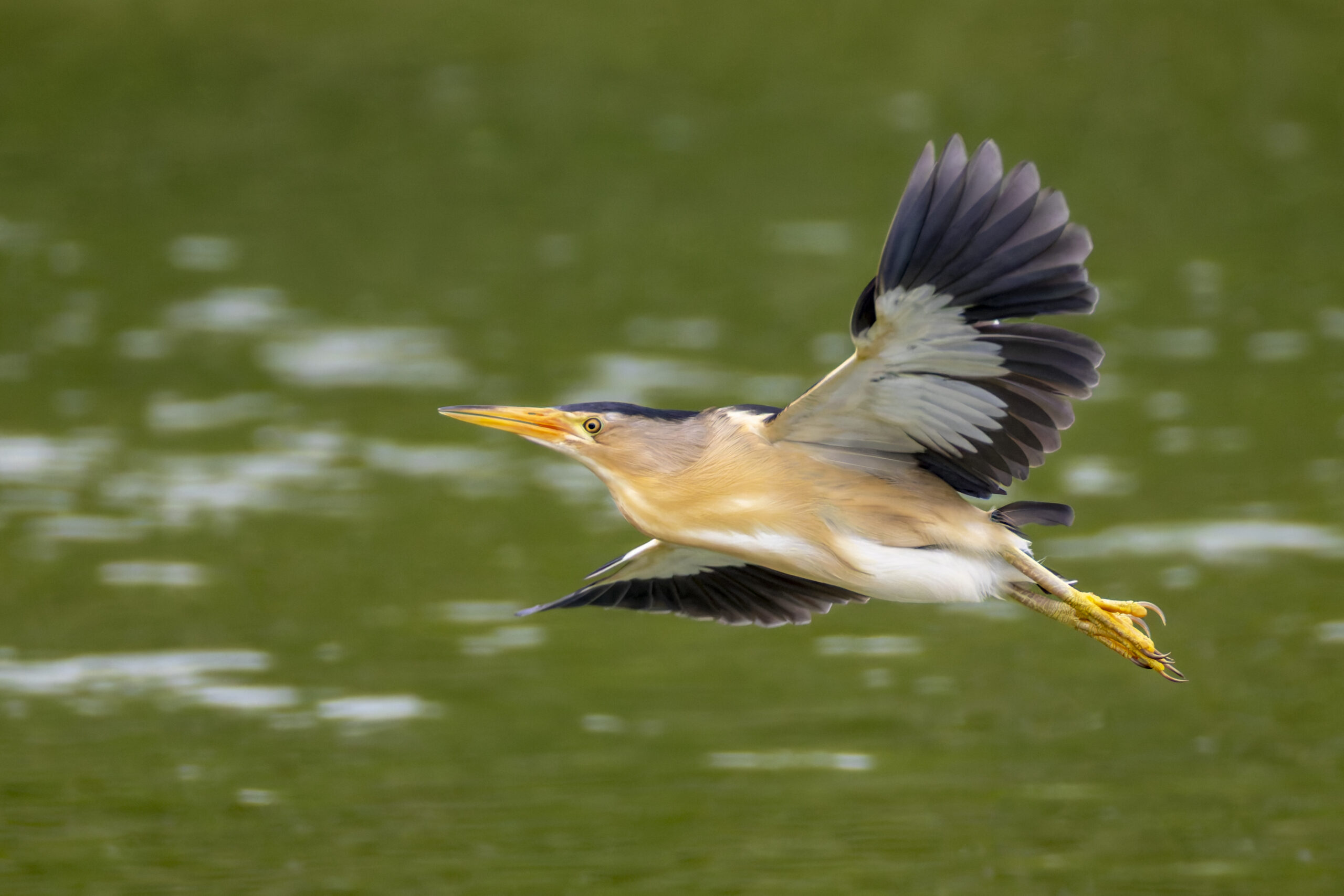
Where to see the Little Bittern in the Netherlands
Very rare 🦅 Bird Sensitive species · R1
🛡️ No exact locations, on purpose
This is a sensitive species. We deliberately give no exact locations. If an area is named below, that is because the site manager publishes the species there themselves, and the source is given with it. That way we do our bit for the protection of the species. Why we do that.
Where and when do you see a Little Bittern? This species is very rarely seen, from April to September.
How do you recognise a Little Bittern?
Our smallest heron, 27 to 38 cm long with a wingspan of 40 to 58 cm. The male has a black crown, back and flight feathers, with blond coverts that form a large pale wing panel both in flight and perched; the breast is orange with broad pale streaks. The female shows the same pattern in duller brown tones, young birds are streaked brown. The flight is fast and jerky; the contrast between the black hand and the blond wing panel makes confusion in flight all but impossible.
What does a Little Bittern sound like?
Recording: Jens Loose, CC BY-SA 4.0, via Wikimedia Commons
Where do you see this species in the Netherlands?
A very rare breeding bird: 25 to 50 breeding pairs in the period 2018 to 2020, against hundreds of pairs before 1950. The species breeds in lowland peat marshes and marshes along the rivers in the west, centre and south of the country. We do not name more precise places: all records are blurred to 10 by 10 kilometres.
Habitat: Dense reed, sedge and bulrush vegetation forming the transition between open water and silting-up marsh. It lives very secretively and climbs nimbly through the reeds; when disturbed it withdraws rather than flying up. It eats water insects such as beetles, bugs and dragonfly larvae, and besides that frogs, newts, spiders, worms and small fish.
When is the best time?
Green = present · orange = peak period. The bar is generated from our database.
Best period: A summer visitor: arrival from late April to early May, departure in August and September. Calling males mainly in May and June.
Best time of day: Dusk and the first hours of the night, when the male calls.
Recent sightings
👁️ Where has this species been seen recently?
Check the current sightings on Waarneming.nl. A useful addition to our own verified information.
Current sightings on Waarneming.nl →
Note: for sensitive species the source already blurs or withholds sightings. We do not reproduce exact locations.
How to improve your chances
- Learn the calls first. You will hear most birds before you see them.
- Go in the first hour after sunrise, when the song is at its peak and the wind is still down.
- Use a hide or natural cover. Sitting still gets you more than walking closer.
- Keep the sun behind you. Against the light you see a silhouette and no colour.
🎒 What you need for this
Above all your ears. Binoculars help, but the chance of seeing a little bittern without hearing it first is small.
Photography
Do not go searching in the reedbed itself: entering reed marsh in the breeding season is downright harmful and gets you nothing besides. Photograph at most from an existing path or from a bird hide, and accept that a sound recording is often the only feasible evidence.
🌿 Watching responsibly
Keep your distance, stay on the paths, and never lure animals with food or sound. Leave as soon as an animal becomes uneasy. This is a sensitive species. We deliberately give no exact locations. If an area is named below, that is because the site manager publishes the species there themselves, and the source is given with it. That way we do our bit for the protection of the species.
Status: Verified · Last checked: 2026-08-08