
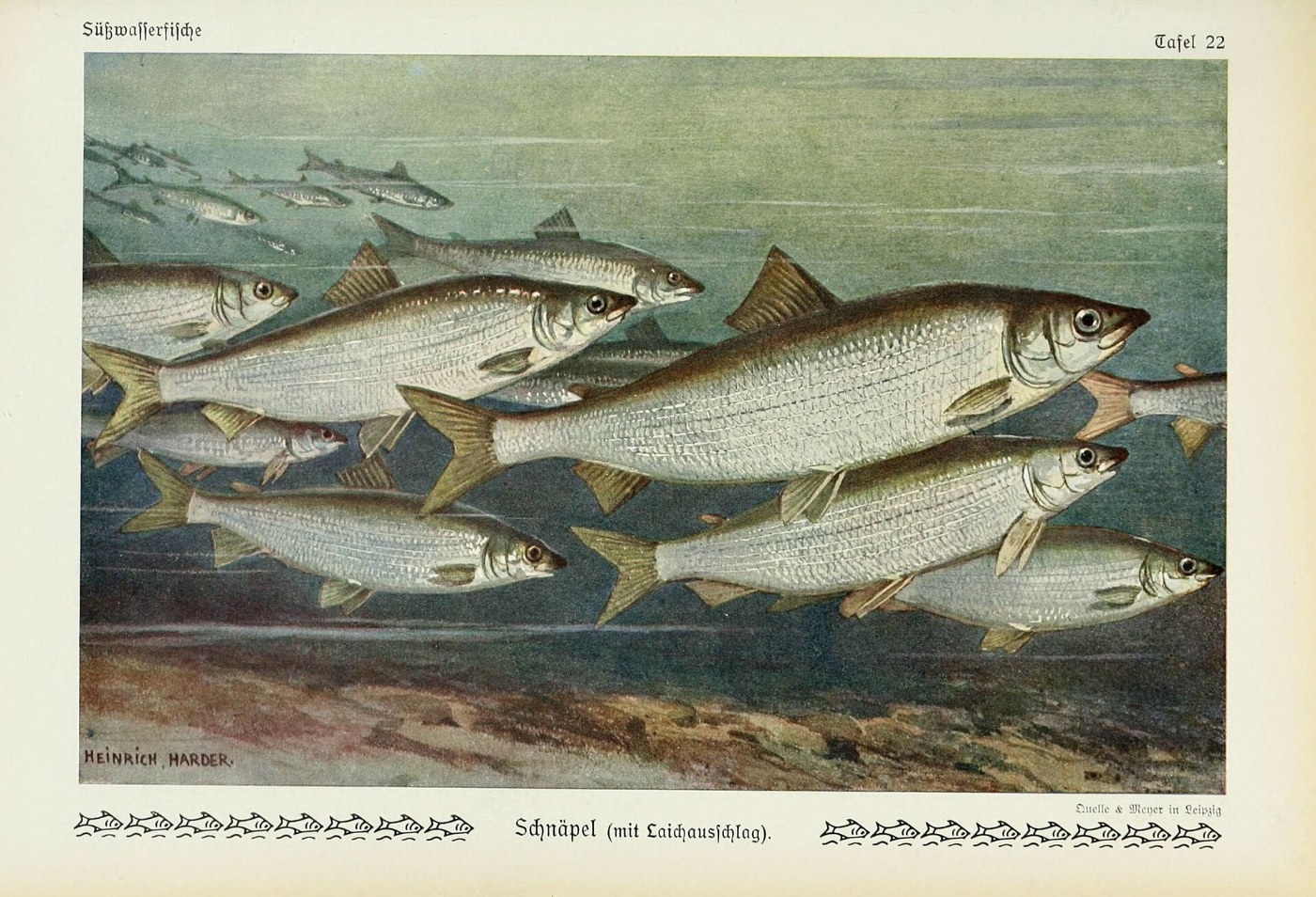
Where to see the houting in the Netherlands
Rare 🐟 Fish
Where and when do you see a houting? This species is rarely seen, all year round.
How do you recognise a houting?
An elongated, laterally flattened body with silver flanks and an adipose fin at the end of the back. Characteristic is the blue-black, pointed snout. Up to about fifty centimetres.
What can you confuse a houting with?
Looks like: Common nase, Common dace, European smelt
- Common nase, Common dace and blauwneus: other species with a thickened snout, such as these three, have no adipose fin.
- European smelt: also has an adipose fin, but in smelt the dorsal fin stands straight above it and the snout is less pointed.
Where do you see this species in the Netherlands?
Adults live in the IJsselmeer, the lower rivers, the Wadden Sea and the Voordelta. Originally the species occurred in the Rhine, Meuse, Scheldt and Ems.
📍 Grevelingenmeer
presence reported📍 Nationaal Park De Biesbosch
presence reported📍 Haringvlietsluizen
presence reportedThese links come straight from our database, with the chance, the source and the evidence level for each area.
When is the best time?
Green = present · orange = peak period. The bar is generated from our database.
Best period: Around November the North Sea houting moves up the rivers to breed. The eggs hatch in early spring.
Best time of day: Not applicable; records come from fish counts.
Recent sightings
👁️ Where has this species been seen recently?
Check the current sightings on Waarneming.nl. A useful addition to our own verified information.
How to improve your chances
- Look for clear, shallow water and watch from a bridge, a jetty or a high bank.
- Polarising sunglasses take the reflection off the surface and show you what is swimming underneath.
- Stay low and move slowly. Fish are very good at seeing movement above the water.
- Early morning gives the calmest water and the best visibility.
🎒 What you need for this
Not applicable — follow the fish counts at locks and fish passes
Photography
The adipose fin is the difference. Common nase, Common dace and blauwneus also have a thickened or underslung snout but no adipose fin; so always include the stretch of back between the dorsal fin and the tail in your photo.
🌿 Watching responsibly
Keep your distance, stay on the paths, and never lure animals with food or sound. Leave as soon as an animal becomes uneasy.
Status: Verified · Last checked: 2026-10-28