
Where to see the European wildcat in the Netherlands
Very rare 🦌 Mammal (land)
Where and when do you see a European wildcat? This species is very rarely seen, all year round.
How do you recognise a European wildcat?
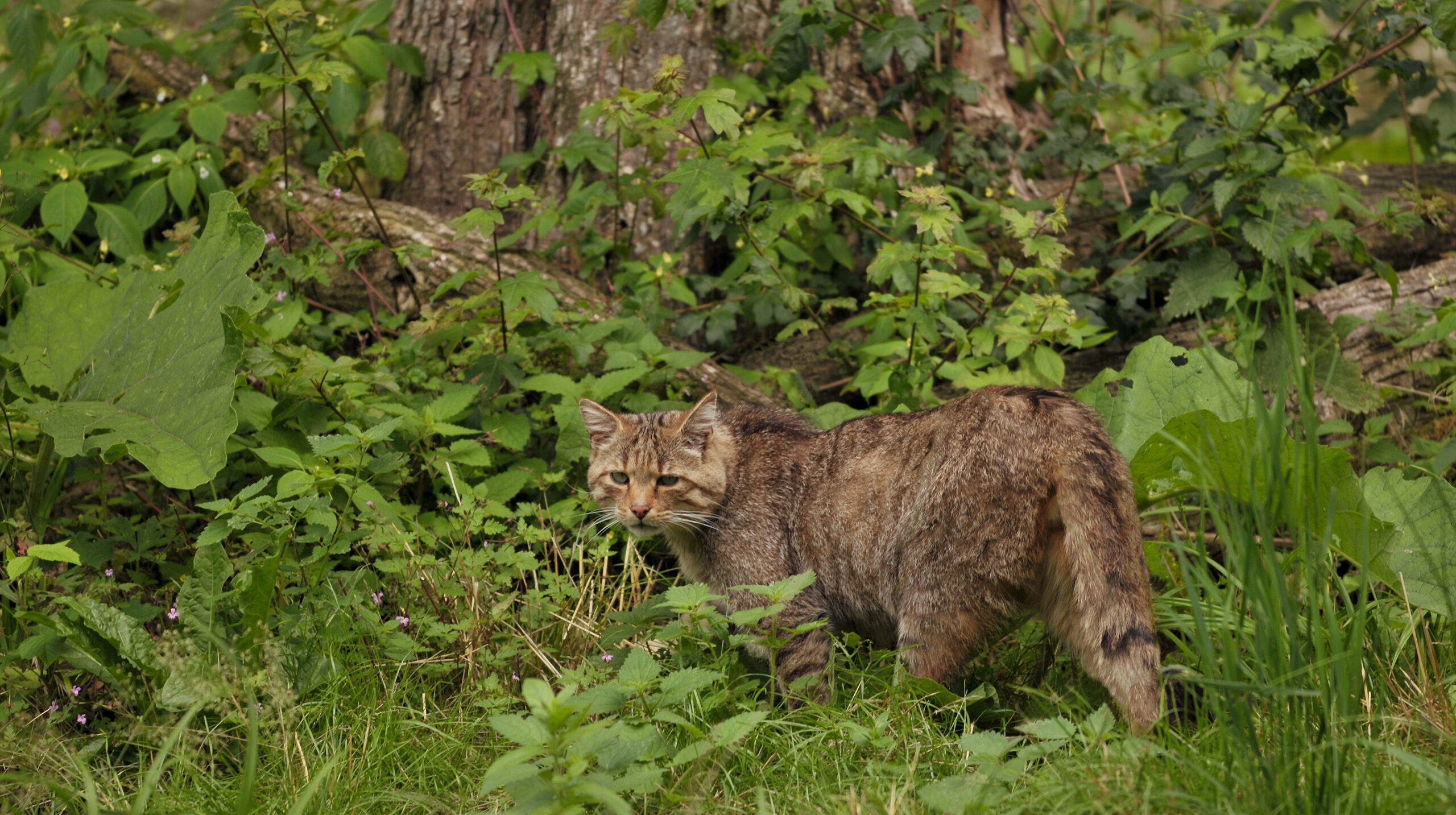
It looks like a hefty tabby house cat, but with a longer coat, stocky thick legs and a massive broad muzzle. The coat is cream to ochre yellow with faint grey stripes. The dorsal stripe along the back begins only behind the shoulders and already ends at the base of the tail. The tail is thick with a blunt black end and three to five dark rings. The eyes are green to yellowish green, the nose always flesh-coloured. Head and body 44 to 78 centimetres, tail 25 to 35 centimetres, 2.3 to 6.5 kilograms.
What does a European wildcat sound like?
Recording: JMK, CC BY-SA 4.0, via Wikimedia Commons
What tracks does a European wildcat leave?
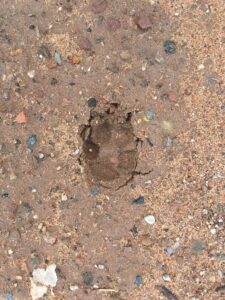
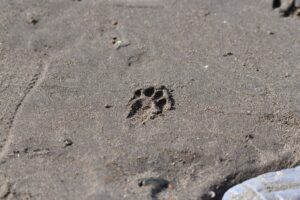
Print: 3.5 to 4.5 cm wide and 4 to 4.5 cm long, so slightly longer than wide. Fore and hind foot have four toes and leave no claw marks, and that tells a cat from a dog or fox at once. Droppings: 1 to 2 cm thick and 1.5 to 8 cm long, dark to greyish green or brown, very hard, with hairs, feathers or bone remains in them; fresh they smell sharp and unpleasant. Scratch marks: at the junctions of trails and other much-used places, especially on trees and shrubs with soft bark such as elder and juniper.

Where do you see this species in the Netherlands?
Probably gone from the Netherlands in the Middle Ages. Recorded again since 1999; in South Limburg a small population has gradually built up and there are first records from south-eastern North Brabant. The nearest populations lie in north-eastern France, the Ardennes, the Eifel and the Palatinate.
Habitat: Landscapes with extensive, old, structurally rich oak, beech or mixed deciduous woodland, alternating with open areas rich in mice. It is absent where more than twenty centimetres of snow lies.
This is a common, widespread species: you can come across it in far more places than the areas listed below. Treat that list as a starting point rather than a full survey.
📍 Nationaal Park Zuid-Limburg (in formation)
Very rare chance per sourceThese links come straight from our database, with the chance, the source and the evidence level for each area.
When is the best time?
Green = present · orange = peak period. The bar is generated from our database.
Best period: All year; the rut falls from January to March.
Best time of day: Night and dusk.
Recent sightings
👁️ Where has this species been seen recently?
Check the current sightings on Waarneming.nl. A useful addition to our own verified information.
How to improve your chances
- Keep the wind in your face. Most mammals will smell you long before they see you.
- Arrive before sunrise and then stay put. Sitting still beats walking about.
- Wear muted colours, skip the scent, and put your phone on silent.
- Be patient. Expect to come back more than once before it works.
🎒 What you need for this
A trail camera. It is decidedly shy and all but impossible to see by day.
Photography
Always photograph the tail. Without a clear image of the thick tail with its blunt black tip and separate rings a wildcat cannot be told from a feral house cat — and it is precisely that doubt that makes many reports unusable.
🌿 Watching responsibly
Keep your distance, stay on the paths, and never lure animals with food or sound. Leave as soon as an animal becomes uneasy.
Status: Verified · Last checked: 2026-08-08