
Where to see the Eurasian lynx in the Netherlands
Very rare 🦌 Mammal (land) Sensitive species · R1
🛡️ No exact locations, on purpose
This is a sensitive species. We deliberately give no exact locations. If an area is named below, that is because the site manager publishes the species there themselves, and the source is given with it. That way we do our bit for the protection of the species. Why we do that.
Where and when do you see a Eurasian lynx? This species is very rarely seen, all year round.
How do you recognise a Eurasian lynx?
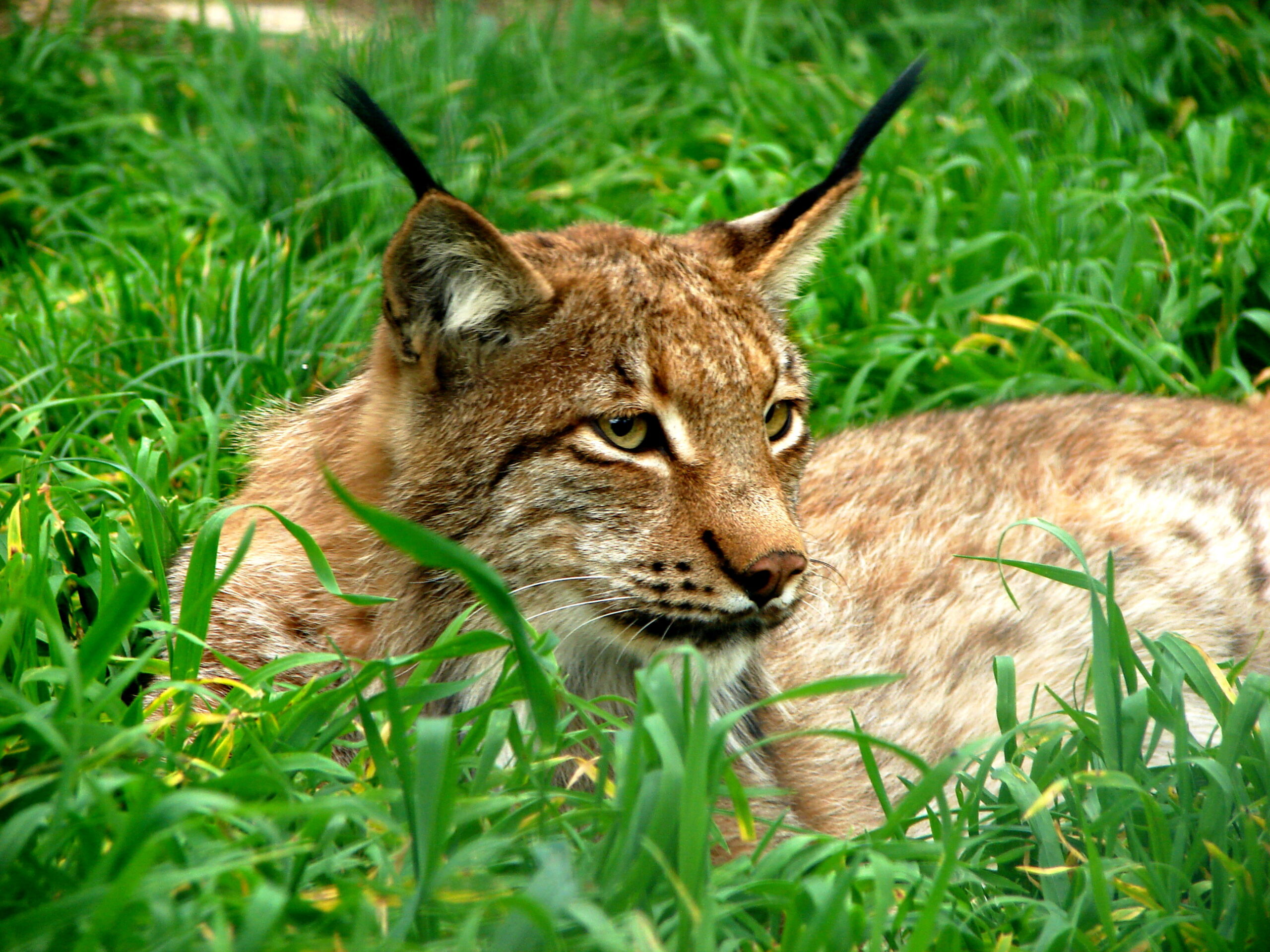
Powerfully built cat with clear cheek ruffs and a strikingly short, thick tail with a black tip. The ear tufts are easiest to see in winter. The coat is light brown to cream with distinct spots and a paler belly. Head and body 70 to 150 centimetres, tail 15 to 25 centimetres, 14 to 26 and sometimes 38 kilograms; males larger than females.
What tracks does a Eurasian lynx leave?
Track: round, 7 to 9 cm wide and just as long, without claw marks, which is how you tell it from a large dog. Trail: 80 to 120 cm between prints at a walk, up to 135 cm at a trot, up to four metres in bounds. Scat: up to 3 cm thick and often longer than 10 cm, cone-shaped with deep constrictions; fresh it has a mucus layer that dries to a shine, and a very sharp, musty smell. Prey remains: deep claw scratches across the back and flanks of the prey animal, of which mainly the muscular parts are eaten; skin, entrails and the large bones are left behind.


Where do you see this species in the Netherlands?
There is no evidence that the lynx once occurred in the Netherlands, although it probably did. Reports from Limburg lack hard proof; in Belgium its presence has been established with more certainty.
Habitat: Large unbroken forests in mountainous or hilly terrain, above all conifer forest with enough cover. It tolerates snow up to fifty centimetres deep and lives in mountains up to the tree line at 2000 to 2500 metres.
When is the best time?
Green = present · orange = peak period. The bar is generated from our database.
Best period: All year; the ear tufts are clearest in winter.
Best time of day: Night.
Recent sightings
👁️ Where has this species been seen recently?
Check the current sightings on Waarneming.nl. A useful addition to our own verified information.
Current sightings on Waarneming.nl →
Note: for sensitive species the source already blurs or withholds sightings. We do not reproduce exact locations.
How to improve your chances
- Keep the wind in your face. Most mammals will smell you long before they see you.
- Arrive before sunrise and then stay put. Sitting still beats walking about.
- Wear muted colours, skip the scent, and put your phone on silent.
- Be patient. Expect to come back more than once before it works.
🎒 What you need for this
Trail camera. A lynx is extremely shy and covers 3.5 to 19 kilometres a day.
Photography
Report every sighting that comes with an image through telmee.nl or waarneming.nl. For a species whose presence in the Netherlands has not yet been firmly proven, one good photo or camera image is literally of scientific value.
🌿 Watching responsibly
Keep your distance, stay on the paths, and never lure animals with food or sound. Leave as soon as an animal becomes uneasy. This is a sensitive species. We deliberately give no exact locations. If an area is named below, that is because the site manager publishes the species there themselves, and the source is given with it. That way we do our bit for the protection of the species.
Status: Verified · Last checked: 2026-08-08