
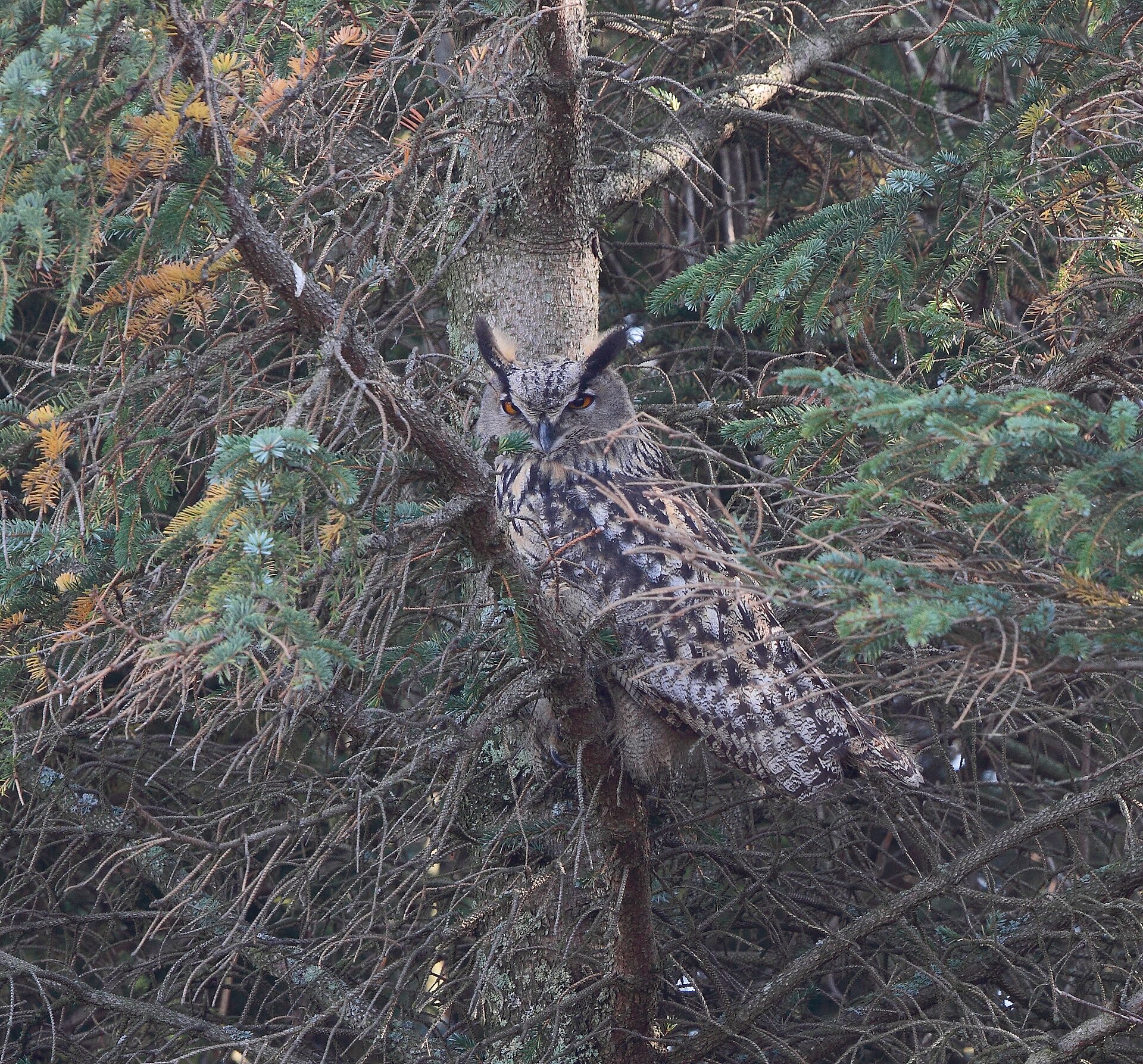
Where to see the Eurasian Eagle-owl in the Netherlands
Very rare 🦅 Bird Sensitive species · R1
🛡️ No exact locations, on purpose
This is a sensitive species. We deliberately give no exact locations. If an area is named below, that is because the site manager publishes the species there themselves, and the source is given with it. That way we do our bit for the protection of the species. Why we do that.
Where and when do you see a Eurasian Eagle-owl? This species is very rarely seen, all year round.
How do you recognise a Eurasian Eagle-owl?
An enormous owl with 8 cm long ear tufts and large orange eyes; up to 75 cm long with a wingspan of 160 to 188 centimetres.
What does a Eurasian Eagle-owl sound like?
Recording: Mirko Tomasi, CC BY-SA 4.0, via Wikimedia Commons
Where do you see this species in the Netherlands?
South Limburg, the Achterhoek, Twente and North Brabant; quarries, steep walls and woodland edges.
📍 Sint-Pietersberg & Zuid-Limburg
With luck chance per sourceThese links come straight from our database, with the chance, the source and the evidence level for each area.
When is the best time?
Green = present · orange = peak period. The bar is generated from our database.
Best period: All year; calling most in January to March.
Best time of day: Dusk and night.
Recent sightings
👁️ Where has this species been seen recently?
Check the current sightings on Waarneming.nl. A useful addition to our own verified information.
Current sightings on Waarneming.nl →
Note: for sensitive species the source already blurs or withholds sightings. We do not reproduce exact locations.
How to improve your chances
- Learn the calls first. You will hear most birds before you see them.
- Go in the first hour after sunrise, when the song is at its peak and the wind is still down.
- Use a hide or natural cover. Sitting still gets you more than walking closer.
- Keep the sun behind you. Against the light you see a silhouette and no colour.
🎒 What you need for this
Only your ears; keep your distance
🌿 Watching responsibly
Keep your distance, stay on the paths, and never lure animals with food or sound. Leave as soon as an animal becomes uneasy. This is a sensitive species. We deliberately give no exact locations. If an area is named below, that is because the site manager publishes the species there themselves, and the source is given with it. That way we do our bit for the protection of the species.
Status: Verified · Last checked: 2026-08-08