Where to see the elk / Moose in the Netherlands
With luck 🐄 Mammal (large grazer)
Where and when do you see an elk / Moose? With some luck you can see this species, all year round.
How do you recognise an elk / Moose?
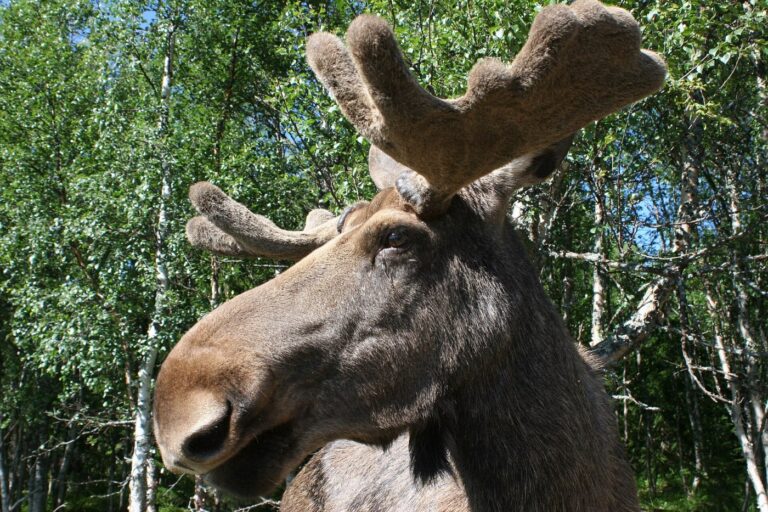
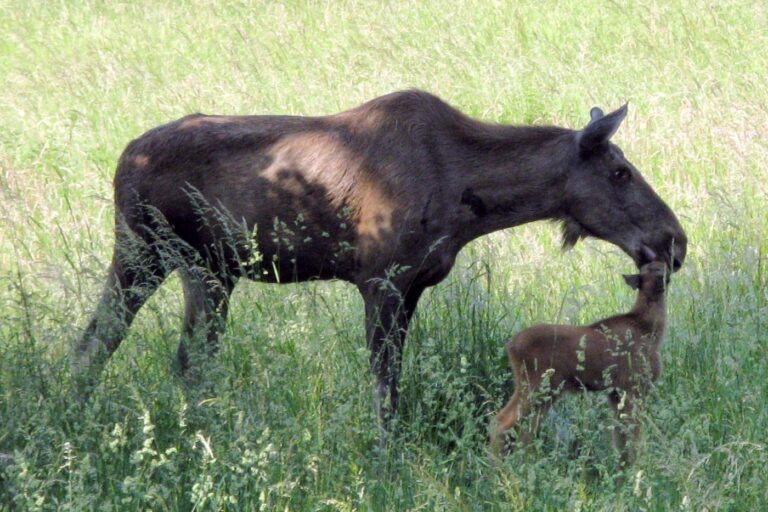
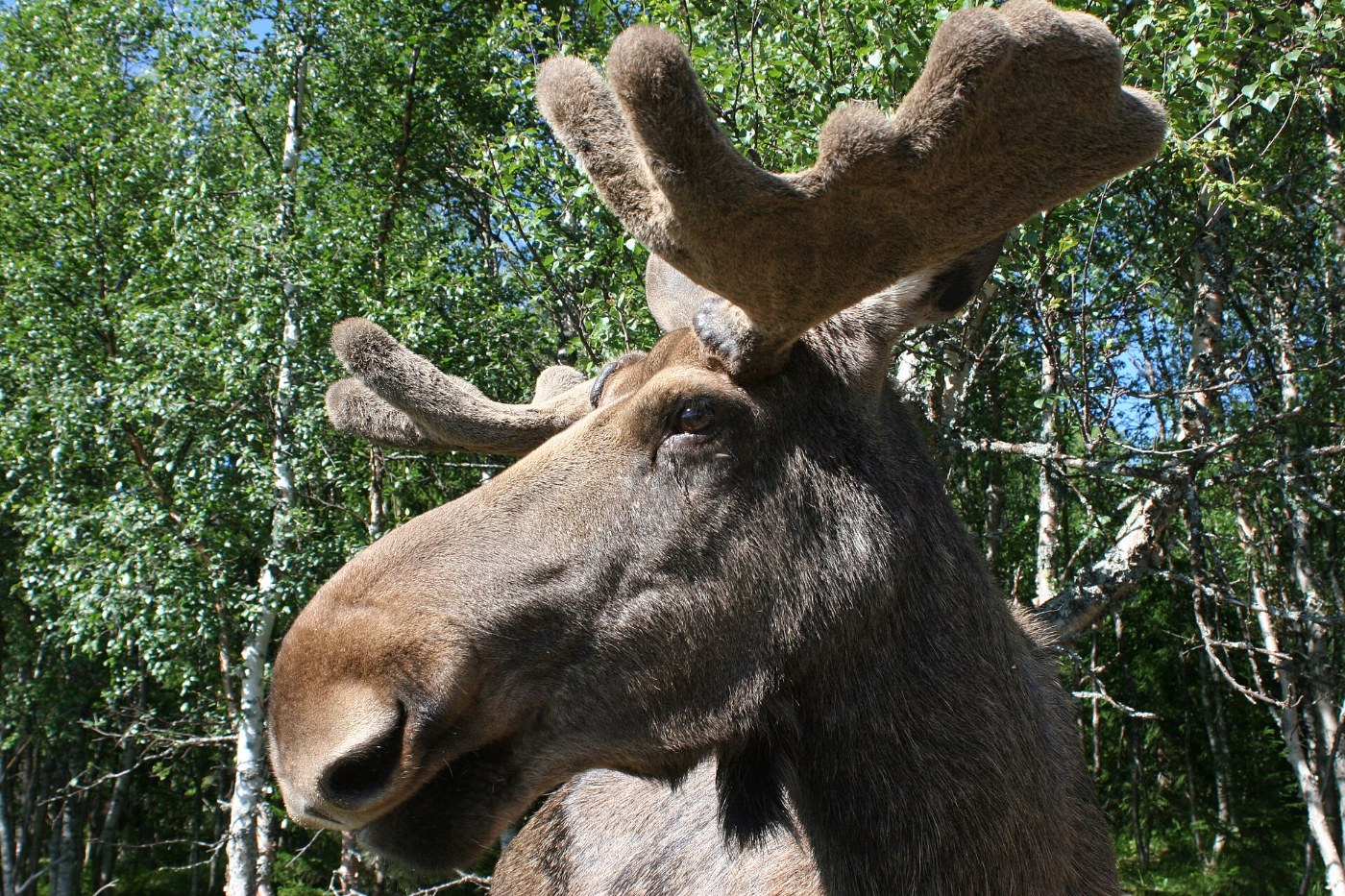
The largest deer in the world, and unmistakable: a high shoulder, long legs, a heavy overhanging upper lip and, on the bull, broad palmate antlers. Het Flevo-landschap gives a shoulder height of up to 2.20 m and 320 to 800 kg for the bull, and up to 1.70 m and 275 to 375 kg for the cow. The journal Zoogdier is broader and lower: 200 to 550 kg and a shoulder height of up to 2 metres. Those two sources contradict each other, so we give both. Only the bull carries antlers: they grow in spring and are shed between December and March.
What can you confuse an elk / Moose with?
Looks like: Red deer, Fallow deer
- Red deer: the largest wild deer in the Netherlands, but far lower on the leg, with branched antlers instead of palmate ones and without the overhanging upper lip.
- Fallow deer: smaller, spotted in summer, with palmate antlers that do resemble the elk's but are much smaller.
- Reindeer: does not occur in the Netherlands; both sexes have antlers, the elk only the bull.
- In practice confusion is unlikely: an adult elk is almost twice as tall as a Fallow deer.
Where do you see this species in the Netherlands?
Only in Natuurpark Lelystad, in a fenced enclosure. The elk does not occur in the wild in the Netherlands. The last evidence of wild elk here is a Drenthe hunting licence from 1025; the only dated Dutch animal is a subfossil skeleton from the Bornse Beek, which died between about 9450 and 9350 BC, found in 1967 and now on show in Museum Natura Docet in Denekamp.
Habitat: In Natuurpark Lelystad a large fenced woodland and grassland enclosure. By nature the elk chooses woodland with a mix of food and cover; Zoogdier gives home ranges of six to sixty square kilometres per animal.
We have not yet recorded any areas for this species with enough evidence behind them, so we name the habitat type instead.
When is the best time?
Green = present · orange = peak period. The bar is generated from our database.
Best period: Present all year, but best seen in autumn, winter and early spring — when the vegetation is bare. The bull carries his antlers from spring until somewhere between December and March, so anyone who wants to see the palmate antlers should go in summer or autumn.
Best time of day: Het Flevo-landschap: "In the autumn, the winter and the early spring the animals are often best seen along the fence around the enclosure." In summer the leaves close in and they disappear behind them. Early in the morning the chance is greatest.
Recent sightings
👁️ Where has this species been seen recently?
Check the current sightings on Waarneming.nl. A useful addition to our own verified information.
How to improve your chances
- Keep the wind in your face. Most mammals will smell you long before they see you.
- Arrive before sunrise and then stay put. Sitting still beats walking about.
- Wear muted colours, skip the scent, and put your phone on silent.
- Be patient. Expect to come back more than once before it works.
🎒 What you need for this
Binoculars and a telephoto lens from 200 mm. You photograph from a path alongside a fence, so you need distance.
Photography
The fence is your biggest problem. Put your lens as close against it as you can and use a wide aperture (f/2.8 to f/4): at close range the mesh then disappears from the frame completely. Aim at the head with the overhanging upper lip — that is what makes an elk an elk. Avoid the middle of the day: the enclosure lies largely in the shade of woodland.
🌿 Watching responsibly
Keep your distance, stay on the paths, and never lure animals with food or sound. Leave as soon as an animal becomes uneasy.
Status: Verified · Last checked: 2026-10-28
More photos