Where to see the Galloway cattle in the Netherlands
Easy 🐄 Mammal (large grazer)
Where and when do you see Galloway cattle? This species is easy to see, all year round.
How do you recognise Galloway cattle?
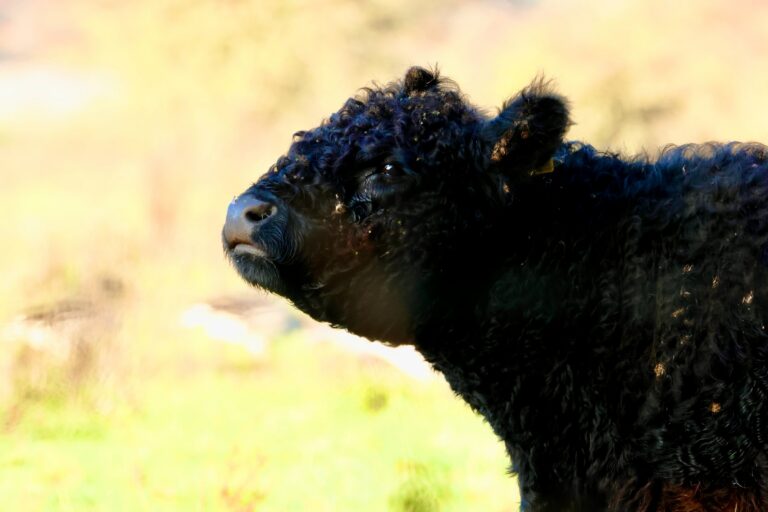
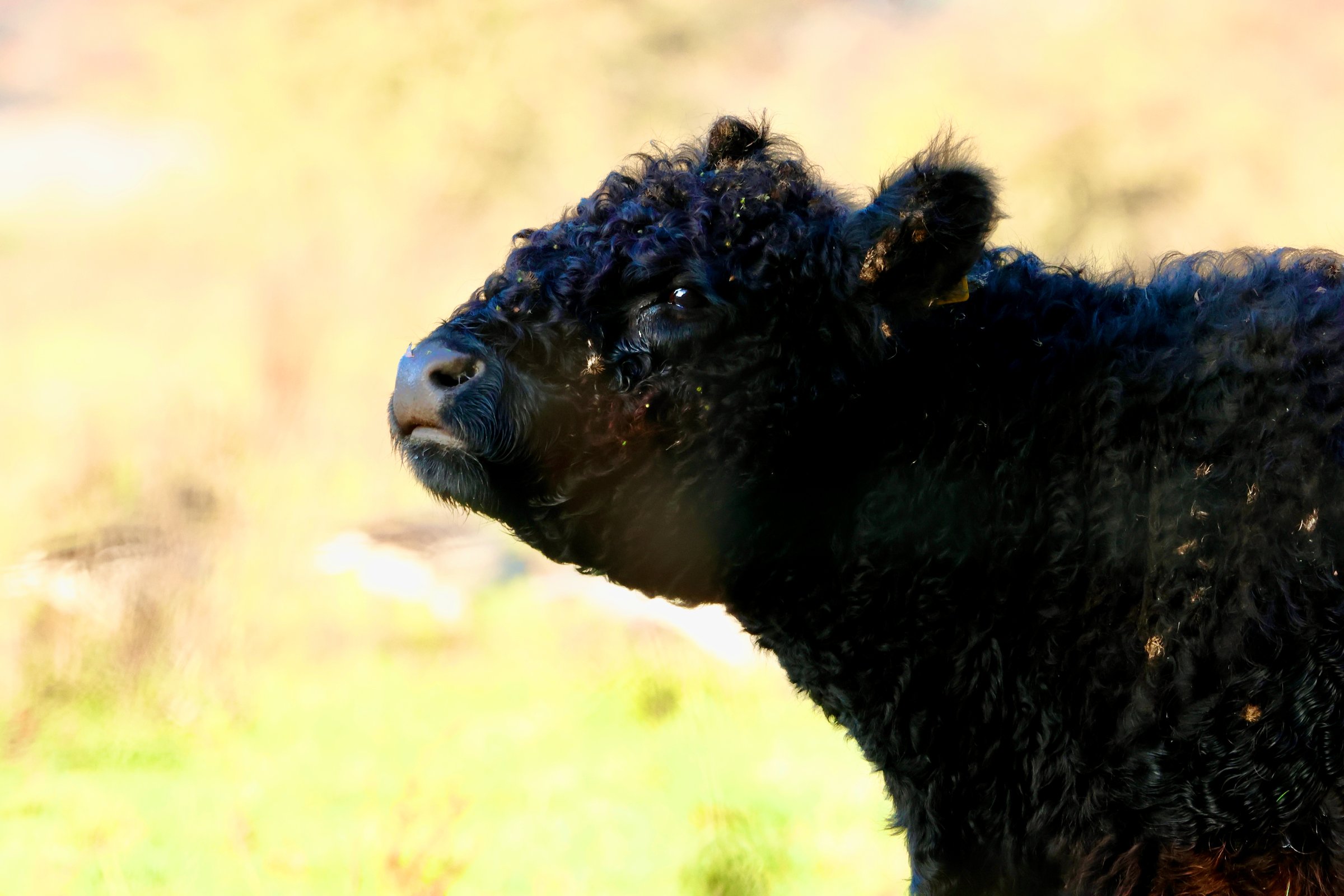
A heavily built, short-legged breed of cattle without horns — that last point is the quickest feature, because the breed is naturally polled. The coat is thick and double: a wavy to curly outer layer over a woolly undercoat, which makes the animal look shaggy, especially in winter. Besides that, a broad head and shoulders and strikingly hairy ears. Usually black, sometimes brown or whitish. Cows weigh 450 to 600 kilos; bulls about 800 kilos and sometimes more than 1,000. The breed comes from the Galloway region in the south-west of Scotland.
What can you confuse Galloway cattle with?
Looks like: Heck cattle, Highland cattle, Sayaguesa cattle, European bison
- Heck cattle: also dark and heavy, but Heck cattle do have horns — curved forwards and upwards — and a strikingly pale ring around the muzzle.
- Highland cattle: long-haired and usually reddish brown, with wide-spreading horns and a fringe over the eyes; a Galloway is polled and usually black.
- Ordinary cattle: a plain black cow in a nature reserve is often just a cow; watch for the short legs, the broad head and the thick curly coat of the Galloway.
- European bison: a genuinely wild species with a high shoulder hump, short curved horns and a heavy forequarter.
Where do you see this species in the Netherlands?
A breed of cattle that is used in the Netherlands as a grazer in nature reserves, not a wild species. The best documented site is De Blauwe Kamer near Rhenen: Utrechts Landschap writes that herds of half-wild Galloways and Konik horses roam free there, and Vroege Vogels mentioned about sixty Galloways there in October 2022 alongside as many Konik horses. Galloways are used as grazers elsewhere in the Netherlands as well — Het Limburgs Landschap, for instance, uses them — but as of 4 November 2026 we found no current, verifiable overview of all the sites. We therefore name only areas we have been able to check.
📍 Blauwe Kamer
Good chance verifiedThese links come straight from our database, with the chance, the source and the evidence level for each area.
When is the best time?
Green = present · orange = peak period. The bar is generated from our database.
Best period: Present all year. In spring and early summer the calves make the herd more conspicuous; in autumn the animals are covered in burrs, which they spread through the area that way.
Best time of day: By day, all year. The animals stay outdoors in winter too and can look after themselves perfectly well.
Recent sightings
👁️ Where has this species been seen recently?
Check the current sightings on Waarneming.nl. A useful addition to our own verified information.
How to improve your chances
- Keep the wind in your face. Most mammals will smell you long before they see you.
- Arrive before sunrise and then stay put. Sitting still beats walking about.
- Wear muted colours, skip the scent, and put your phone on silent.
- Be patient. Expect to come back more than once before it works.
🎒 What you need for this
Binoculars or a telephoto lens; keep at least 25 metres away
Photography
The absence of horns and the thick, curly coat are the two features that tell a Galloway from other black cattle. Those show best from the side or obliquely from the front, in side light, with a telephoto lens from the path. Never stand between a mother and her calf.
🌿 Watching responsibly
Keep your distance, stay on the paths, and never lure animals with food or sound. Leave as soon as an animal becomes uneasy.
Status: Verified · Last checked: 2026-11-04
More photos