
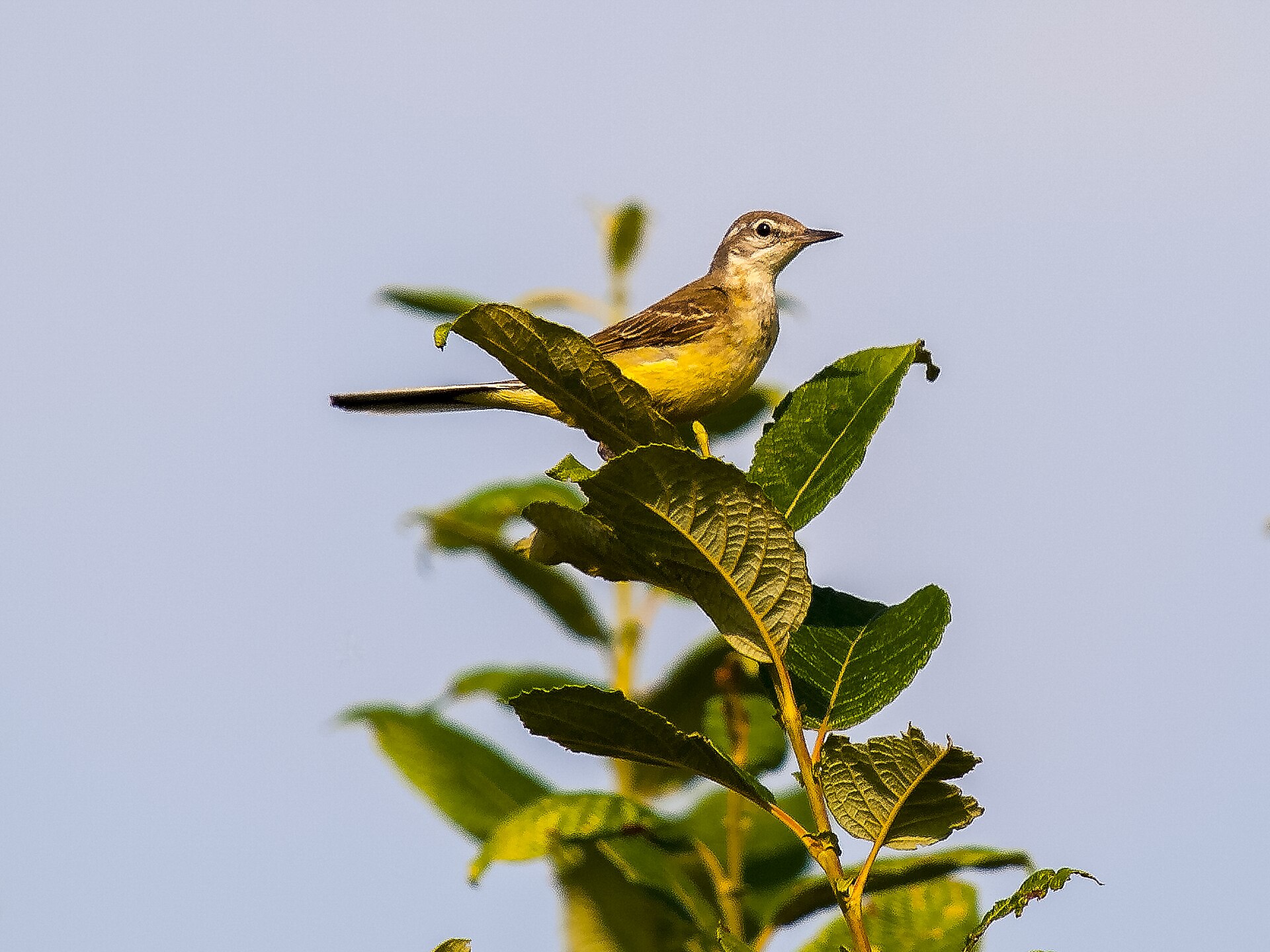
Where to see the Yellow Wagtail (British) in the Netherlands
Rare 🦅 Bird
Where and when do you see a Yellow Wagtail (British)? This species is rarely seen, from April to September.
How do you recognise a Yellow Wagtail (British)?
Length 16.5 to 17 cm. Like the Western Yellow Wagtail, but the male has an entirely yellow-green head with a yellow eyebrow stripe, where our own form has a blue-grey head with a white eyebrow stripe. That makes the whole bird look plainer and yellower.
Where do you see this species in the Netherlands?
Mainly on passage along the coast and in the west; breeding records do occur, particularly in Zeeland and the Delta area.
Habitat: Open farmland: arable fields, meadows and shallow flooded areas where Western Yellow Wagtails forage.
We have not yet recorded any areas for this species with enough evidence behind them, so we name the habitat type instead.
When is the best time?
Green = present · orange = peak period. The bar is generated from our database.
Best period: On passage in April to May and August to September.
Best time of day: Morning.
Recent sightings
👁️ Where has this species been seen recently?
Check the current sightings on Waarneming.nl. A useful addition to our own verified information.
How to improve your chances
- Learn the calls first. You will hear most birds before you see them.
- Go in the first hour after sunrise, when the song is at its peak and the wind is still down.
- Use a hide or natural cover. Sitting still gets you more than walking closer.
- Keep the sun behind you. Against the light you see a silhouette and no colour.
🎒 What you need for this
Binoculars
Photography
In spring, find a flock of Western Yellow Wagtails on a field and work through them one by one; the yellow-green head leaps out once you have seen it. Leave the females — they cannot be assigned
🌿 Watching responsibly
Keep your distance, stay on the paths, and never lure animals with food or sound. Leave as soon as an animal becomes uneasy.
Status: Verified · Last checked: 2026-08-07