
Where to see the river lamprey in the Netherlands
Rare 🐟 Fish Sensitive species · R4
🛡️ No exact locations, on purpose
This is a sensitive species. We deliberately give no roosting or wintering gathering places. Why we do that.
Where and when do you see a river lamprey? This species is rarely seen, all year round.
How do you recognise a river lamprey?
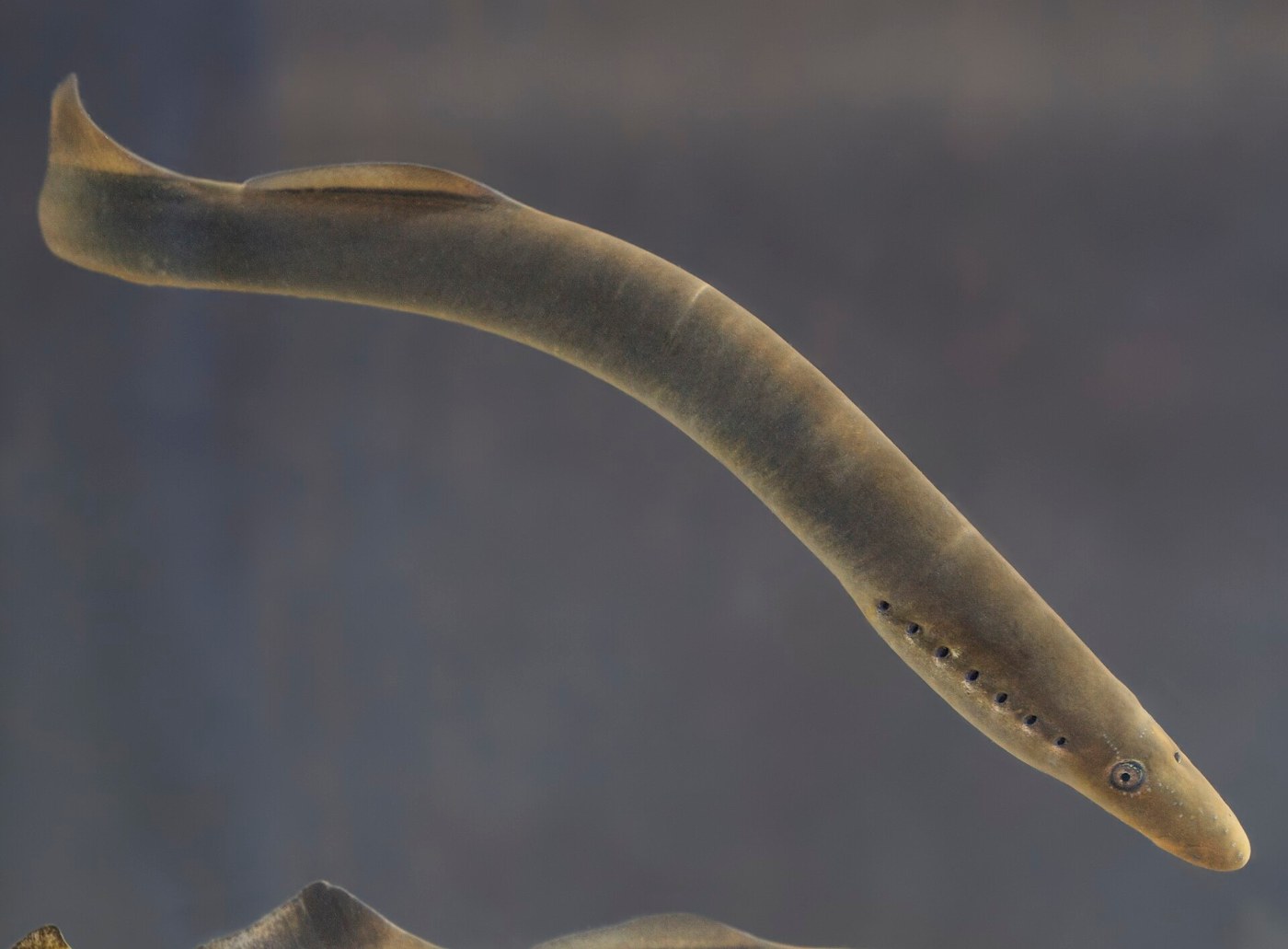
Cylindrical and elongated with silver flanks, a round sucking disc with five to seven sharp teeth and seven round gill openings behind the eye. Adult river lampreys reach a length of 30 to 50 centimetres. The river lamprey looks much like the brook lamprey but appears less grey.
What can you confuse a river lamprey with?
Looks like: European brook lamprey, Sea lamprey
- Brook lamprey: reaches at most 20 cm and has blunt rather than sharp teeth — but newly metamorphosed river lampreys also have blunt teeth. And: the larvae of brook lamprey and river lamprey cannot be told apart in the field.
- Sea lamprey: larger than 60 cm, with more than seven teeth and a marbled pattern of blotches.
- European eel: a comparable body shape, but without a sucking disc and without round gill openings.
Where do you see this species in the Netherlands?
The species is currently fairly common again, but must formerly have occurred in far greater numbers. Since 1993 there has been a structural increase, strongest in the Gelderse Poort. Breeding takes place at only a few sites; we do not name those spawning sites.
Habitat: The larvae live buried in beds of silt and detritus in streams and rivers; the adults live at sea.
We have not yet recorded any areas for this species with enough evidence behind them, so we name the habitat type instead.
When is the best time?
Green = present · orange = peak period. The bar is generated from our database.
Best period: It runs upriver in autumn and winter, sometimes over hundreds of kilometres; spawning falls on sunny days in March to May. The main part of the run is from November to April.
Best time of day: On sunny days in the spawning season, in shallow flowing water.
Recent sightings
👁️ Where has this species been seen recently?
Check the current sightings on Waarneming.nl. A useful addition to our own verified information.
Current sightings on Waarneming.nl →
Note: for sensitive species the source already blurs or withholds sightings. We do not reproduce exact locations.
How to improve your chances
- Look for clear, shallow water and watch from a bridge, a jetty or a high bank.
- Polarising sunglasses take the reflection off the surface and show you what is swimming underneath.
- Stay low and move slowly. Fish are very good at seeing movement above the water.
- Early morning gives the calmest water and the best visibility.
🎒 What you need for this
Polarising glasses; watching from the bank
Photography
Photograph the oral disc and count the teeth: five to seven on the river lamprey, more than seven on the sea lamprey. With larvae there is no point — in the field they cannot be told from brook lamprey larvae.
🌿 Watching responsibly
Keep your distance, stay on the paths, and never lure animals with food or sound. Leave as soon as an animal becomes uneasy. This is a sensitive species. We deliberately give no roosting or wintering gathering places.
Status: Verified · Last checked: 2026-10-28