
Where to see the raccoon dog in the Netherlands
Rare 🦌 Mammal (land)
Where and when do you see a raccoon dog? This species is rarely seen, all year round.
How do you recognise a raccoon dog?
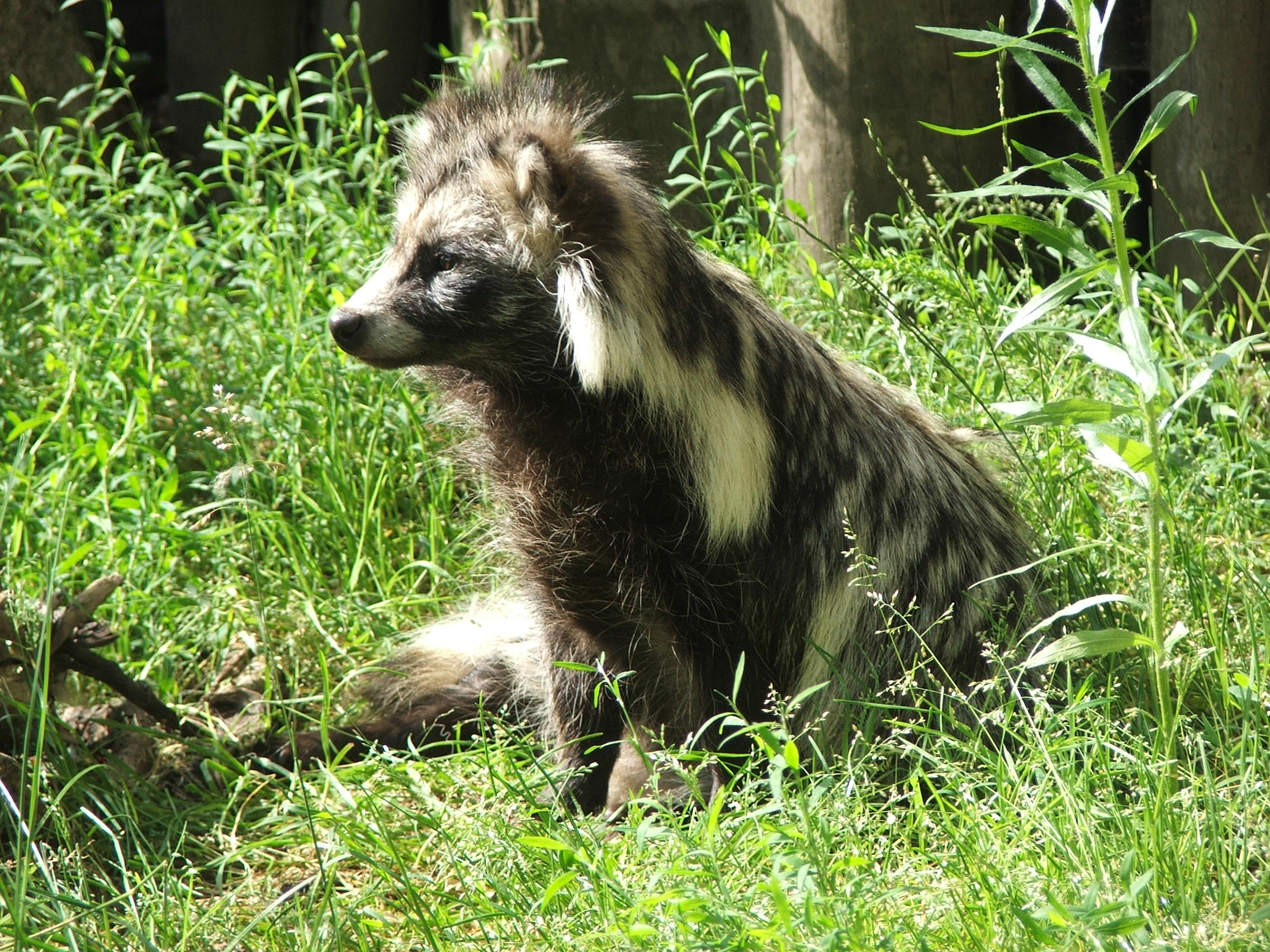
Compact dog-like animal with short legs. Its hallmarks are the black-and-white pattern on the broad, whiskered head and the beige-brown, long-haired coat with black patches on the back and flanks. The tail is dark and plain, without rings. Head and body 50 to 72 centimetres, tail 12 to 22 centimetres, about 5 kilograms in summer and 9 kilograms in autumn.
What tracks does a raccoon dog leave?
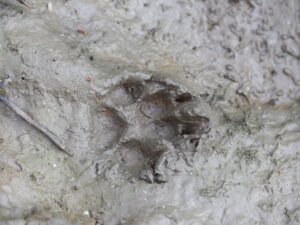
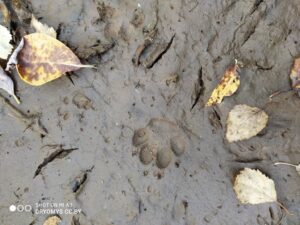
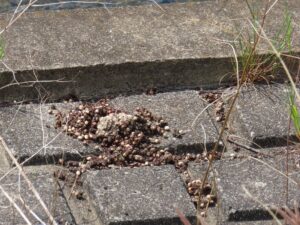
Track: 4 to 5 cm wide and fairly round, with four toes splayed around the metatarsal pad; the claws are blunt and always leave a mark. Trail: zigzagging, and not as tightly in line as that of a red fox or a dog. Scat: 1 to 2 cm thick, sometimes 3, and 4 to 6 cm long, built up from two or three segments, usually black with half-digested plant remains, sometimes jelly-like. Latrines: along trails and specifically not on raised spots, sometimes in small hollows; a home range can have up to ten latrines in use at once.
Where do you see this species in the Netherlands?
First recorded in 1981. By far most reports so far come from Friesland, Drenthe, Groningen, parts of Overijssel and Flevoland; further spread across the whole of the Netherlands is expected.
Habitat: Damp grassland and deciduous and mixed woodland with dense undergrowth. It avoids conifer forest, but it also turns up in built-up areas, where it looks for food in gardens.
This is a common, widespread species: you can come across it in far more places than the areas listed below. Treat that list as a starting point rather than a full survey.
Habitat: Damp grassland and deciduous and mixed woodland with dense undergrowth. It avoids conifer forest, but it also turns up in built-up areas, where it looks for food in gardens.
We have not yet recorded any areas for this species with enough evidence behind them, so we name the habitat type instead.
When is the best time?
Green = present · orange = peak period. The bar is generated from our database.
Best period: All year; from December into April it rests through the winter, broken by short outings in mild weather.
Best time of day: Night.
Recent sightings
👁️ Where has this species been seen recently?
Check the current sightings on Waarneming.nl. A useful addition to our own verified information.
How to improve your chances
- Keep the wind in your face. Most mammals will smell you long before they see you.
- Arrive before sunrise and then stay put. Sitting still beats walking about.
- Wear muted colours, skip the scent, and put your phone on silent.
- Be patient. Expect to come back more than once before it works.
🎒 What you need for this
Trail camera. Watch for latrines: raccoon dogs set up fixed dunging sites that every animal in the area uses.
Photography
Look for latrines along woodland edges and in damp grassland — fixed dunging sites used by several animals. A trail camera aimed at one of those yields far more than searching at random. Report your sighting with a photo.
🌿 Watching responsibly
Keep your distance, stay on the paths, and never lure animals with food or sound. Leave as soon as an animal becomes uneasy.
Status: Verified · Last checked: 2026-08-08