
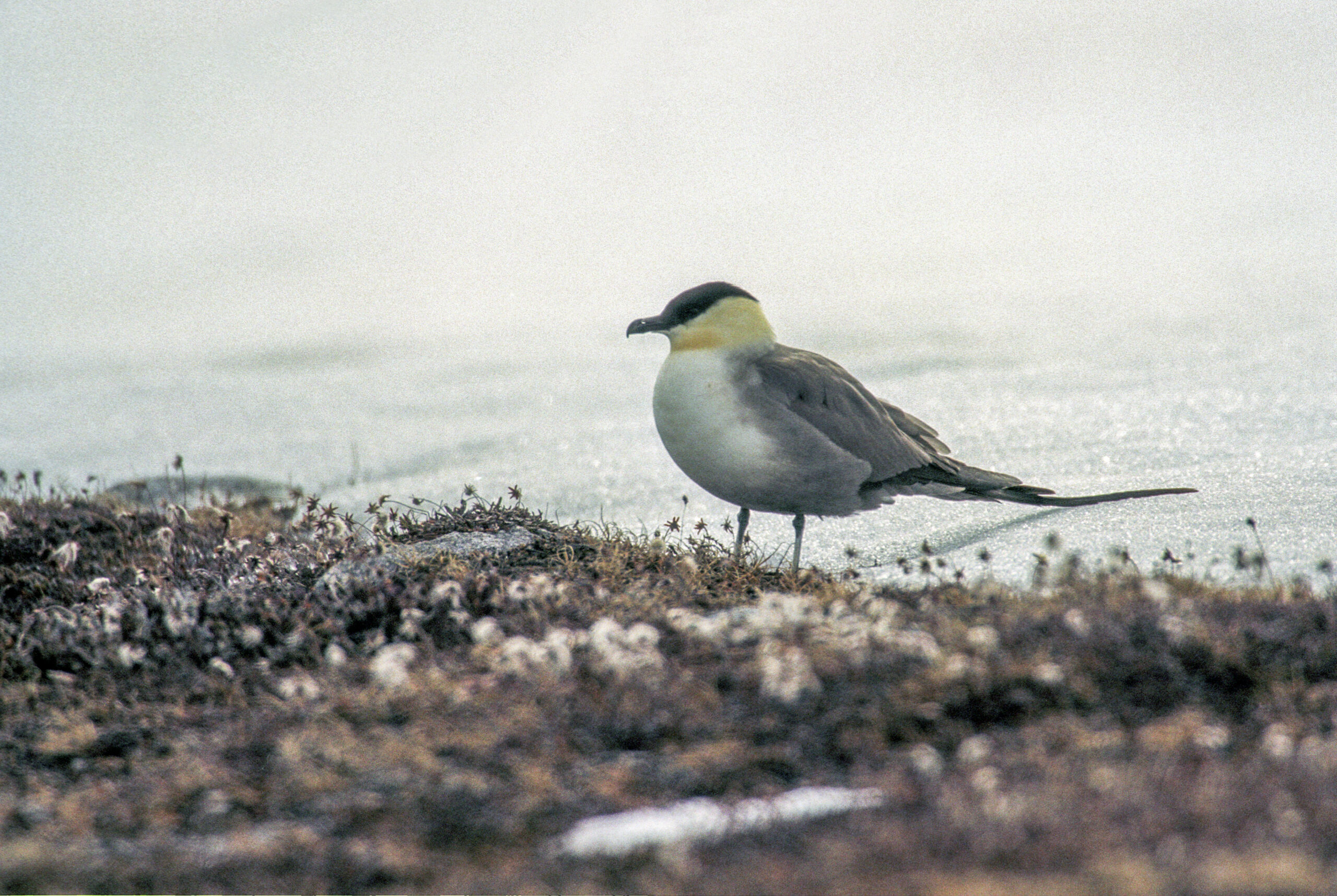
Where to see the Long-tailed Skua in the Netherlands
Very rare 🦅 Bird
Where and when do you see a Long-tailed Skua? This species is very rarely seen, from August to October.
How do you recognise a Long-tailed Skua?
The smallest and most elegant skua, 25 to 41 cm including the very long tail streamers, with a wingspan of 105 to 112 cm. Slenderly built, with narrow wings and a light, tern-like flight. Important: unlike the other skuas it has no white patches on the underwing. The upperparts look a colder grey with pale feather edges; the breast droops slightly and projects forwards. Young birds are barred on the underparts.
Where do you see this species in the Netherlands?
A rare passage migrant: 1 to 100 birds a year. Not a breeding bird. Of the four skuas this is the one you still have the best chance of coming across inland here. Its migration covers about 10,000 kilometres, from the arctic tundra to waters around Antarctica and South Africa.
Habitat: It breeds above the tree line on tundra and bog-like heath; outside that, the open ocean. In the breeding season it lives mainly on lemmings; all year round also on fish, birds' eggs, insects and berries. At sea it regularly steals food from other seabirds, especially from terns.
We have not yet recorded any areas for this species with enough evidence behind them, so we name the habitat type instead.
When is the best time?
Green = present · orange = peak period. The bar is generated from our database.
Best period: The birds leave the breeding area in August and pass the Netherlands mainly in September; by late October they are in the wintering areas.
Best time of day: During seawatching in September, in an onshore wind.
Recent sightings
👁️ Where has this species been seen recently?
Check the current sightings on Waarneming.nl. A useful addition to our own verified information.
How to improve your chances
- Learn the calls first. You will hear most birds before you see them.
- Go in the first hour after sunrise, when the song is at its peak and the wind is still down.
- Use a hide or natural cover. Sitting still gets you more than walking closer.
- Keep the sun behind you. Against the light you see a silhouette and no colour.
🎒 What you need for this
A telescope. The distinction from the Arctic Skua rests on subtle differences in wing shape, colour tone and the absence of white underwing patches.
Photography
Photograph from a seawatching point and try to get the underwing in frame: the absence of white primary patches is the feature that closes the identification. While following a flock of terns it sometimes appears out of nowhere.
🌿 Watching responsibly
Keep your distance, stay on the paths, and never lure animals with food or sound. Leave as soon as an animal becomes uneasy.
Status: Verified · Last checked: 2026-08-08