
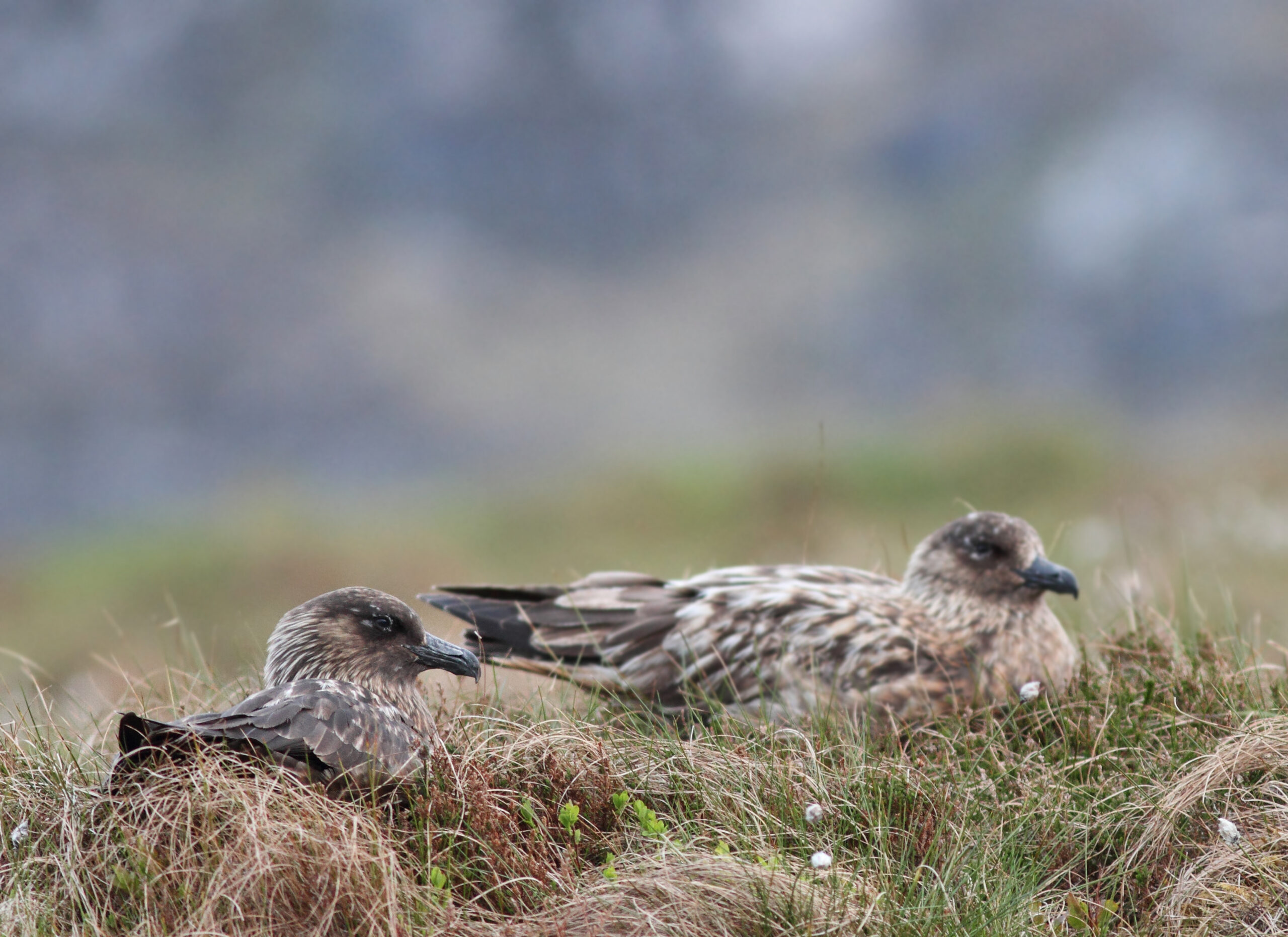
Where to see the Great Skua in the Netherlands
With luck 🦅 Bird
Where and when do you see a Great Skua? With some luck you can see this species, from July to February.
How do you recognise a Great Skua?
A hefty, dark seabird of 53 to 58 cm with a wingspan of 132 to 140 cm. The silhouette is characteristic: a heavy body, a projecting head and a strikingly short tail. The best feature is the large white patches on both the upper and the underwing, which flash with every beat. Young birds are an even dark brown, adults a paler brown with black speckling. The heavy bill ends in a sharp hook.
Where do you see this species in the Netherlands?
A passage migrant and winter visitor on the North Sea. In the winters of 2016/17 to 2020/21, 85 to 290 birds were present here; the number of passage migrants varies from 20 to 1,400 a year. The species does not breed in the Netherlands, but does in Iceland, the Faroes and in Scotland.
Habitat: The open sea, where it likes to hang around fishing boats. It forages opportunistically: sprat and other fish, fish waste behind trawlers, and prey it takes from other seabirds. It also hunts auks and kittiwakes actively and can even attack and kill large, healthy seabirds.
We have not yet recorded any areas for this species with enough evidence behind them, so we name the habitat type instead.
When is the best time?
Green = present · orange = peak period. The bar is generated from our database.
Best period: Present along the coast from July through February, peaking from September to November.
Best time of day: In a strong wind from the west or north-west, when seabirds are pushed towards the coast.
Recent sightings
👁️ Where has this species been seen recently?
Check the current sightings on Waarneming.nl. A useful addition to our own verified information.
How to improve your chances
- Learn the calls first. You will hear most birds before you see them.
- Go in the first hour after sunrise, when the song is at its peak and the wind is still down.
- Use a hide or natural cover. Sitting still gets you more than walking closer.
- Keep the sun behind you. Against the light you see a silhouette and no colour.
🎒 What you need for this
A telescope and a seawatching point with shelter. A windproof chair makes hours of staring a good deal more bearable.
Photography
The best chance of a good photo is during autumn gales from a pier or groyne. Use 1/2000 or shorter and photograph low over the waves, so that the white wing patches stand out against the dark water.
🌿 Watching responsibly
Keep your distance, stay on the paths, and never lure animals with food or sound. Leave as soon as an animal becomes uneasy.
Status: Verified · Last checked: 2026-08-08