Where to see the Great Northern Loon in the Netherlands
Very rare 🦅 Bird
Where and when do you see a Great Northern Loon? This species is very rarely seen, from October to April.
How do you recognise a Great Northern Loon?
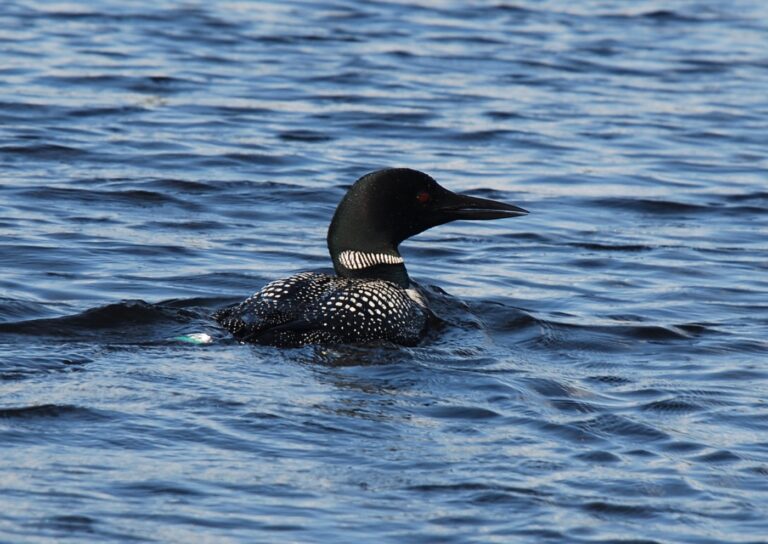
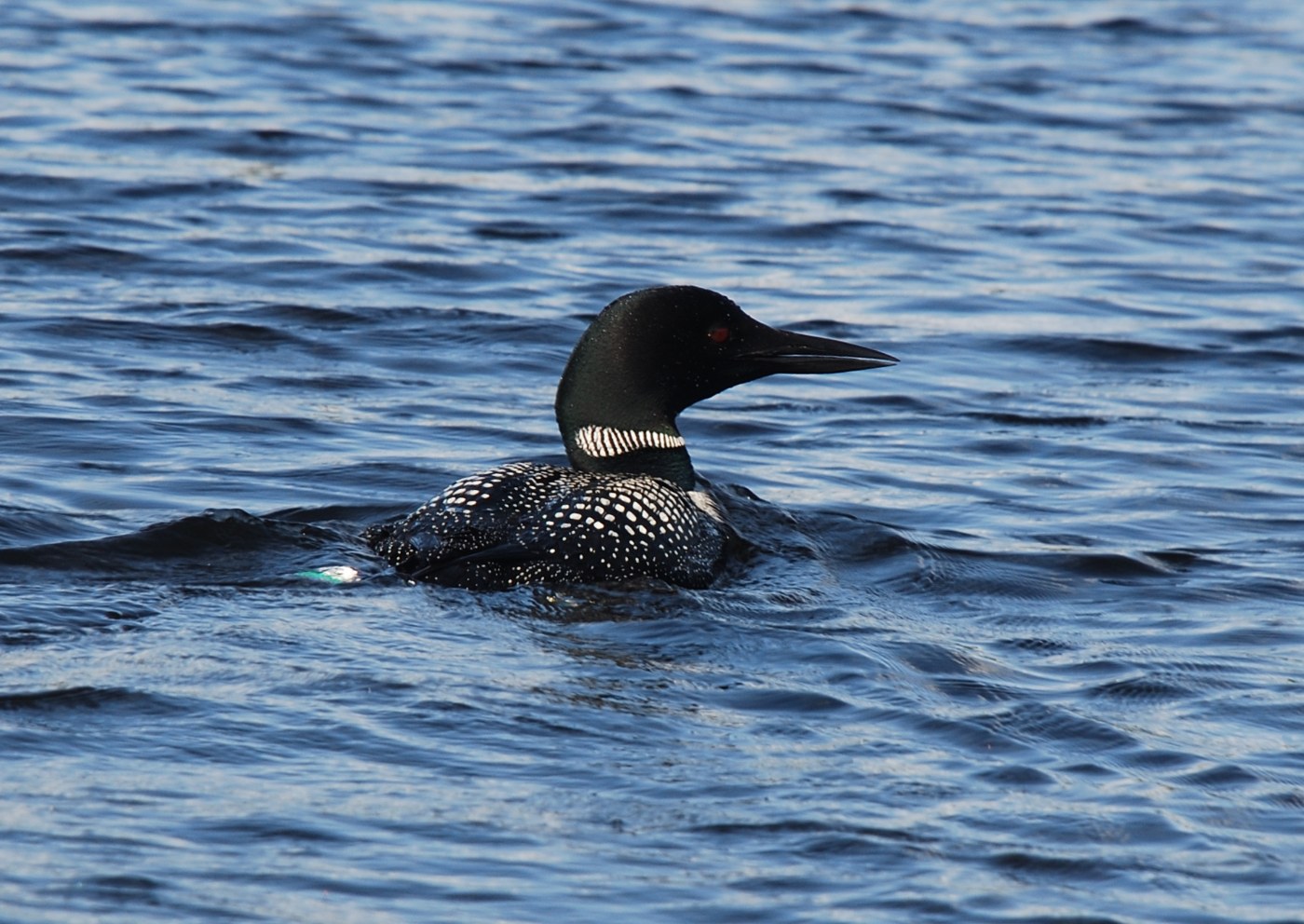
A large, heavily built diver with a heavy, thick bill and a steep forehead, considerably bigger than the Red-throated and Black-throated Loon. In flight the large, far-projecting feet stand out, often with the toes spread. In winter plumage: the bill is heavy, greyish white with a dark tip and held horizontally; a pale eye-ring; a thick neck with, on the side of the neck, a white notch above a dark ring — a horizontal boundary between dark and light. Length 69 to 91 cm, wingspan 127 to 147 cm.
What can you confuse a Great Northern Loon with?
Looks like: Black-throated Loon, Red-throated Diver
- Black-throated Loon: more lightly built, a thinner bill, and on the side of the neck a vertical division between dark and light instead of the horizontal notch-above-ring of the Great Northern Loon.
- Red-throated Loon: smaller, the bill upturned, a flat forehead, a thin drooping neck.
- Note how hard this is: De Gierzwaluw describes a concrete case in which photos were first assessed as Black-throated Loon and seabird experts eventually settled unanimously on Great Northern Loon.
Where do you see this species in the Netherlands?
Mainly along the North Sea coast and on the IJsselmeer, occasionally on large inland waters. Not a breeding bird in the Netherlands.
Habitat: In the Netherlands coastal waters and large open waters. It breeds by deep lakes in forests and on the tundra.
We have not yet recorded any areas for this species with enough evidence behind them, so we name the habitat type instead.
When is the best time?
Green = present · orange = peak period. The bar is generated from our database.
Best period: Late autumn to early spring, with most records from November to March.
Best time of day: When one is reported. A staying Great Northern Loon sometimes remains in the same place for days or weeks and can then be watched at leisure — that is the realistic way to see one.
Recent sightings
👁️ Where has this species been seen recently?
Check the current sightings on Waarneming.nl. A useful addition to our own verified information.
How to improve your chances
- Learn the calls first. You will hear most birds before you see them.
- Go in the first hour after sunrise, when the song is at its peak and the wind is still down.
- Use a hide or natural cover. Sitting still gets you more than walking closer.
- Keep the sun behind you. Against the light you see a silhouette and no colour.
🎒 What you need for this
A telescope. For a staying bird binoculars are sometimes enough.
Photography
With a staying bird: lie low by the water and wait until it swims towards you instead of approaching it. Aim at the side of the neck — the white notch above the dark ring is the difference from the Black-throated Loon and is only sharply visible in side view.
🌿 Watching responsibly
Keep your distance, stay on the paths, and never lure animals with food or sound. Leave as soon as an animal becomes uneasy.
Status: Verified · Last checked: 2026-10-28
More photos