
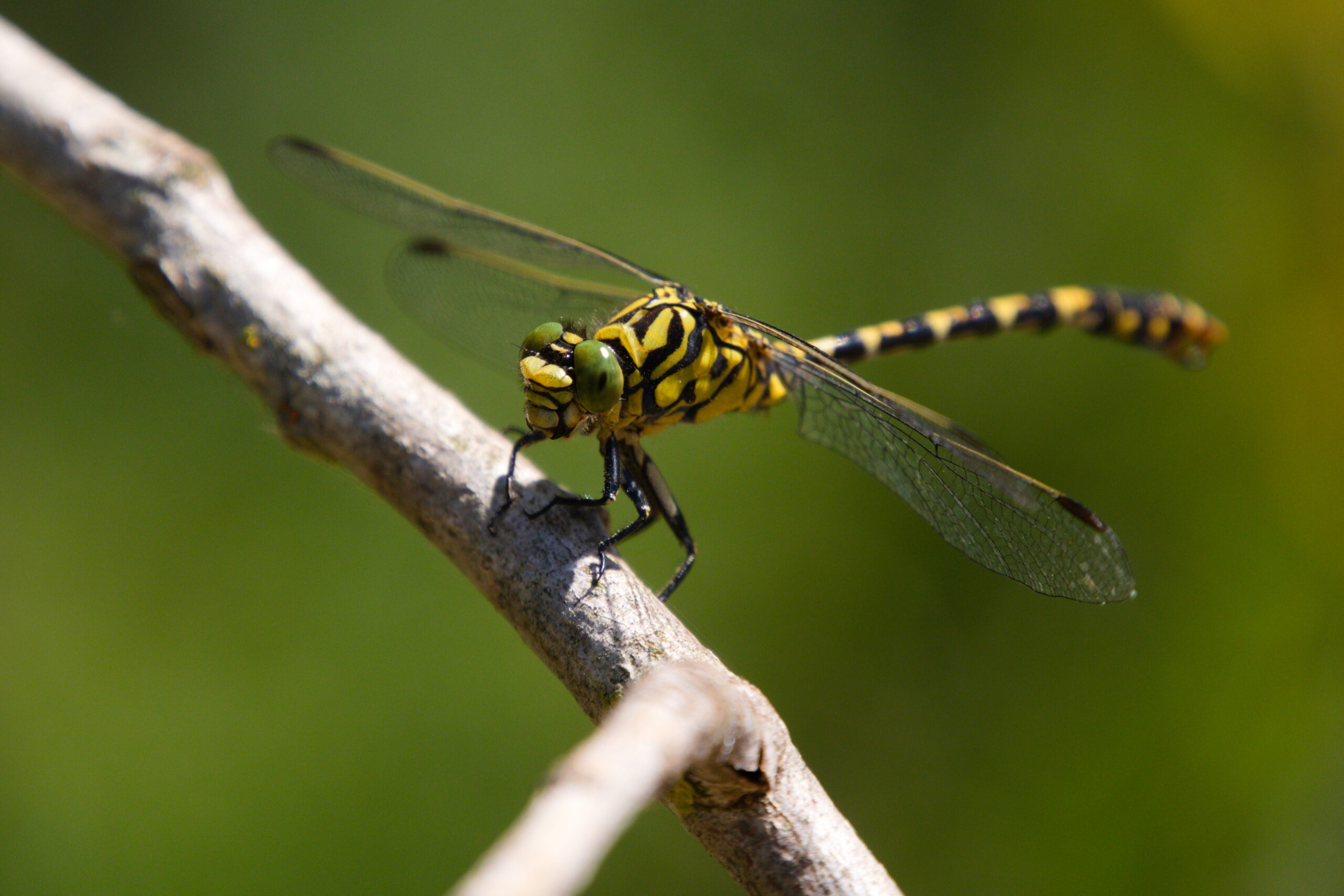
Where to see the Golden-ringed Dragonfly in the Netherlands
Very rare 🪰 Dragonfly Sensitive species · R1
🛡️ No exact locations, on purpose
This is a sensitive species. We deliberately give no exact locations. If an area is named below, that is because the site manager publishes the species there themselves, and the source is given with it. That way we do our bit for the protection of the species. Why we do that.
Where and when do you see a Golden-ringed Dragonfly? This species is very rarely seen, from May to August.
How do you recognise a Golden-ringed Dragonfly?
At 74 to 85 millimetres the largest dragonfly in the Netherlands; females are on average larger than males. The abdomen is black with yellow spots and dashes, the eyes are green and touch at only one point on top of the head. The male has a club-shaped widening on segments 7 to 9, the female a long, clearly visible ovipositor.
Where do you see this species in the Netherlands?
Limburg and the east of Noord-Brabant.
Habitat: Clean, oxygen-rich headwaters of streams, often with plenty of shade: woodland streams and seepage rills. The larva lives for years buried in the sand of the streambed.
When is the best time?
Green = present · orange = peak period. The bar is generated from our database.
Best period: Late May through to late August, peaking from mid-June to late July.
Best time of day: The sunny hours in the middle of the day.
Recent sightings
👁️ Where has this species been seen recently?
Check the current sightings on Waarneming.nl. A useful addition to our own verified information.
Current sightings on Waarneming.nl →
Note: for sensitive species the source already blurs or withholds sightings. We do not reproduce exact locations.
How to improve your chances
- Go on a warm, windless day between about ten and four, when they are active.
- Look for the place rather than the animal: flowery edges for butterflies, banks and open water for dragonflies.
- Move slowly and keep your shadow off the animal. It notices that before it notices you.
- Early in the morning they are still cold and motionless on a leaf. That is when you can get closest.
🎒 What you need for this
Binoculars. Size alone is enough to name it: no other Dutch dragonfly reaches eight centimetres.
Photography
Stay out of the stream. The larvae live in the bed for years, and wading through a spring-fed brook once destroys several year classes at the same time. Photograph from the path with a telephoto.
🌿 Watching responsibly
Keep your distance, stay on the paths, and never lure animals with food or sound. Leave as soon as an animal becomes uneasy. This is a sensitive species. We deliberately give no exact locations. If an area is named below, that is because the site manager publishes the species there themselves, and the source is given with it. That way we do our bit for the protection of the species.
Status: Verified · Last checked: 2026-08-07