
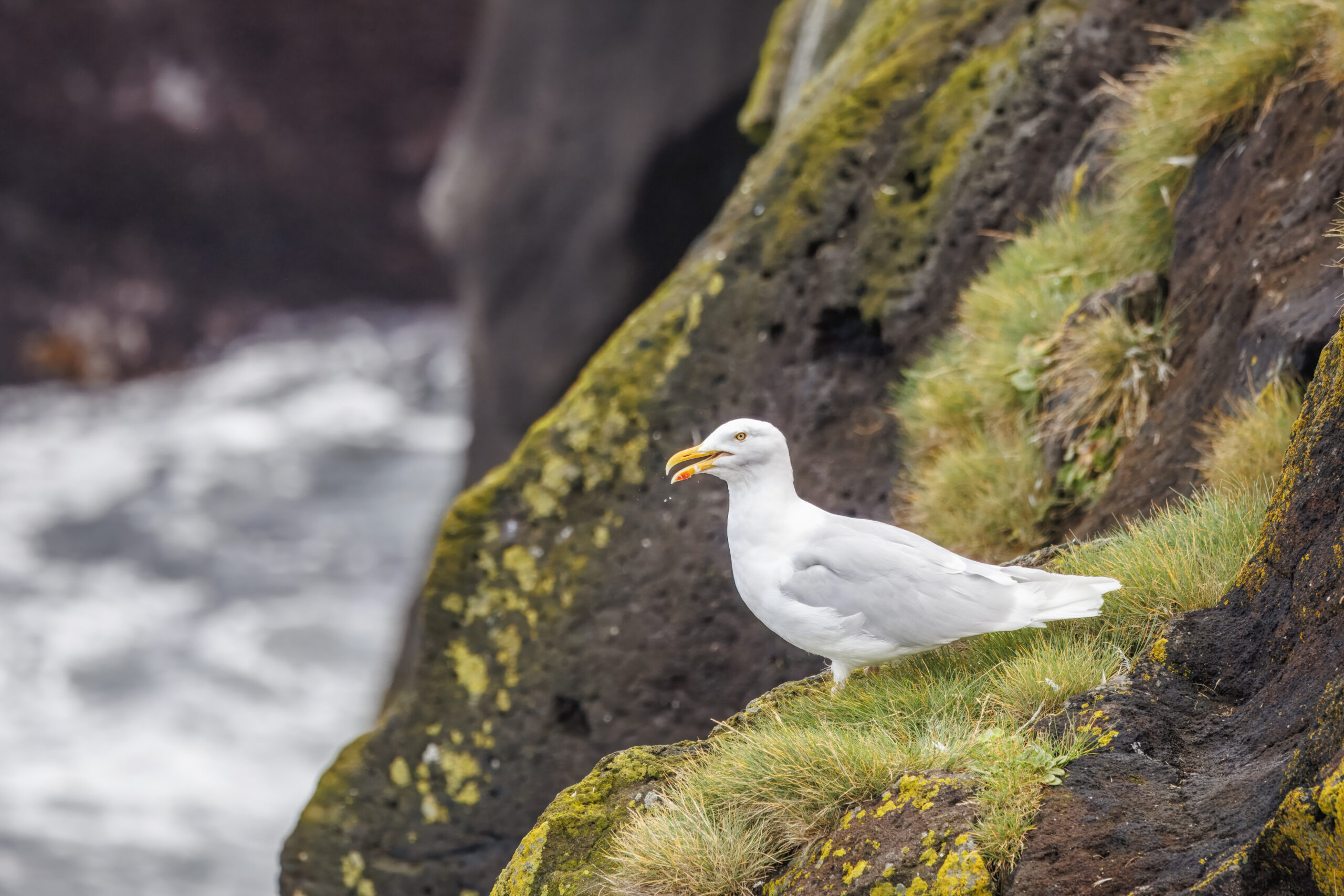
Where to see the Glaucous Gull in the Netherlands
Very rare 🦅 Bird
Where and when do you see a Glaucous Gull? This species is very rarely seen, from November to April.
How do you recognise a Glaucous Gull?
A large gull of 64 to 77 cm with a wingspan of 132 to 142 cm, about the size of a Great Black-backed Gull. It too has white wing tips with no black. The mantle is slightly paler than that of the European Herring Gull; in winter plumage head and neck are heavily streaked. The main difference from the Iceland Gull is in the bill: here it is pink with a black tip, while the Iceland Gull has an all-dark bill. The call resembles that of the herring gull but is shorter, more staccato and sometimes coarser.
Where do you see this species in the Netherlands?
A winter visitor in extremely small numbers: 5 to 10 wintering birds in the period 2012/13 to 2014/15 and 1 to 100 passage migrants a year. It breeds on arctic cliffs and islands and shifts south with the ice edge after the breeding season.
Habitat: In the Netherlands almost exclusively on the coast: harbours, piers and groynes. An omnivore with a broad diet of animal material: eggs, fish, young birds, shellfish and carrion.
We have not yet recorded any areas for this species with enough evidence behind them, so we name the habitat type instead.
When is the best time?
Green = present · orange = peak period. The bar is generated from our database.
Best period: A winter visitor from November through April, with most records in midwinter.
Best time of day: By day in a fishing harbour, when gulls come in to a catch or to waste.
Recent sightings
👁️ Where has this species been seen recently?
Check the current sightings on Waarneming.nl. A useful addition to our own verified information.
How to improve your chances
- Learn the calls first. You will hear most birds before you see them.
- Go in the first hour after sunrise, when the song is at its peak and the wind is still down.
- Use a hide or natural cover. Sitting still gets you more than walking closer.
- Keep the sun behind you. Against the light you see a silhouette and no colour.
🎒 What you need for this
A telescope. Size and bill colour can only be judged if you can see the bird next to familiar species.
Photography
Photograph in the harbour with the sun behind you and make sure the bill is sharp: the pink bill with a black tip is the identification feature and has to be visible in the frame. A flight over a fishing boat also gives you a size comparison with herring gulls.
🌿 Watching responsibly
Keep your distance, stay on the paths, and never lure animals with food or sound. Leave as soon as an animal becomes uneasy.
Status: Verified · Last checked: 2026-08-08