
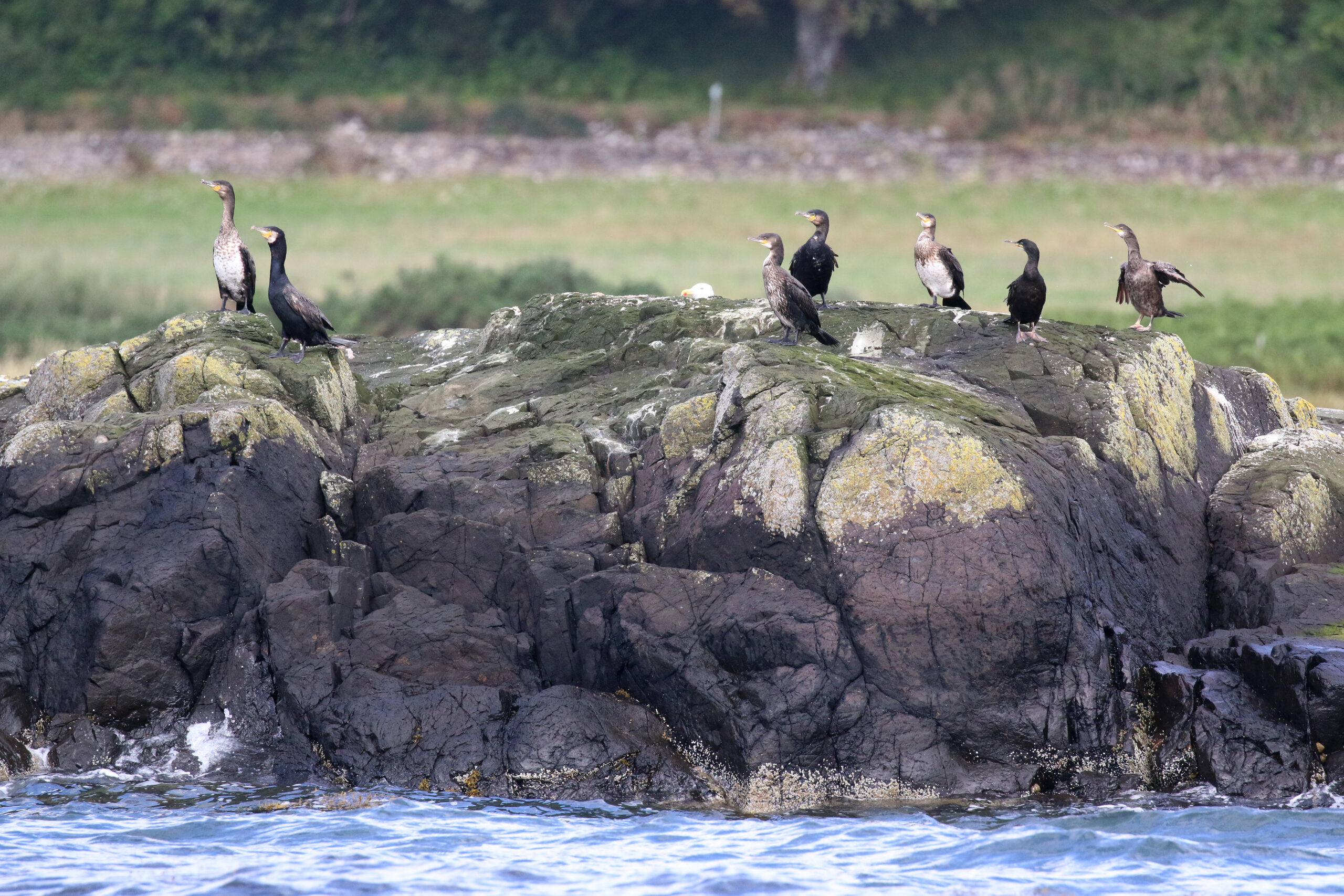
Where to see the European Shag in the Netherlands
Rare 🦅 Bird
Where and when do you see a European Shag? This species is rarely seen, from August to April.
How do you recognise a European Shag?
A cormorant relative of 65 to 80 cm with a wingspan of 90 to 105 cm, about twenty per cent smaller and clearly slimmer than the Great Cormorant. The neck and bill are thinner, the head smaller and rounder and the forehead steeper. The plumage is a glossy olive green, but looks black at a distance. There is more feathering on chin and throat than on the cormorant. Early in the breeding season breeding birds carry a forward-curling crest on the forehead.
What does a European Shag sound like?
Recording: Stanislas Wroza, CC BY-SA 4.0, via Wikimedia Commons
Where do you see this species in the Netherlands?
A scarce winter visitor with 15 to 30 birds in the period 2012 to 2015. The first confirmed Dutch breeding record took place in 2013, on stone revetments at Neeltje Jans. The European population numbers about 90,000 breeding pairs, with its stronghold in the United Kingdom.
Habitat: Rocky coastlines bordering deep water. Unlike the cormorant it stays on the coast outside the breeding season as well, instead of moving out onto open water; it always needs places to dry and preen. It usually hunts fish alone, especially sandeels and species from the herring and cod families, diving for them from the water surface.
We have not yet recorded any areas for this species with enough evidence behind them, so we name the habitat type instead.
When is the best time?
Green = present · orange = peak period. The bar is generated from our database.
Best period: Records concentrate from August through April.
Best time of day: By day at low water, when birds sit drying on the stone revetment.
Recent sightings
👁️ Where has this species been seen recently?
Check the current sightings on Waarneming.nl. A useful addition to our own verified information.
How to improve your chances
- Learn the calls first. You will hear most birds before you see them.
- Go in the first hour after sunrise, when the song is at its peak and the wind is still down.
- Use a hide or natural cover. Sitting still gets you more than walking closer.
- Keep the sun behind you. Against the light you see a silhouette and no colour.
🎒 What you need for this
A telescope. At a distance the shag simply looks black; you need magnification to judge the steep head shape and the thin bill.
Photography
Find a stone revetment or pier where birds are drying and photograph from the dyke with the sun behind you: only then do you see the olive green gloss that separates the species from the cormorant. Stay on top of the revetment and do not climb down.
🌿 Watching responsibly
Keep your distance, stay on the paths, and never lure animals with food or sound. Leave as soon as an animal becomes uneasy.
Status: Verified · Last checked: 2026-08-08