
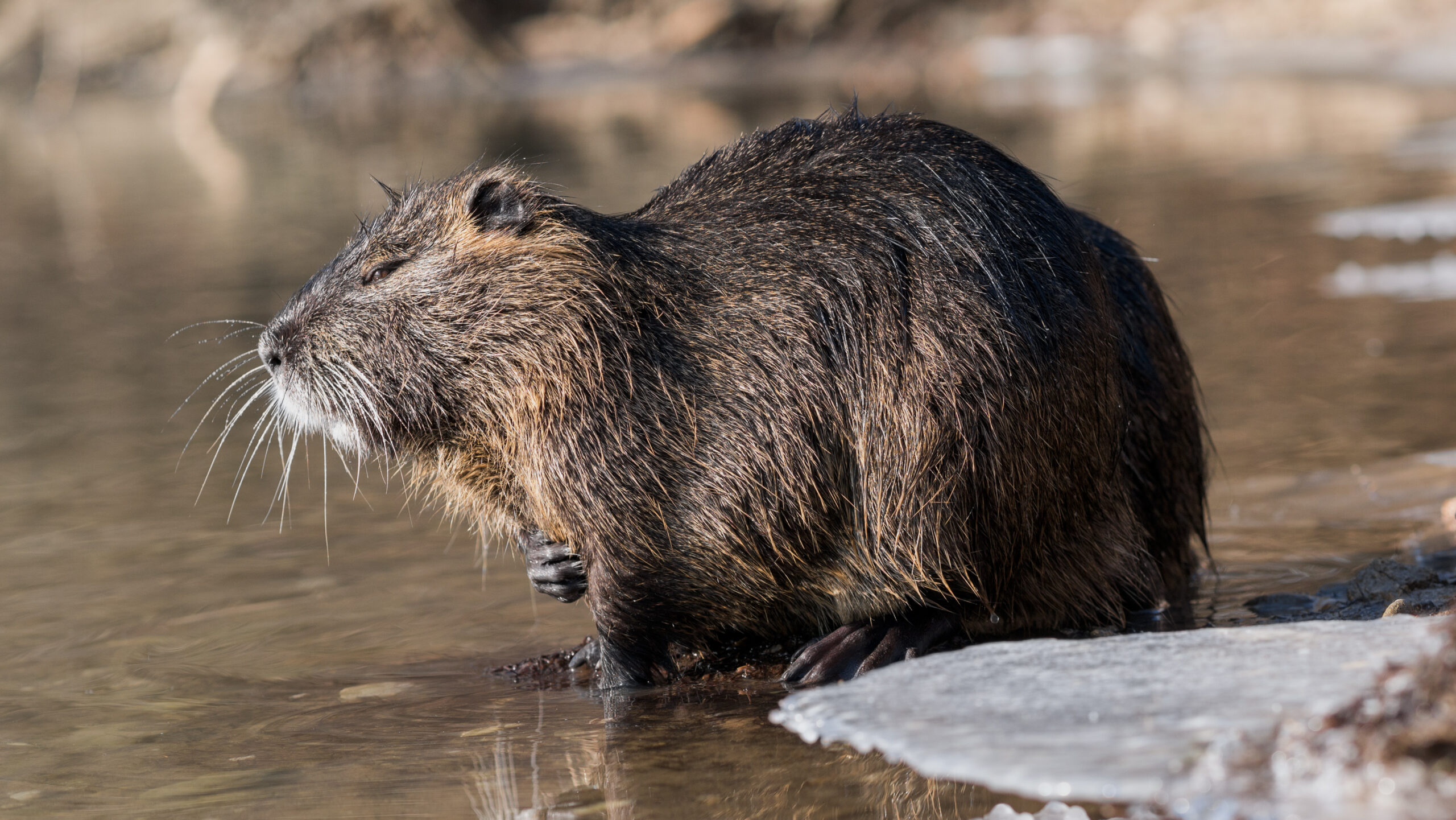
Where to see the coypu in the Netherlands
Rare 🦫 Mammal (land/water)
Where and when do you see a coypu? This species is rarely seen, all year round.
How do you recognise a coypu?
A heavily built rodent with a broad, angular head. The upper coat is glossy brown to yellowish brown with a grey underfur, and there is white around the nose; the whiskers are white too. The incisors are strikingly coloured: dark orange in males, yellow-orange in females. The tail is almost bare and round in section. Head and body 42 to 65 centimetres, tail 30 to 45 centimetres, 4 to 8 and sometimes 12 kilograms.
What can you confuse a coypu with?
Looks like: Muskrat, Eurasian beaver
- Muskrat: smaller, with a laterally flattened tail instead of a round one.
- Eurasian beaver: larger, with a broad flat tail and without orange incisors.
What tracks does a coypu leave?
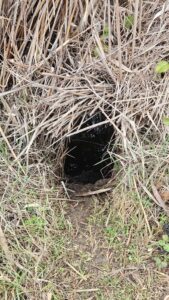
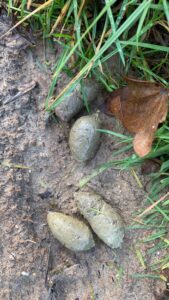
Print: the fore foot is 40 to 50 mm wide and 50 to 60 mm long, with clearly visible claws; the hind foot is much larger at 7 to 9 cm wide and 12 to 16 cm long and is webbed, except between the fourth and fifth toe, and that gap in the web is the best feature. A drag mark from the tail often runs alongside the prints. Droppings: 15 to 55 mm long and about 15 mm thick, cylindrical and grooved lengthwise, greenish brown to black, deposited in the water or along the bank. Slides: on muddy banks, runs 20 to 30 cm wide where the animals go in and out of the water each time.

Where do you see this species in the Netherlands?
Present in fur farming since the nineteen-twenties and from the nineteen-fifties in every province. Pushed back to the national borders by control measures since 1994, with most animals in the eastern provinces.
Habitat: Areas with both flowing and standing permanent waters with rich bankside vegetation: river courses, clay pits, gravel pits and marshy areas.
This is a common, widespread species: you can come across it in far more places than the areas listed below. Treat that list as a starting point rather than a full survey.
📍 Nationaal Park De Groote Peel
presence reported📍 Nationaal Park De Maasduinen
presence reported📍 Nationaal Park De Meinweg
presence reported📍 Gelderse Poort & Millingerwaard
presence reported📍 Blauwe Kamer
presence reported📍 De Dollard
presence reported📍 Zuidlaardermeergebied en Hunzedal
presence reportedThese links come straight from our database, with the chance, the source and the evidence level for each area.
When is the best time?
Green = present · orange = peak period. The bar is generated from our database.
Best period: All year; it does not hibernate.
Best time of day: Dusk and night, sometimes by day.
Recent sightings
👁️ Where has this species been seen recently?
Check the current sightings on Waarneming.nl. A useful addition to our own verified information.
How to improve your chances
- Keep the wind in your face. Most mammals will smell you long before they see you.
- Arrive before sunrise and then stay put. Sitting still beats walking about.
- Wear muted colours, skip the scent, and put your phone on silent.
- Be patient. Expect to come back more than once before it works.
🎒 What you need for this
Binoculars. Watch the tail — that is the quickest way to tell it from a beaver or a muskrat.
Photography
Photograph it as the animal comes out of the water: then you see the tail, and that is what makes identification possible. On a swimming animal you only see the head, and that is not enough.
🌿 Watching responsibly
Keep your distance, stay on the paths, and never lure animals with food or sound. Leave as soon as an animal becomes uneasy.
Status: Verified · Last checked: 2026-08-08