
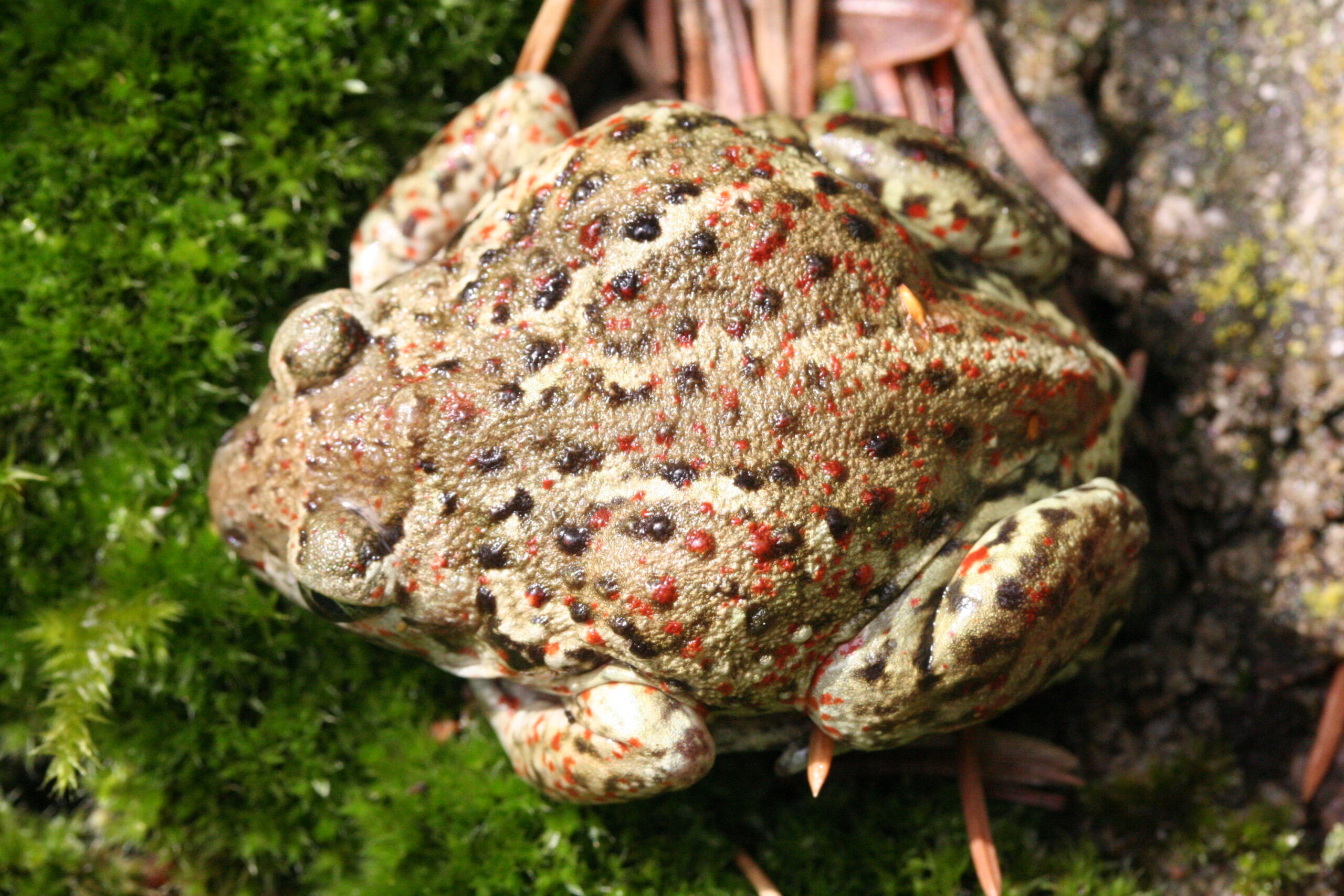
Where to see the common spadefoot toad in the Netherlands
Very rare 🐸 Amphibian Sensitive species · R1
🛡️ No exact locations, on purpose
This is a sensitive species. We deliberately give no exact locations. If an area is named below, that is because the site manager publishes the species there themselves, and the source is given with it. That way we do our bit for the protection of the species. Why we do that.
Where and when do you see a common spadefoot toad? This species is very rarely seen, from March to August.
How do you recognise a common spadefoot toad?
Squat toad of at most 8 centimetres with strikingly bulging eyes and a vertical pupil. Back pale yellow to brown with dark blotches, the flanks often with red or orange dots. On each hind foot a large, pale digging spur.
What does a common spadefoot toad sound like?
Recording: Odé, Baudewijn .mw-parser-output .messagebox{margin:4px 0;width:auto;border-collapse:collapse;border:2px solid, CC BY-SA 4.0, via Wikimedia Commons
Where do you see this species in the Netherlands?
Pleistocene sandy soils in Drenthe, Overijssel, Gelderland, Noord-Brabant and Limburg. The strongholds are in Drenthe and in the stream and river valleys.
Habitat: Open patches of sand with surrounding vegetation and easily dug ground: arable land, rough vegetation and allotments, river dunes and semi-natural grassland. Also the edges of dykes, roads, railway lines and heath.
When is the best time?
Green = present · orange = peak period. The bar is generated from our database.
Best period: Late March to June, with the migration peak in April. From July onwards the freshly metamorphosed young toads appear on open sand in the evening.
Best time of day: After sunset.
Recent sightings
👁️ Where has this species been seen recently?
Check the current sightings on Waarneming.nl. A useful addition to our own verified information.
Current sightings on Waarneming.nl →
Note: for sensitive species the source already blurs or withholds sightings. We do not reproduce exact locations.
How to improve your chances
- Go after dark in mild, wet weather, when amphibians are at their most active.
- Follow the chorus. In spring you can hear the calling males from a long way off.
- Shine your torch along the bank rather than into it, and keep the light brief.
- Stay on the bank and touch nothing. Amphibian skin is sensitive to whatever is on your hands.
🎒 What you need for this
Torch with a red filter and rubber boots. If you really want to hear the call, you need a hydrophone.
Photography
Work with a red or dimmed lamp and photograph low to the ground, at the toad's eye level. Strip the location data from the file before you upload it.
🌿 Watching responsibly
Keep your distance, stay on the paths, and never lure animals with food or sound. Leave as soon as an animal becomes uneasy. This is a sensitive species. We deliberately give no exact locations. If an area is named below, that is because the site manager publishes the species there themselves, and the source is given with it. That way we do our bit for the protection of the species.
Status: Verified · Last checked: 2026-08-07