
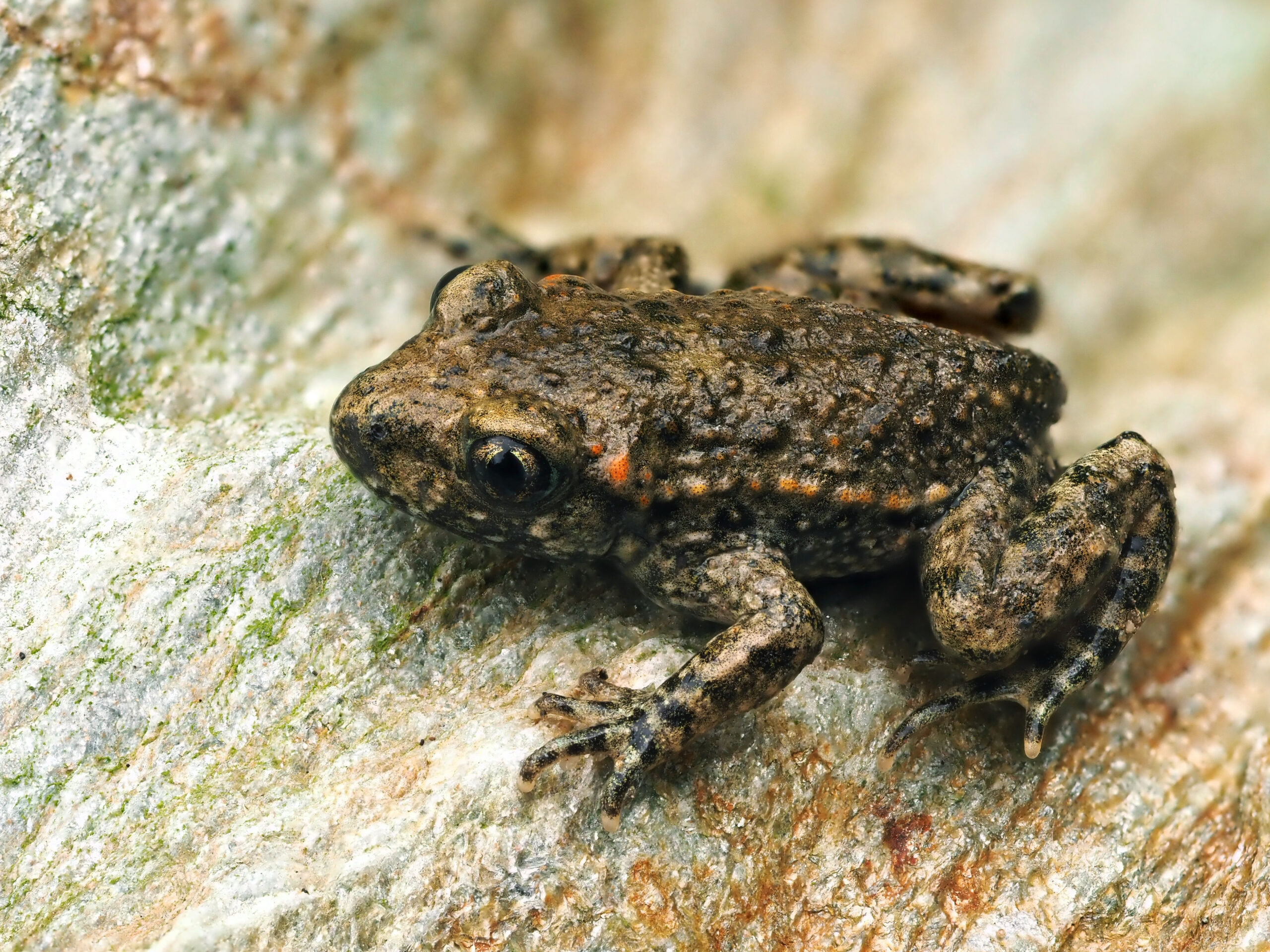
Where to see the common midwife toad in the Netherlands
Rare 🐸 Amphibian Sensitive species · R1
🛡️ No exact locations, on purpose
This is a sensitive species. We deliberately give no exact locations. If an area is named below, that is because the site manager publishes the species there themselves, and the source is given with it. That way we do our bit for the protection of the species. Why we do that.
Where and when do you see a common midwife toad? This species is rarely seen, from March to August.
How do you recognise a common midwife toad?
Small, stocky toad of about 5.5 centimetres. Large eyes with a vertical pupil and a clearly visible eardrum. Brown, grey or olive with small reddish or yellowish warts; the belly is whitish.
What does a common midwife toad sound like?
Recording: Odé, Baudewijn .mw-parser-output .messagebox{margin:4px 0;width:auto;border-collapse:collapse;border:2px solid, CC BY-SA 4.0, via Wikimedia Commons
Where do you see this species in the Netherlands?
Naturally only in the south of Limburg, where more than eighty percent of the populations sit on limestone and lime-rich soils. Elsewhere in the country it concerns released or escaped animals, which have often managed to hold on in urban areas.
Habitat: Stony, open slopes and slope woodland, preferably facing south. Breeding takes place in pioneer situations: cart tracks, concrete drinking troughs and deep, cool spring pools along slope woodland. A pronounced follower of human landscapes.
When is the best time?
Green = present · orange = peak period. The bar is generated from our database.
Best period: Late March through August. The call is most abundant in May and June, from half an hour after sunset.
Best time of day: After sunset.
Recent sightings
👁️ Where has this species been seen recently?
Check the current sightings on Waarneming.nl. A useful addition to our own verified information.
Current sightings on Waarneming.nl →
Note: for sensitive species the source already blurs or withholds sightings. We do not reproduce exact locations.
How to improve your chances
- Go after dark in mild, wet weather, when amphibians are at their most active.
- Follow the chorus. In spring you can hear the calling males from a long way off.
- Shine your torch along the bank rather than into it, and keep the light brief.
- Stay on the bank and touch nothing. Amphibian skin is sensitive to whatever is on your hands.
🎒 What you need for this
Above all your ears. Beyond that a torch with a red filter and shoes with grip, because the terrain is stony and steep.
Photography
Do not go looking for the animal under stones — that destroys its shelter. Photograph what shows itself, with dimmed light and without a recognisable background.
🌿 Watching responsibly
Keep your distance, stay on the paths, and never lure animals with food or sound. Leave as soon as an animal becomes uneasy. This is a sensitive species. We deliberately give no exact locations. If an area is named below, that is because the site manager publishes the species there themselves, and the source is given with it. That way we do our bit for the protection of the species.
Status: Verified · Last checked: 2026-08-07