
Where to see the twaite shad in the Netherlands
Very rare 🐟 Fish
Where and when do you see a twaite shad? This species is very rarely seen, all year round.
How do you recognise a twaite shad?
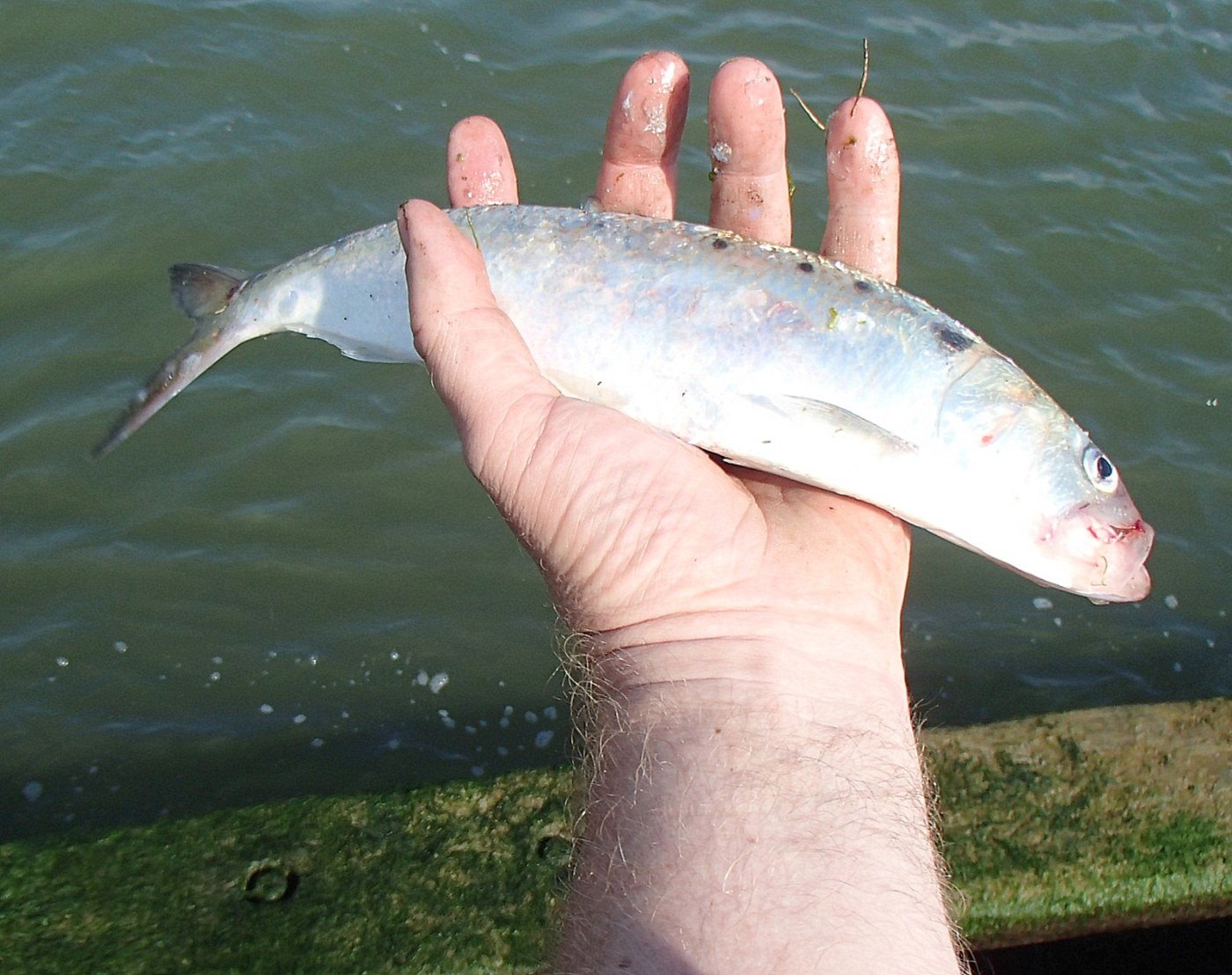
Elongated and laterally flattened, with a large head and a deep mouth cleft reaching behind the eye. A golden brown head, a blue-grey back, a silvery white underside, usually with one to eight spots along the flank starting from the head. The twaite shad can grow to 55 cm, which makes it slightly smaller than the allis shad.
What can you confuse a twaite shad with?
Looks like: Allis shad
- Allis shad: the twaite shad has larger scales (55 to 65 on the lateral line) and grows to about 55 centimetres, while the allis shad can reach 80 centimetres; the allis shad usually has one dark spot behind the head, the twaite shad a row of spots. Where both species spawn together, hybridisation can occur.
- Herring: smaller and without the row of flank spots.
Where do you see this species in the Netherlands?
Listed on the Dutch Red List as extinct, because there is no longer a breeding population. The spawning population disappeared from the lower river area in the nineteen-seventies, probably through dams and weirs such as the Haringvliet dam. From 1994, however, the number of twaite shad along the Dutch coast and in the lower rivers appears to be increasing again. In the Scheldt the species has increased and breeding takes place again in the Belgian freshwater tidal area.
Habitat: In spring it runs up the rivers from the sea. The freshwater tidal area of the lower rivers is crucial; larvae and young fish grow up in the estuary.
We have not yet recorded any areas for this species with enough evidence behind them, so we name the habitat type instead.
When is the best time?
Green = present · orange = peak period. The bar is generated from our database.
Best period: Spawning falls in April and May, at slow-flowing places in or near the freshwater tidal area.
Best time of day: Not applicable.
Recent sightings
👁️ Where has this species been seen recently?
Check the current sightings on Waarneming.nl. A useful addition to our own verified information.
How to improve your chances
- Look for clear, shallow water and watch from a bridge, a jetty or a high bank.
- Polarising sunglasses take the reflection off the surface and show you what is swimming underneath.
- Stay low and move slowly. Fish are very good at seeing movement above the water.
- Early morning gives the calmest water and the best visibility.
🎒 What you need for this
Not applicable
Photography
If you do come across one during monitoring, capture head and flank together: the golden brown head, the row of spots and the size are together the best you have without genetics.
🌿 Watching responsibly
Keep your distance, stay on the paths, and never lure animals with food or sound. Leave as soon as an animal becomes uneasy.
Status: Verified · Last checked: 2026-10-28