
Where to see the schneider in the Netherlands
Very rare 🐟 Fish Sensitive species · R1
🛡️ No exact locations, on purpose
This is a sensitive species. We deliberately give no exact locations. If an area is named below, that is because the site manager publishes the species there themselves, and the source is given with it. That way we do our bit for the protection of the species. Why we do that.
Where and when do you see a schneider? This species is very rarely seen, all year round.
How do you recognise a schneider?
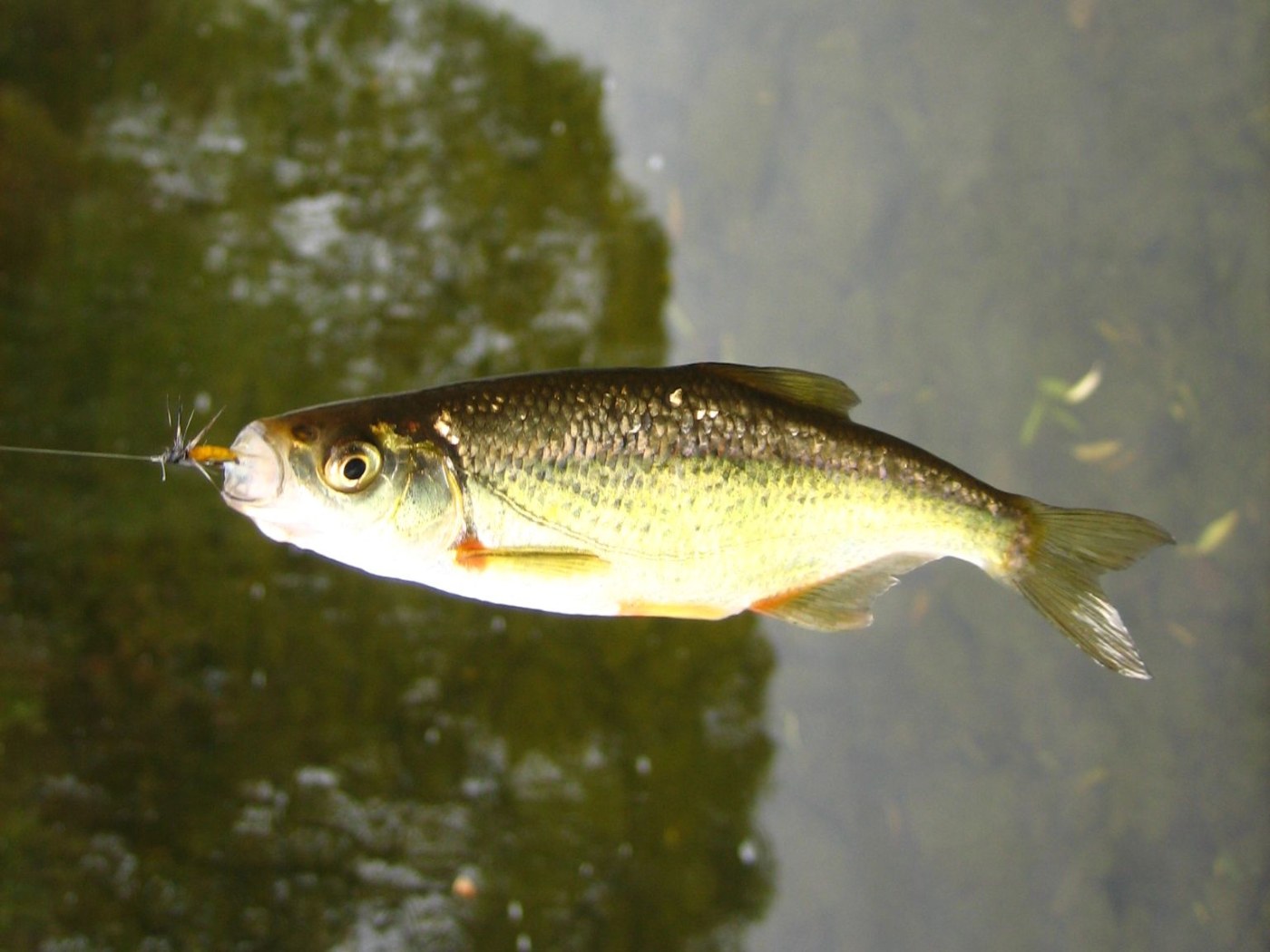
Laterally flattened with a small terminal mouth, up to about fifteen centimetres. The key feature is the black-spotted, downward-curving lateral line — no other member of the carp family has that.
What can you confuse a schneider with?
Looks like: Bleak, Common dace, Chub
- Bleak: lacks the black-spotted lateral line and has a strongly upturned mouth.
- Common dace: has an underslung mouth and grows twice as large.
- Young Chub: larger scales and a convex anal fin.
Where do you see this species in the Netherlands?
Only in South Limburg; elsewhere in the Netherlands suitable habitat is lacking. The species had disappeared from the country in the second half of the twentieth century through water pollution and has been present again since the end of that century. We do not name more precise sites.
Habitat: Fast-flowing streams and rivers with a gravel or stone bed. It lives in the top layer of water and eats, among other things, insects that fall on the water.
When is the best time?
Green = present · orange = peak period. The bar is generated from our database.
Best period: Spawning runs from May to July; females spawn several times, in small groups above gravel banks.
Best time of day: By day, in clear low water.
Recent sightings
👁️ Where has this species been seen recently?
Check the current sightings on Waarneming.nl. A useful addition to our own verified information.
Current sightings on Waarneming.nl →
Note: for sensitive species the source already blurs or withholds sightings. We do not reproduce exact locations.
How to improve your chances
- Look for clear, shallow water and watch from a bridge, a jetty or a high bank.
- Polarising sunglasses take the reflection off the surface and show you what is swimming underneath.
- Stay low and move slowly. Fish are very good at seeing movement above the water.
- Early morning gives the calmest water and the best visibility.
🎒 What you need for this
Polarising glasses; no dip net in streams with protected species without a permit
Photography
Photograph the flank from the side, so that the spotted lateral line is in frame. And watch your background: recognisable stream details give away the location of a species whose sites we deliberately do not publish.
🌿 Watching responsibly
Keep your distance, stay on the paths, and never lure animals with food or sound. Leave as soon as an animal becomes uneasy. This is a sensitive species. We deliberately give no exact locations. If an area is named below, that is because the site manager publishes the species there themselves, and the source is given with it. That way we do our bit for the protection of the species.
Status: Verified · Last checked: 2026-10-28