Where to see the Red-throated Pipit in the Netherlands
Very rare 🦅 Bird
Where and when do you see a Red-throated Pipit? This species is very rarely seen, in April, May, August, September, October and November.
How do you recognise a Red-throated Pipit?
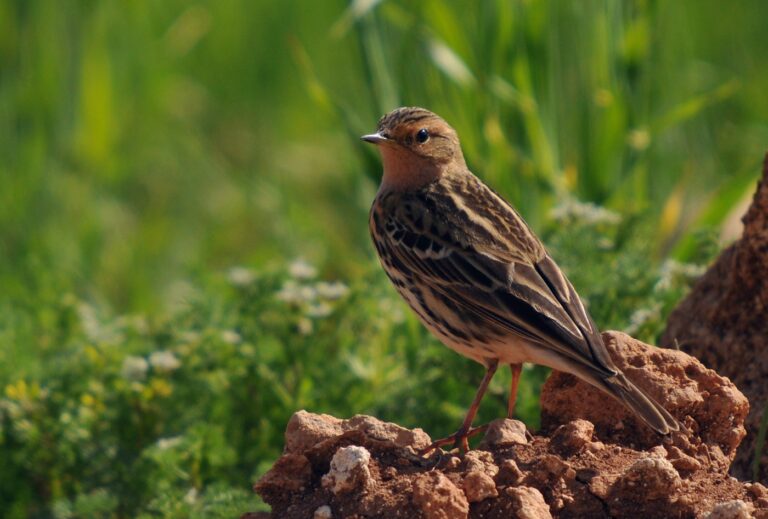
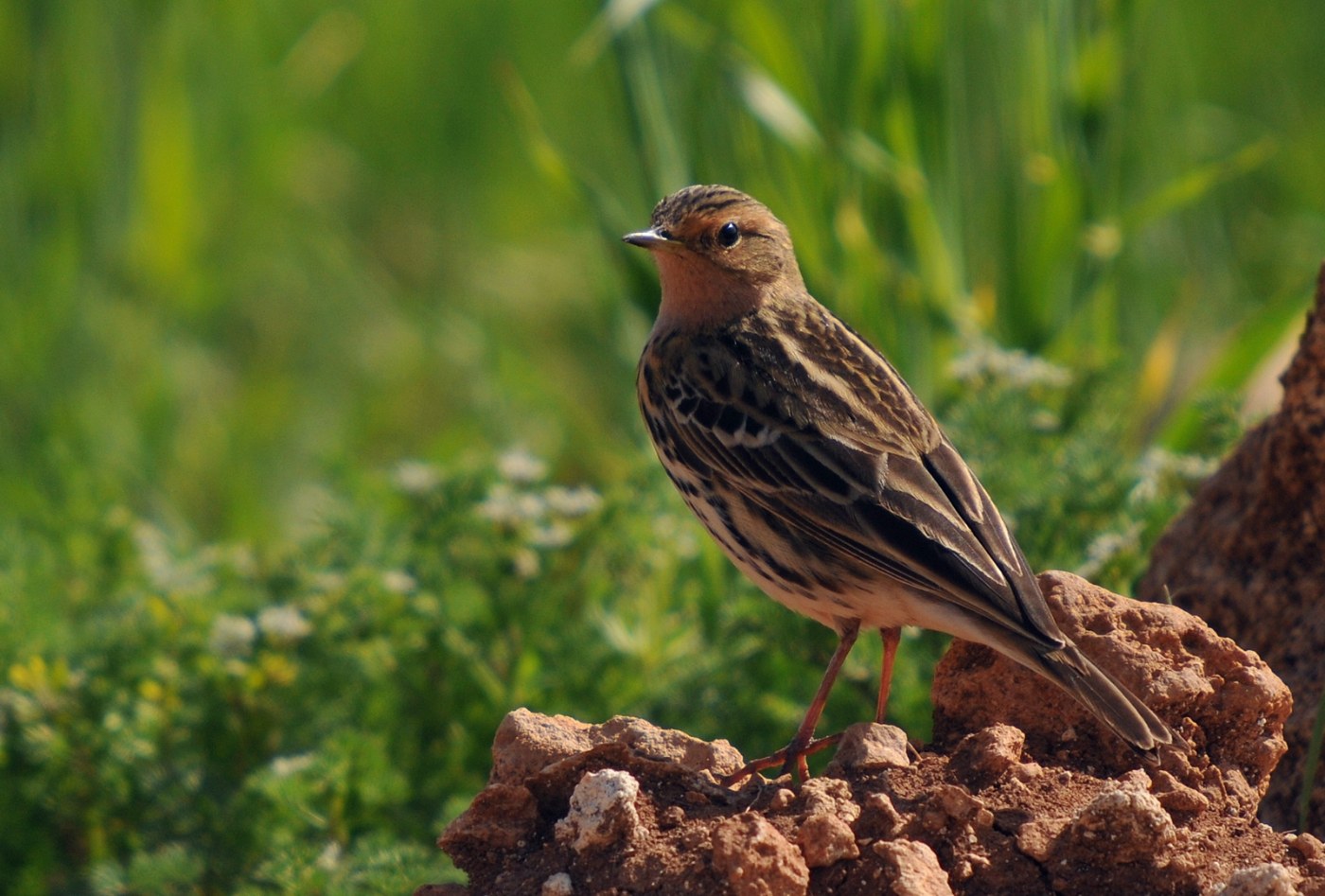
A pipit of 14 to 15 cm. Adults in spring are recognisable by the brick-red face and the red throat and breast; in autumn that is still faintly visible. First-year birds are almost white below with coarse, sharply defined streaking on the flanks, a fine thin bill with a yellow base and a heavily streaked rump.
What can you confuse a Red-throated Pipit with?
Looks like: Tree Pipit
- Meadow Pipit, Tree Pipit, Tawny Pipit, Rock Pipit and Water Pipit are all named by Vogelbescherming as confusion species.
- Tree Pipit: the call is the most similar, but that of the Red-throated Pipit is purer and more drawn out — rendered as "psIIII", with an explosive start and a dying fall.
- Adult in spring plumage: the brick-red face and red throat are unmistakable; only then is the species certain on sight.
Where do you see this species in the Netherlands?
On passage along the coast and over wet grassland along rivers, wet fields and marshes. Not a breeding bird; the breeding habitat is tundra with willows, scattered birches and sedges.
Habitat: Wet grassland along rivers, wet fields and marshes during passage.
We have not yet recorded any areas for this species with enough evidence behind them, so we name the habitat type instead.
When is the best time?
Green = present · orange = peak period. The bar is generated from our database.
Best period: Spring passage: 91% of the birds pass between 21 April and 25 May, according to Sovon's BSP database. Autumn passage: from September to a few late birds in November, with most records in September and October. Fewer pass in autumn than in spring.
Best time of day: Early morning at a migration counting point, with an ear on the call. Vogelbescherming names the first two weeks of May and the last week of September as the best period to watch.
Recent sightings
👁️ Where has this species been seen recently?
Check the current sightings on Waarneming.nl. A useful addition to our own verified information.
How to improve your chances
- Learn the calls first. You will hear most birds before you see them.
- Go in the first hour after sunrise, when the song is at its peak and the wind is still down.
- Use a hide or natural cover. Sitting still gets you more than walking closer.
- Keep the sun behind you. Against the light you see a silhouette and no colour.
🎒 What you need for this
A sound recorder, and binoculars for the birds that land. Dutch Avifauna only includes sound records when a recording exists: "Geluidswaarnemingen zijn niet opgenomen wanneer er geen geluidsopname bestaat."
Photography
Do not count on a portrait. The realistic photo is of a landed bird in wet grassland, from far off, with a telephoto lens from a car or a hide. On a first-year bird watch the heavily streaked rump: that is the feature you have to be able to find again in the photo.
🌿 Watching responsibly
Keep your distance, stay on the paths, and never lure animals with food or sound. Leave as soon as an animal becomes uneasy.
Status: Verified · Last checked: 2026-10-28
More photos