
Where to see the Green Snaketail in the Netherlands
Very rare 🪰 Dragonfly
Where and when do you see a Green Snaketail? This species is very rarely seen, from May to September.
How do you recognise a Green Snaketail?
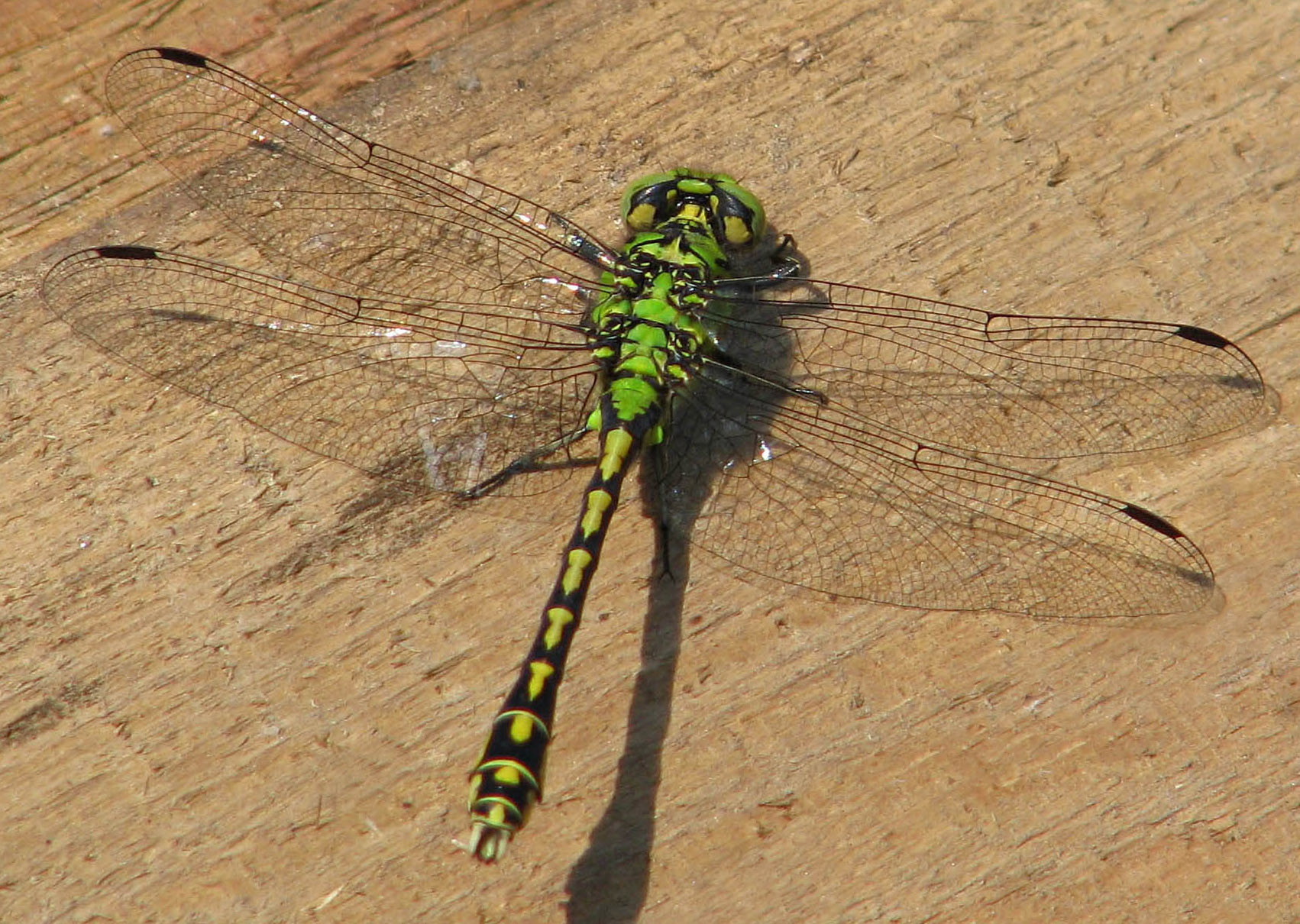
Length 50 to 60 millimetres. Unmistakable thanks to the grass-green colour of the head, eyes, thorax and the start of the abdomen; the rest of the abdomen is black with yellow spots. The male has a club-shaped widening at the abdomen tip, the female is more heavily built.
Where do you see this species in the Netherlands?
Now only in a few streams in Limburg.
Habitat: Rivers and larger streams. The larva takes three years; emergence runs from late May into August.
This is a common, widespread species: you can come across it in far more places than the areas listed below. Treat that list as a starting point rather than a full survey.
Habitat: Rivers and larger streams. The larva takes three years; emergence runs from late May into August.
We have not yet recorded any areas for this species with enough evidence behind them, so we name the habitat type instead.
When is the best time?
Green = present · orange = peak period. The bar is generated from our database.
Best period: Late May into September, but above all in July and August.
Best time of day: The sunny hours in the middle of the day.
Recent sightings
👁️ Where has this species been seen recently?
Check the current sightings on Waarneming.nl. A useful addition to our own verified information.
How to improve your chances
- Go on a warm, windless day between about ten and four, when they are active.
- Look for the place rather than the animal: flowery edges for butterflies, banks and open water for dragonflies.
- Move slowly and keep your shadow off the animal. It notices that before it notices you.
- Early in the morning they are still cold and motionless on a leaf. That is when you can get closest.
🎒 What you need for this
Binoculars. On young animals the green is still weakly developed, so then you have to go by the thorax pattern.
Photography
Besides the stream, search the sunny woodland edges as well: immature animals forage there far from the water and sit more calmly than the males patrolling along the bank.
🌿 Watching responsibly
Keep your distance, stay on the paths, and never lure animals with food or sound. Leave as soon as an animal becomes uneasy.
Status: Verified · Last checked: 2026-08-08