
Where to see the fire salamander in the Netherlands
Very rare 🐸 Amphibian Sensitive species · R1
🛡️ No exact locations, on purpose
This is a sensitive species. We deliberately give no exact locations. If an area is named below, that is because the site manager publishes the species there themselves, and the source is given with it. That way we do our bit for the protection of the species. Why we do that.
Where and when do you see a fire salamander? This species is very rarely seen, from March to October.
How do you recognise a fire salamander?
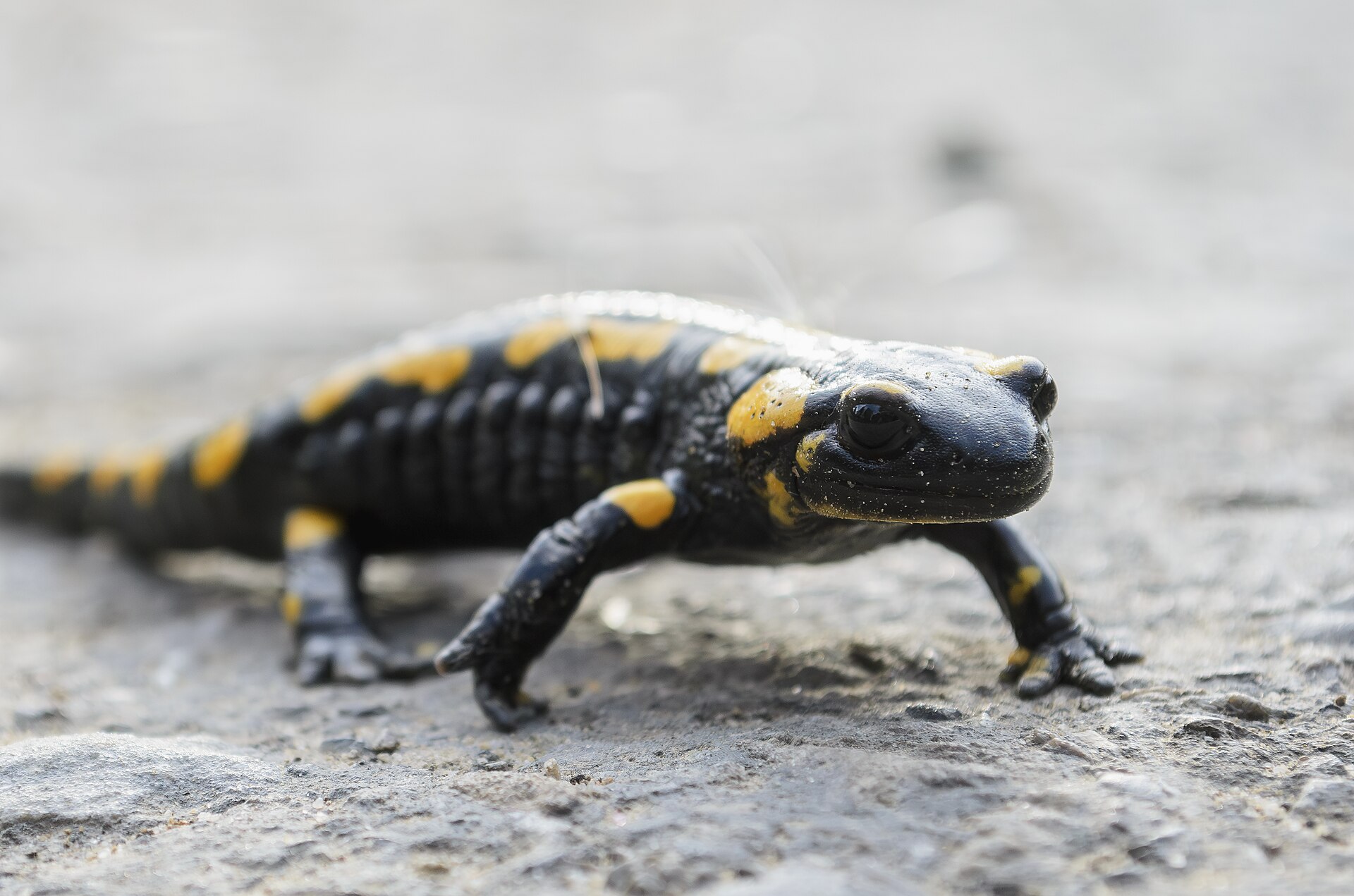
Jet black with bright yellow blotches or stripes, glossy and slow-moving. At up to twenty centimetres it is our largest salamander and one of the most strikingly coloured animals in the Netherlands. That colour is a warning: it secretes a toxic substance through glands in the skin.
Where do you see this species in the Netherlands?
Only the hill woodland of South Limburg. Outside that the species does not occur in the Netherlands.
📍 Nationaal Park Zuid-Limburg (in formation)
presence reported📍 Sint-Pietersberg & Zuid-Limburg
presence reportedThese links come straight from our database, with the chance, the source and the evidence level for each area.
When is the best time?
Green = present · orange = peak period. The bar is generated from our database.
Best period: March to October, on rainy nights. Spring and autumn offer the best chance, because it is more often damp and mild then.
Best time of day: The night, and then only after rain. On a dry evening you look in vain; on a mild, wet night they sometimes walk across the forest tracks.
Recent sightings
👁️ Where has this species been seen recently?
Check the current sightings on Waarneming.nl. A useful addition to our own verified information.
Current sightings on Waarneming.nl →
Note: for sensitive species the source already blurs or withholds sightings. We do not reproduce exact locations.
How to improve your chances
- Go after dark in mild, wet weather, when amphibians are at their most active.
- Follow the chorus. In spring you can hear the calling males from a long way off.
- Shine your torch along the bank rather than into it, and keep the light brief.
- Stay on the bank and touch nothing. Amphibian skin is sensitive to whatever is on your hands.
🎒 What you need for this
A torch (red); do not handle
🌿 Watching responsibly
Keep your distance, stay on the paths, and never lure animals with food or sound. Leave as soon as an animal becomes uneasy. This is a sensitive species. We deliberately give no exact locations. If an area is named below, that is because the site manager publishes the species there themselves, and the source is given with it. That way we do our bit for the protection of the species.
Status: Verified · Last checked: 2026-08-08