
Where to see the European weatherfish in the Netherlands
Rare 🐟 Fish
Where and when do you see a European weatherfish? This species is rarely seen, all year round.
How do you recognise a European weatherfish?
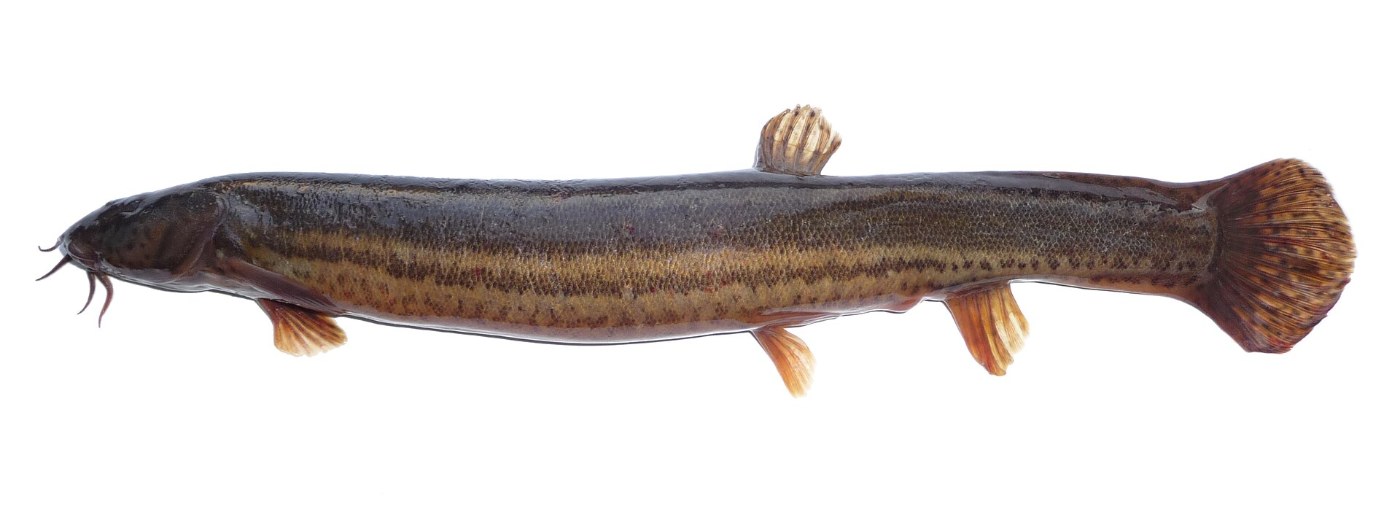
A long and almost round body, flattened from side to side towards the tail; a dark brown to reddish brown back and yellowish to orange flanks with dark bands of blotches. Every individual has a unique pattern, which makes individual recognition possible. Ten barbels. Weatherfish can grow to about 30 centimetres.
What can you confuse a European weatherfish with?
Looks like: Stone loach, Spined loach
- Stone loach and Spined loach: these two species, similar in appearance, have only six barbels against ten.
- European eel: much larger and without barbels.
Where do you see this species in the Netherlands?
Rare and much reduced during the twentieth century through drainage and intensive ditch management. The strongholds lie in West Brabant, the central river area and north-west Overijssel. In the Zouweboezem it is the most important prey of the Purple Heron.
📍 IJssel-uiterwaarden
presence reported📍 Nationaal Park De Biesbosch
presence reported📍 Nationaal Park Weerribben-Wieden
presence reported📍 Blauwe Kamer
presence reported📍 Zouweboezem
presence reportedThese links come straight from our database, with the chance, the source and the evidence level for each area.
When is the best time?
Green = present · orange = peak period. The bar is generated from our database.
Best period: Spawning runs from April to June, in the shallower warm parts of the water with water plants.
Best time of day: Active at night; by day buried in the mud.
Recent sightings
👁️ Where has this species been seen recently?
Check the current sightings on Waarneming.nl. A useful addition to our own verified information.
How to improve your chances
- Look for clear, shallow water and watch from a bridge, a jetty or a high bank.
- Polarising sunglasses take the reflection off the surface and show you what is swimming underneath.
- Stay low and move slowly. Fish are very good at seeing movement above the water.
- Early morning gives the calmest water and the best visibility.
🎒 What you need for this
A dip net during targeted survey work; without a permit, do not go looking for a protected species on purpose
Photography
Photograph the pattern of blotches on the flank from the side. Every individual has a unique pattern, so such a photo is more than a picture: it makes it possible to recognise the same animal again later.
🌿 Watching responsibly
Keep your distance, stay on the paths, and never lure animals with food or sound. Leave as soon as an animal becomes uneasy.
Status: Verified · Last checked: 2026-10-28