Where to see the Eurasian Treecreeper in the Netherlands
Very rare 🦅 Bird
Where and when do you see a Eurasian Treecreeper? This species is very rarely seen, from October to February.
How do you recognise a Eurasian Treecreeper?
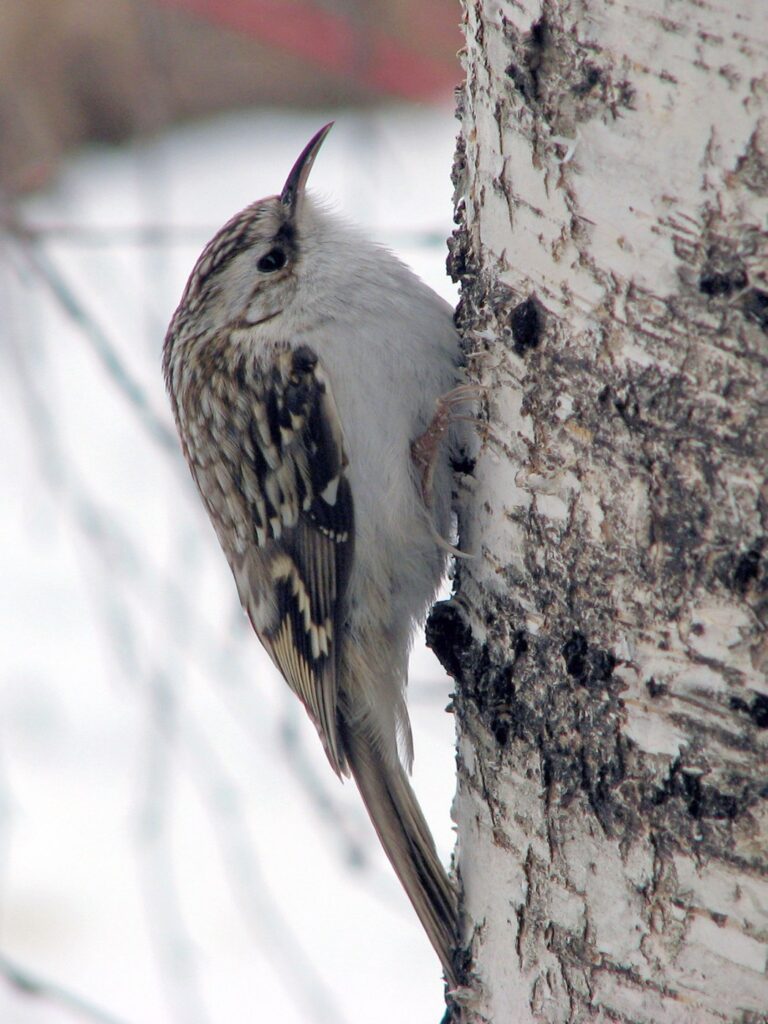
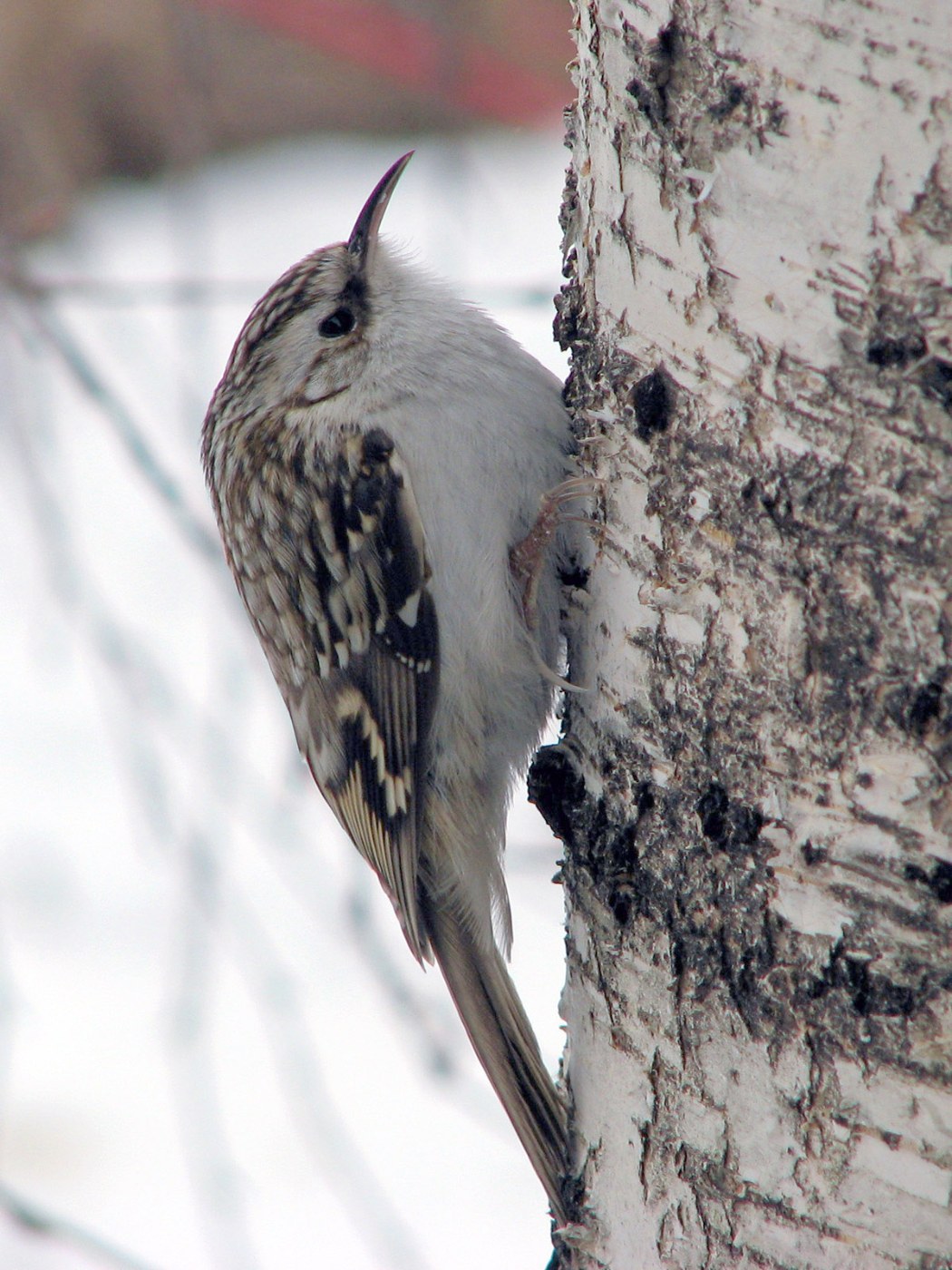
A typical treecreeper: 12.5 cm, brown and streaked above, with a stiff tail and a thin curved bill. The difference from the Short-toed Treecreeper lies in the yellowish orange band across the primaries, which on the Eurasian Treecreeper forms a "cup" and then takes a far steeper shape. The nominate form is also much whiter, with a bright white eyebrow stripe that continues onto the back and white underparts. Those features call for a sharp photo of the open wing or a bird in the hand, and the plumage differences overlap in the central European subspecies macrodactyla.
What can you confuse a Eurasian Treecreeper with?
Looks like: Short-toed Treecreeper
- Short-toed Treecreeper (Certhia brachydactyla): the species you will almost always see in the Netherlands. The difference lies in the shape of the yellowish orange band across the primaries and, on the nominate form, in the much whiter plumage. In practice it comes down to sound: the call of the Eurasian Treecreeper is thinner and finer, and the song begins high and then falls twice, where that of the Short-toed Treecreeper rises.
Where do you see this species in the Netherlands?
Not a breeding bird in the Netherlands. As a rare passage migrant the species was expected mainly on the Wadden islands, from mid-October. Since 2000, however, no records have been accepted.
Habitat: In its breeding range mixed woodland with a larger share of (silver) fir, in Scandinavia and further east and south.
This is a common, widespread species: you can come across it in far more places than the areas listed below. Treat that list as a starting point rather than a full survey.
Habitat: In its breeding range mixed woodland with a larger share of (silver) fir, in Scandinavia and further east and south.
We have not yet recorded any areas for this species with enough evidence behind them, so we name the habitat type instead.
When is the best time?
Green = present · orange = peak period. The bar is generated from our database.
Best period: Historically the birds were seen in autumn and winter, from mid-October onwards. Dutch Avifauna gives zero records for the period from 2000, so there is no current period to go by.
Best time of day: Not applicable. Anyone who believes they are hearing or seeing a Eurasian Treecreeper should above all record the sound — that is the only route to an accepted record.
Recent sightings
👁️ Where has this species been seen recently?
Check the current sightings on Waarneming.nl. A useful addition to our own verified information.
How to improve your chances
- Learn the calls first. You will hear most birds before you see them.
- Go in the first hour after sunrise, when the song is at its peak and the wind is still down.
- Use a hide or natural cover. Sitting still gets you more than walking closer.
- Keep the sun behind you. Against the light you see a silhouette and no colour.
🎒 What you need for this
A sound recorder. Dutch Avifauna only includes sound records of rare species when a recording exists.
Photography
A photo of the bird closed up on the trunk is not enough. You need the open wing, sharp enough to judge the shape of the yellowish orange primary band. In practice that means a burst as it flies off, at a high shutter speed, and a good deal of luck.
🌿 Watching responsibly
Keep your distance, stay on the paths, and never lure animals with food or sound. Leave as soon as an animal becomes uneasy.
Status: Verified · Last checked: 2026-10-28
More photos