
Where to see the American mink in the Netherlands
Very rare 🦫 Mammal (land/water)
Where and when do you see an American mink? This species is very rarely seen, all year round.
How do you recognise an American mink?
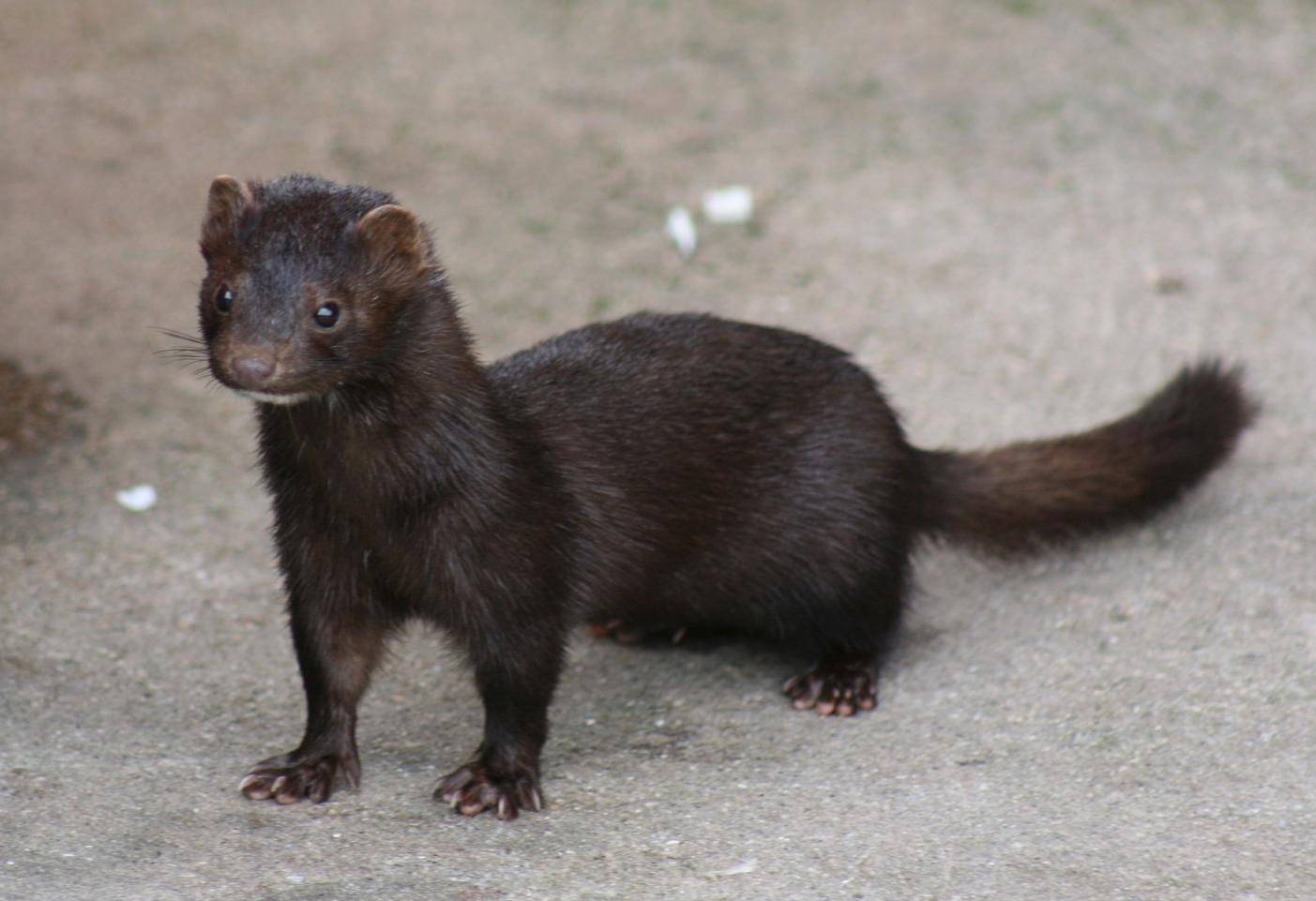
A medium-sized mustelid with a chocolate brown to almost black coat and a white chin patch that continues onto the lower lip. Head and body 32 to 44 centimetres, tail 13.5 to 22 centimetres; males 750 to 1,990 grams, females 490 to 730 grams.
What can you confuse an American mink with?
Looks like: European polecat, Eurasian otter
- European polecat: a paler brown with a pale face mask: white patches between and below the eyes and white ear edges.
- Eurasian otter: much larger, with a thick tail tapering to a point; a mink is barely longer than half a metre.
What tracks does an American mink leave?
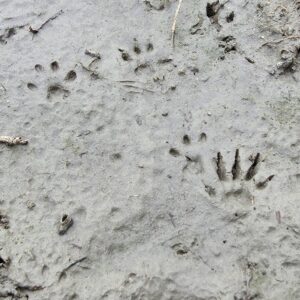
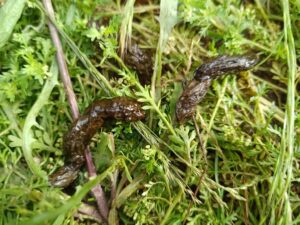
Print: 25 to 35 mm wide and 25 to 32 mm long, with the fore foot slightly smaller than the hind foot; in size almost the same as a polecat's. Trail: almost always in a four-print bound, with 40 to 69 cm between the groups, and in snow slides about 15 cm wide. Droppings: 5 to 8 cm long and usually less than 10 mm thick, cylindrical with a pointed end, glossy dark green to black when fresh and unpleasant in smell. Prey remains: it eats the head first and then empties the belly cavity; of toads, stripped skins and bitten-off heads are left behind.

Where do you see this species in the Netherlands?
Feral individuals have been caught, but there are no indications that the species has bred in the Netherlands. After the closure of the mink farms in 2021 the number of reports fell sharply, to fewer than five in 2025 — which suggests that they were mainly escaped or released animals.
Habitat: Wooded country and grassland near water, along slow-flowing rivers and streams and by lakes and marshes. It stays largely within a strip of ten to fifty metres from the water and seeks sheltered bankside zones with dense vegetation.
This is a common, widespread species: you can come across it in far more places than the areas listed below. Treat that list as a starting point rather than a full survey.
Habitat: Wooded country and grassland near water, along slow-flowing rivers and streams and by lakes and marshes. It stays largely within a strip of ten to fifty metres from the water and seeks sheltered bankside zones with dense vegetation.
We have not yet recorded any areas for this species with enough evidence behind them, so we name the habitat type instead.
When is the best time?
Green = present · orange = peak period. The bar is generated from our database.
Best period: All year; the mating season runs from February to April.
Best time of day: Both at night and by day; in summer mainly at night.
Recent sightings
👁️ Where has this species been seen recently?
Check the current sightings on Waarneming.nl. A useful addition to our own verified information.
How to improve your chances
- Keep the wind in your face. Most mammals will smell you long before they see you.
- Arrive before sunrise and then stay put. Sitting still beats walking about.
- Wear muted colours, skip the scent, and put your phone on silent.
- Be patient. Expect to come back more than once before it works.
🎒 What you need for this
Binoculars along the bank. Watch the chin — that is the proof.
Photography
Photograph the head from the front: the white chin patch continuing onto the lower lip is the decisive feature. Always report your record, because with an invasive species every documented report counts for management.
🌿 Watching responsibly
Keep your distance, stay on the paths, and never lure animals with food or sound. Leave as soon as an animal becomes uneasy.
Status: Verified · Last checked: 2026-08-08