
Where to see the Mazarine Blue in the Netherlands
Very rare 🦋 Butterfly
Where and when do you see a Mazarine Blue? This species is very rarely seen, from April to September.
How do you recognise a Mazarine Blue?
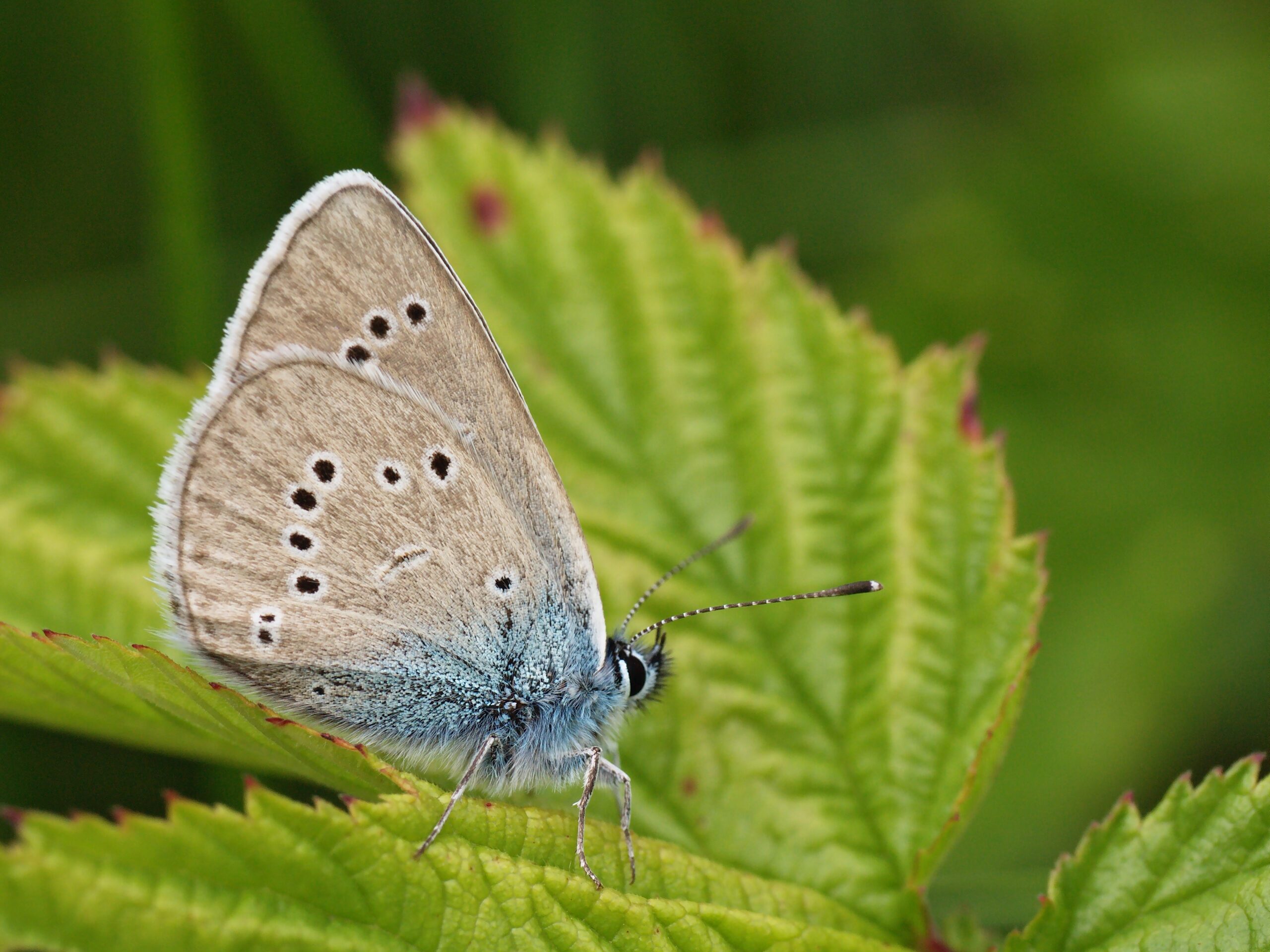
Forewing length about 15 millimetres. The male is a deep violet-blue with black wing margins; the female has a brown upperside. The underside of the wings is dark grey to brown with evenly spaced, white-ringed black dots — and no orange marginal spots.
Where do you see this species in the Netherlands?
It disappeared from the Netherlands in 1974 and has returned since 1993 from neighbouring populations. It is now confined to South Limburg, with the occasional exceptional record elsewhere.
Habitat: Dry grassland, chalk grassland, hay meadows, herb-rich road verges and extensively grazed meadows.
This is a common, widespread species: you can come across it in far more places than the areas listed below. Treat that list as a starting point rather than a full survey.
📍 Nationaal Park Zuid-Limburg (in formation)
presence reported📍 Sint-Pietersberg & Zuid-Limburg
presence reportedThese links come straight from our database, with the chance, the source and the evidence level for each area.
When is the best time?
Green = present · orange = peak period. The bar is generated from our database.
Best period: Late April to late June for the first generation, then a second in July and August and sometimes a third in August and September.
Best time of day: The sunny hours in the middle of the day.
Recent sightings
👁️ Where has this species been seen recently?
Check the current sightings on Waarneming.nl. A useful addition to our own verified information.
How to improve your chances
- Go on a warm, windless day between about ten and four, when they are active.
- Look for the place rather than the animal: flowery edges for butterflies, banks and open water for dragonflies.
- Move slowly and keep your shadow off the animal. It notices that before it notices you.
- Early in the morning they are still cold and motionless on a leaf. That is when you can get closest.
🎒 What you need for this
A camera with a macro lens. Blues are separated on the underside, and for that you have to be low to the ground.
Photography
When photographing, watch the wing margins: the absence of orange lunules on the underside is the proof with this blue. So make sure the whole wing margin is sharply in frame.
🌿 Watching responsibly
Keep your distance, stay on the paths, and never lure animals with food or sound. Leave as soon as an animal becomes uneasy.
Status: Verified · Last checked: 2026-08-08