
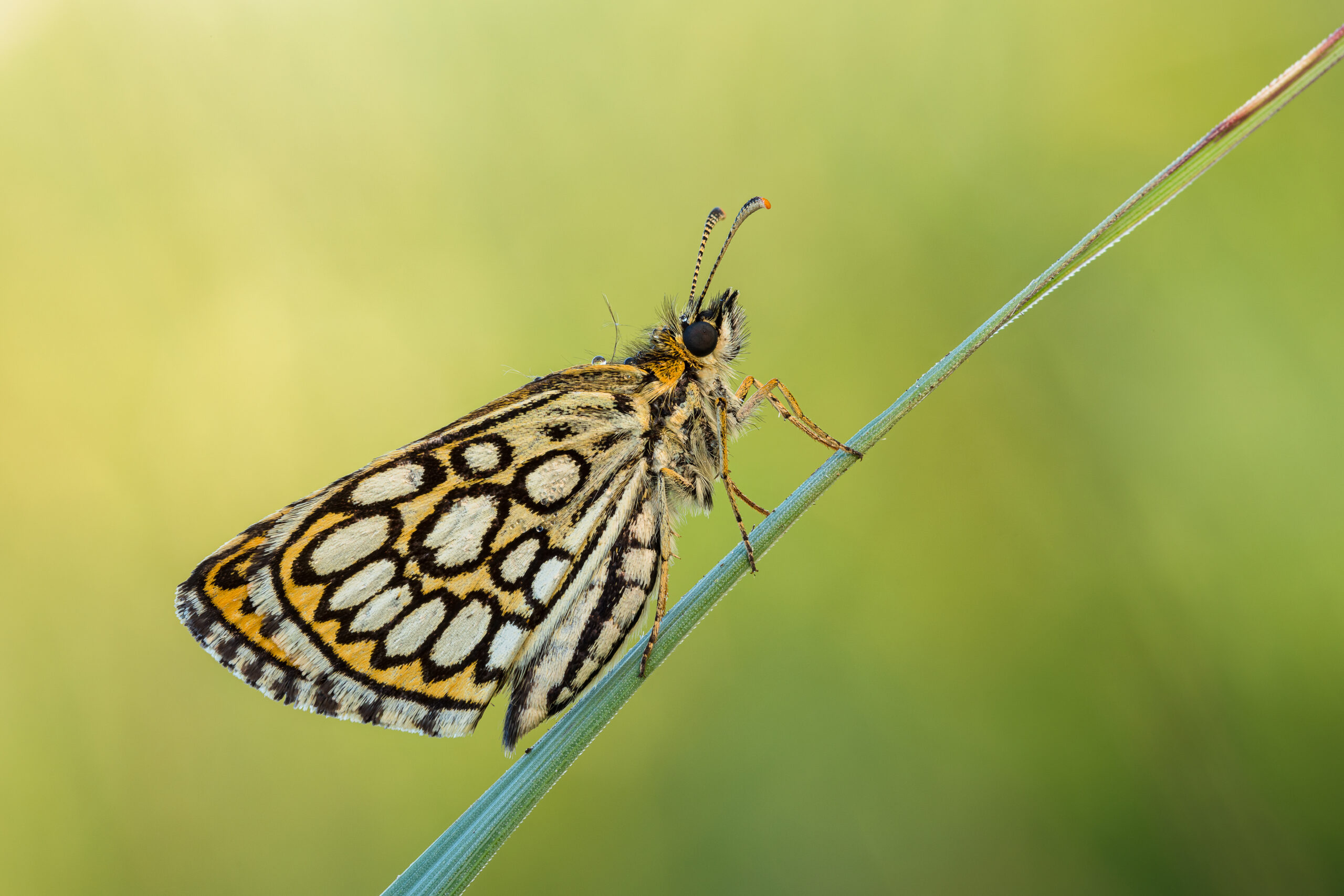
Where to see the Large Chequered Skipper in the Netherlands
Rare 🦋 Butterfly Sensitive species · R1
🛡️ No exact locations, on purpose
This is a sensitive species. We deliberately give no exact locations. If an area is named below, that is because the site manager publishes the species there themselves, and the source is given with it. That way we do our bit for the protection of the species. Why we do that.
Where and when do you see a Large Chequered Skipper? This species is rarely seen, from June to August.
How do you recognise a Large Chequered Skipper?
Forewing length 15 to 18 millimetres. The hallmark is on the underside of the hindwings: large, dark-edged white spots, the so-called mirrors. On the upperside the male has only three or four small yellow spots near the wingtip, the female clearly larger spots.
Where do you see this species in the Netherlands?
Very rare, mainly in the Peel. Only in the Weerterbos and De Groote Peel was the species found in every year between 1990 and 2018. The Gelderland population has been gone since 1996.
Habitat: Damp rough vegetation along forest tracks and woodland edges, open woodland and raised bogs, preferably where the water level stands at or above ground level in winter.
When is the best time?
Green = present · orange = peak period. The bar is generated from our database.
Best period: Late June to early August, in one generation. Gelderland populations flew on average two weeks earlier than those in Brabant and Limburg.
Best time of day: The sunny hours in the middle of the day.
Recent sightings
👁️ Where has this species been seen recently?
Check the current sightings on Waarneming.nl. A useful addition to our own verified information.
Current sightings on Waarneming.nl →
Note: for sensitive species the source already blurs or withholds sightings. We do not reproduce exact locations.
How to improve your chances
- Go on a warm, windless day between about ten and four, when they are active.
- Look for the place rather than the animal: flowery edges for butterflies, banks and open water for dragonflies.
- Move slowly and keep your shadow off the animal. It notices that before it notices you.
- Early in the morning they are still cold and motionless on a leaf. That is when you can get closest.
🎒 What you need for this
Camera with a macro lens. It often sits with closed wings, and that is exactly when you see the mirrors.
Photography
Wait until it lands and closes its wings: only then are the large white mirror spots on the hindwing underside visible, and they make the picture unmistakable at once.
🌿 Watching responsibly
Keep your distance, stay on the paths, and never lure animals with food or sound. Leave as soon as an animal becomes uneasy. This is a sensitive species. We deliberately give no exact locations. If an area is named below, that is because the site manager publishes the species there themselves, and the source is given with it. That way we do our bit for the protection of the species.
Status: Verified · Last checked: 2026-08-08